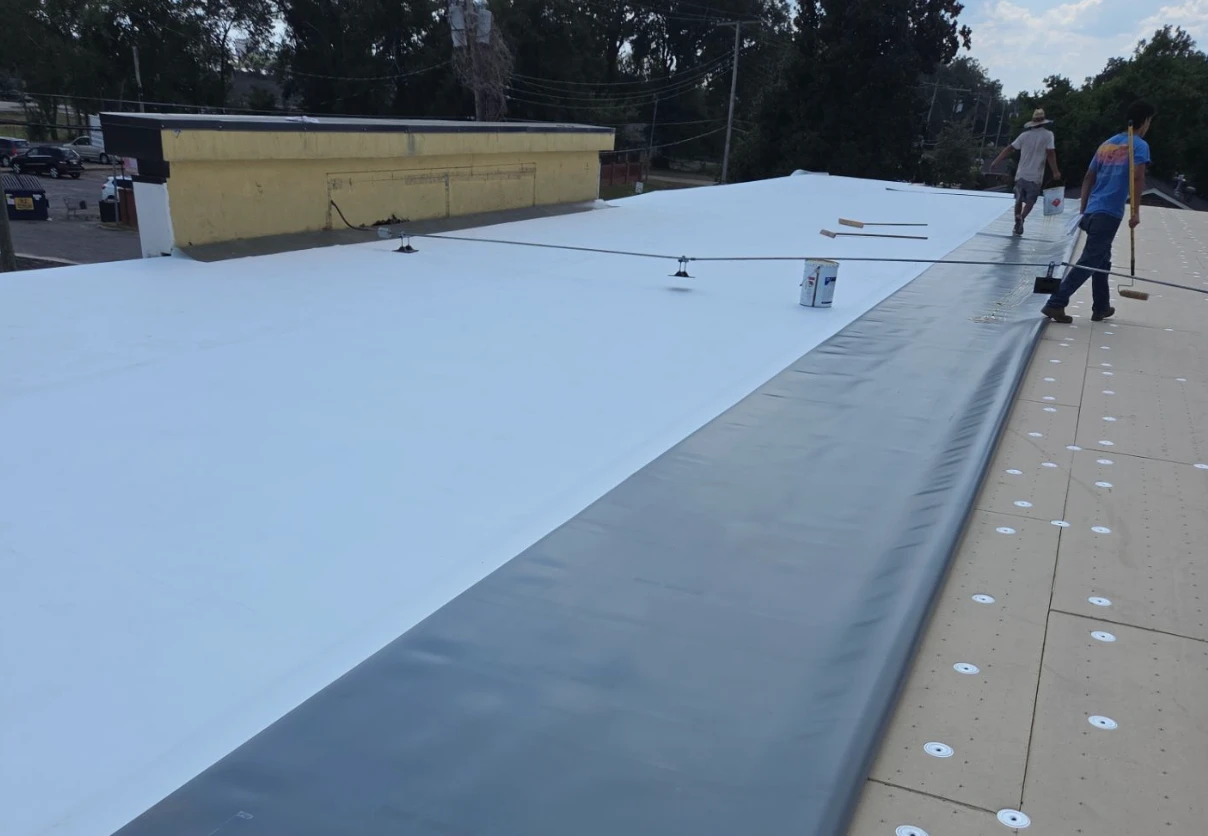
Fiesta on 18th, a nutrition store on North 18th Street in Monroe, had a roof that was replaced on an insurance claim in 2020 — and it failed inside five years. Trapped moisture had bowed the ISO board under the membrane and the building was leaking. Before we proposed anything, Brown's ran moisture testing and documented the assembly. Then we installed a 20-year GAF system: 60-mil TPO over new 3" ISO, full tear-off to a sound deck — and the store never closed for a single day.
That's the whole job in a paragraph. The rest of this article is why we did it in that order, because the sequence matters more than most building owners realize.
Why the Original Roof Failed in Five Years
A roof that dies in five years didn't die of old age. It died of a decision.
The 2020 work looked right on paper — claim filed, roof replaced, owner moved on. The problem was underneath the new membrane. Moisture got sealed into the assembly with no path to dry out. A single-ply membrane like TPO is, by design, a vapor barrier on top. If the layers below go on wet, or if wet insulation gets covered instead of removed, that water has nowhere to go. It sits, it migrates, and it rots.
By the time the owner called us, the interior was leaking and every bit of the polyiso under the membrane had bowed. Saturated polyiso doesn't just lose R-value; it swells, warps, and stops giving the membrane a flat, solid surface. Once the board is cupping and soft, the roof above it is finished no matter how good the membrane is.
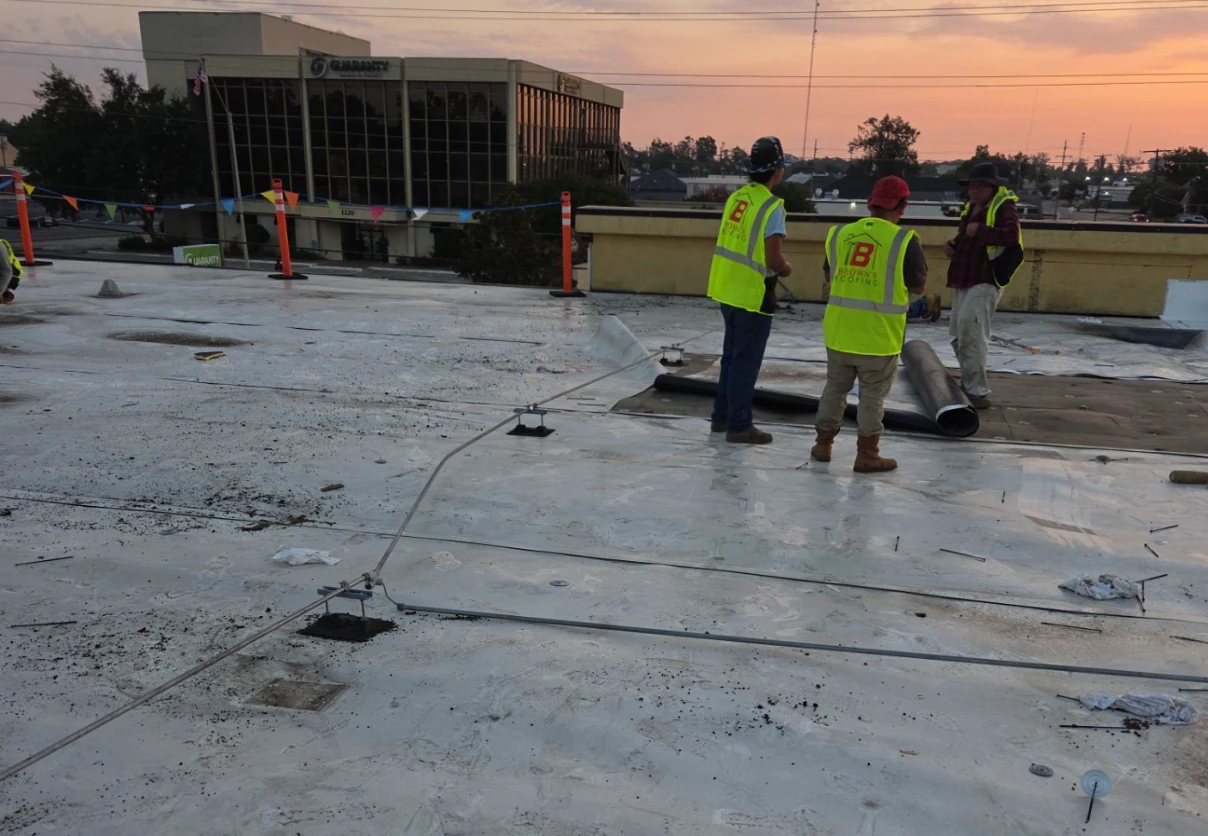
Early start on the existing roof. Everything above the deck came off before a single new layer went down.
Here's what we tell every commercial owner in the Ark-La-Tex: a warranty means nothing if the substrate under it is wet. You can lay a beautiful 20-year membrane over a soaked deck and it will still fail — the paperwork just says otherwise. Trapped moisture is one of the most common and most expensive ways commercial roofs die early, and it's almost always preventable. We break down the usual culprits in what causes commercial roof leaks and how to prevent them.
Testing Comes Before the Tear-Off
Would you let a surgeon cut on you before running a single test? Of course not. A good surgeon scans, images, and documents before anyone picks up a scalpel. Roof surgery is no different, and skipping the tests is exactly how this building ended up with a five-year roof.
So before we wrote a line of a proposal, we went up and found out what was actually there. That's not a courtesy step. Guessing costs the building owner twice — this owner had already paid for a roof once. The point of testing was to make sure the roof we installed in 2025 was the last one that building needed for a long time, not another guess with a warranty stapled to it.
How to Test a Commercial Roof Before a Reroof: 4 Steps
- Pull the leak and repair history. Where has it leaked, how often, and what's been patched? Water travels sideways on a flat roof, so a ceiling stain rarely sits under the actual breach.
- Run a moisture survey of the existing assembly. Infrared, impedance, or nuclear readings map where the wet insulation is hiding. Trapped moisture doesn't announce itself from the parking lot.
- Verify with core samples. This is the step contractors skip. Per NRCA's Professional Roofing, infrared and impedance readings are only relative or qualitative — the industry standards require invasive verification by core cuts, and noninvasive meters complement that work rather than replace it. A core cut is the most honest tool we have: cut it, and the roof stops lying to you. We walk through what one shows in what is a core sample in commercial roofing.
- Check deck condition and drainage. Bowed board, a soft deck, or standing water rules out the cheap fix before anyone proposes it. On larger or trickier assemblies we'll bring in infrared from above, covered in our piece on thermal scans for commercial roofing systems.
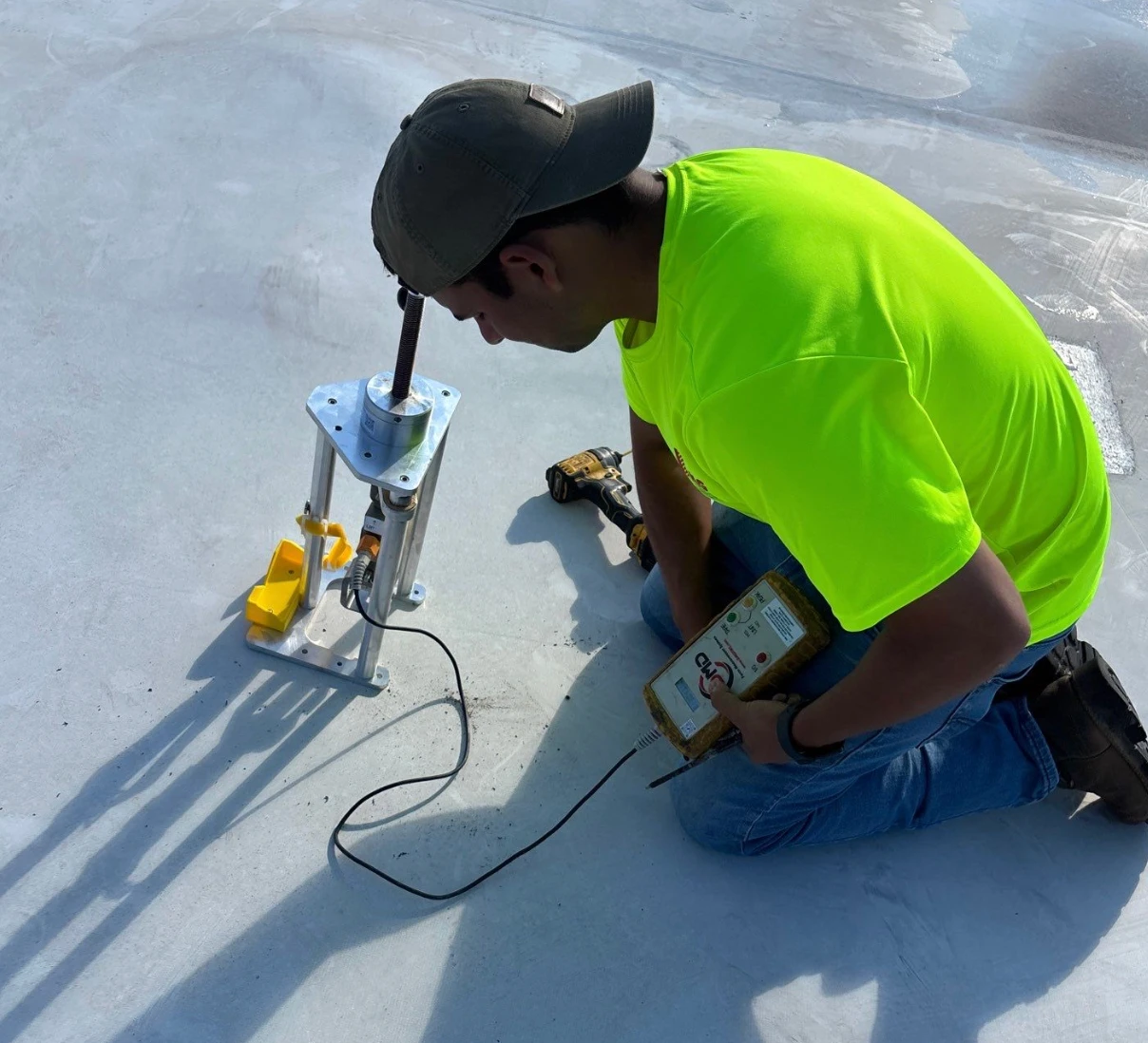
Field testing the existing assembly. This is the work that decides whether a building gets an overlay or a tear-off — and it happens before the proposal, not after.
What We Found and What We Specified
The testing settled the debate fast. With the ISO bowed and moisture throughout the assembly, an overlay — laying a new membrane over the existing roof — was off the table. You can't build a dry, flat, warrantable roof on top of wet, warped insulation. That's the difference between a real fix and covering up the last contractor's mistake.
We specified a full tear-off to a sound deck. Everything wet came off. On a clean, solid deck, the new system went down in this order:
- New 3" ISO insulation — a dry base with real R-value that gives the membrane the flat, stable surface it needs. Insulation and cover board choice is where a lot of single-ply jobs are quietly won or lost; more on that in our guide to coverboards for single-ply roofing.
- GAF 60-mil TPO membrane with a 20-year warranty — a manufacturer-backed system installed to spec by a certified crew, which is what makes the warranty actually hold.
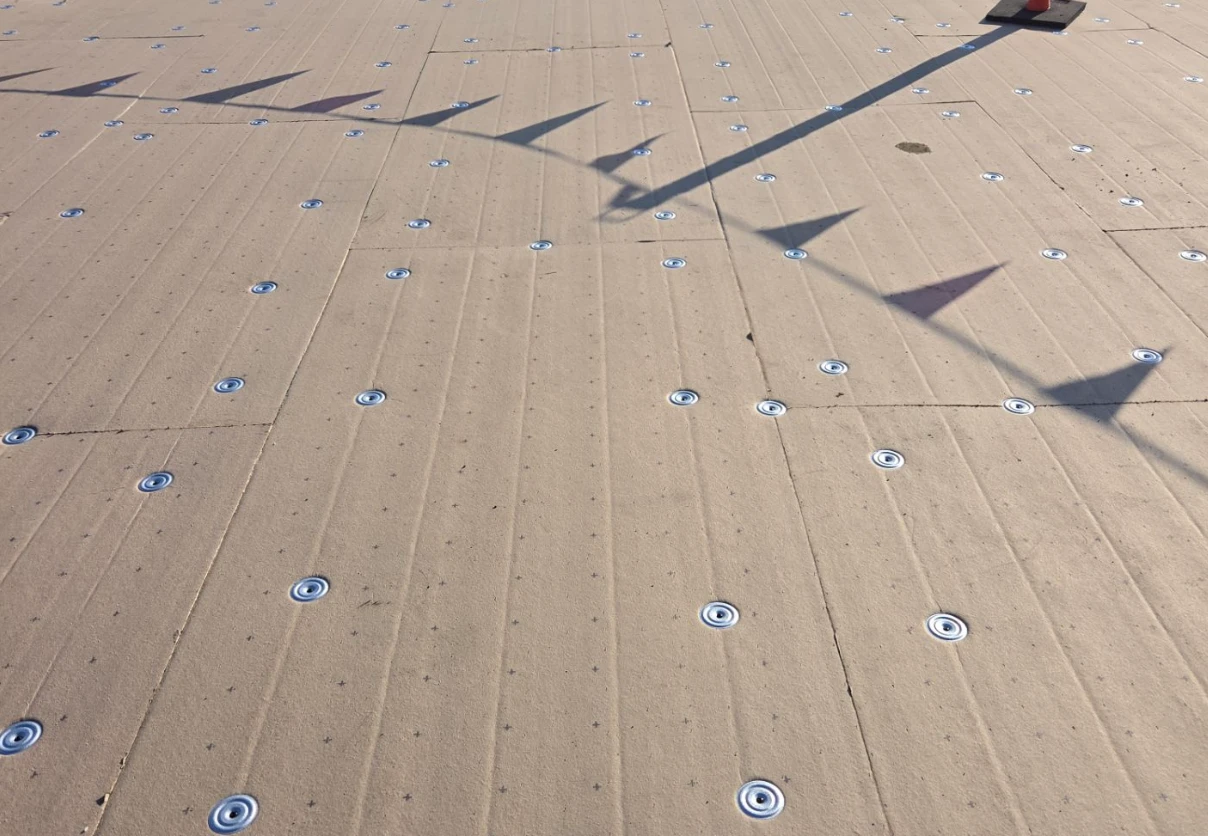
Dry board, fastened on a clean deck, laid out flat. This is the layer that decides how long the membrane above it lasts.
Why 60-mil and Not Something Thinner
Because of where this building sits. Monroe summers are long and hot, and a white membrane bakes under full UV for months. Add the humidity, the pop-up storms, and the reality that flat roofs hold water no matter how well they drain. Sixty-mil TPO membrane puts more material between the sun and the insulation, resists punctures from foot traffic and service techs, and gives you more to work with at the seams — which is where single-ply roofs tend to fail first. In this climate, that extra thickness isn't a luxury.
Reroofing a Live Store vs. an Empty Building
Anybody can reroof a vacant building. You open it up and take your time. Reroofing an operating store — customers walking in, product on the shelves — is a different discipline, and it's where contractors get people in trouble.
The difference is what's directly beneath your feet. Everything you do up top has a consequence down below: dust sifting through deck seams, debris, and the risk of an open roof when a northeast Louisiana thunderstorm rolls in that afternoon. So the job gets planned around the business, not the other way around:
- Interior protection and containment below the active work, keeping dust and debris off product and out of the customer space.
- Sequenced tear-off and dry-in. We only open what we can button back up the same day. No section goes home overnight exposed to the sky.
- Weather-window discipline. You plan around the forecast, not against it. Same-day dry-in is non-negotiable with a business running underneath.
- On-site supervision and daily cleanup, so problems get caught in real time and the property looks like a job site that respects the tenant.
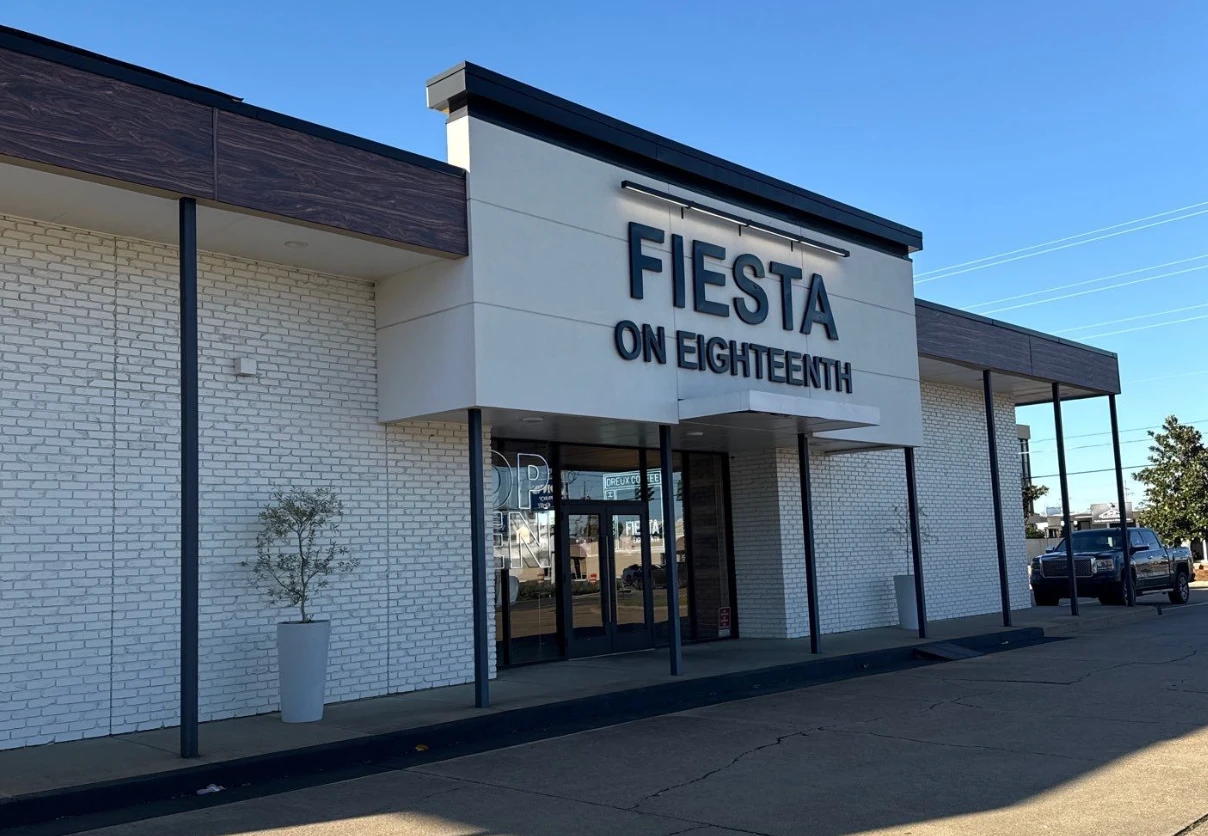
Doors open, shelves stocked, new roof overhead. The store never went dark.
The owner couldn't afford to go dark, so we didn't ask him to. We coordinated around store hours, staged the work so shelves stayed stocked and doors stayed open, and kept the owner and his staff current on what was happening each day. A live-facility reroof lives or dies on communication. The outcome: a store that never closed, and a documented, warrantied 20-year roof replacing one that failed in five.
Why Monroe Building Owners Trust Brown's on Live-Facility Work
Brown's is a stable local contractor. We're not a storm-chaser who blows into Ouachita Parish after a hailstorm and disappears before the warranty ink dries. We were here before your roof failed and we'll be here if it ever needs us again.
That matters twice over. The documentation we build during testing is something an owner can hand to an insurer or a future buyer — proof of what was there, what we found, and what we installed. And our installs are manufacturer-certified, which is what makes a 20-year GAF warranty stick. A warranty is only as good as the crew that earns it.
Frequently Asked Questions
Can you replace a commercial roof while my business stays open?
Yes. It comes down to sequencing the tear-off and dry-in so the roof is never left open, protecting the interior below the work, and coordinating around your business hours. A live-facility reroof takes more planning than a vacant one, but the doors don't have to close.
Why did my TPO roof fail only five years after an insurance replacement?
Almost always because moisture got trapped in the assembly. If wet insulation is covered instead of removed — or new layers go on damp — the water can't dry out under a single-ply membrane. It saturates and bows the ISO board and leaks into the building. A membrane warranty can't save a wet substrate.
What testing should a roofer do before quoting a commercial reroof?
At minimum: a moisture survey of the existing assembly, an inspection of insulation and deck condition, and a look at drainage. Core samples and infrared thermal scans confirm exactly where moisture is hiding. Anyone quoting a reroof without checking what's underneath is guessing with your money.
What's the difference between a roof overlay and a full tear-off?
An overlay lays a new membrane over the existing roof — faster and cheaper, but only valid when what's underneath is dry and sound. A tear-off removes everything to the deck and rebuilds the system. When testing finds trapped moisture or bowed insulation, an overlay just buries the problem.
How thick should TPO and insulation be on a commercial roof in Louisiana?
For this climate we generally spec 60-mil TPO, which holds up to intense UV, heat, ponding, and foot traffic far better than thinner membrane. Insulation depends on the building and code, though 3" of ISO gives solid R-value and a dry, flat base. Pricing depends on roof size, slope, complexity, access, and material specification — we provide a written estimate after a free on-site inspection, and we cover what drives the number in our overview of commercial roofing costs in Louisiana.
How do you protect the inside of a store during a reroof?
Containment and interior protection below the active work areas keep dust and debris off equipment, product, and customer spaces. We open only what we can dry in the same day, supervise on site, and clean up daily. The goal is that your customers never know there's a crew on the roof.
Get an Honest Look at Your Roof
If you own a commercial building in Monroe and something about your roof doesn't sit right — recurring leaks, soft spots, or a reroof that's younger than it should be — get it looked at before it becomes another five-year failure. Brown's will come out, run the tests, and tell you what's actually going on up there. With permanent offices and local crews in Monroe, Shreveport, Baton Rouge, and Lafayette, plus Little Rock and Wichita, we handle commercial roofing across Louisiana, Arkansas, and Kansas. Call (318) 329-6579 for a free inspection with same-day response — no pressure, no scare tactics, just the straight answer backed by what we find.