Commercial Roof Repair
Documented. Warranted. Fast.
A commercial roof leak is a business problem, not just a building problem. Brown's Roofing responds fast, diagnoses correctly, repairs to manufacturer specification, and delivers the documentation your warranty compliance and facility records require — across every major commercial roofing system.
Why Commercial Repair Is Different
Commercial Roof Repair Isn't Residential Scaled Up
Commercial roof repairs aren't larger versions of residential repairs. The systems are fundamentally different — flat and low-slope membranes, complex equipment penetrations, drainage infrastructure, and manufacturer warranty requirements that can be voided by improper repair methods or non-approved materials.
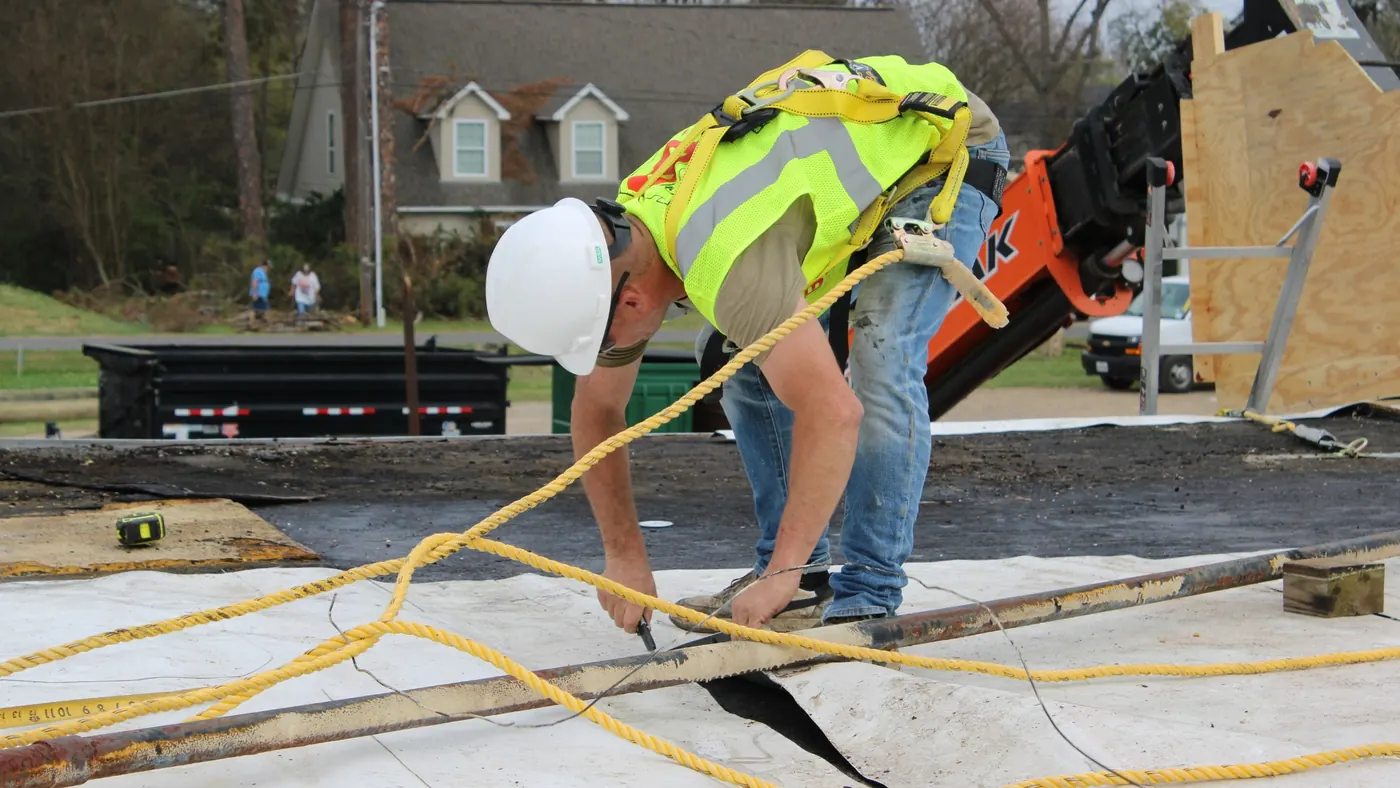
Beyond the technical differences, the stakes are higher. A leaking commercial roof interrupts operations, damages inventory, compromises tenant relationships, and creates liability exposure. Speed matters — but so does doing it right. Brown's Roofing is equipped to do both: rapid emergency response, accurate diagnosis, manufacturer-spec repair, and complete documentation.
Every commercial roof repair we perform comes with written documentation: a pre-repair condition report, a repair scope and photos, and a post-repair completion record. This isn't a courtesy — it's required for warranty compliance and informed capital planning. Property managers and facility managers who work with us know that every job generates a record they can share with ownership and future buyers.
We carry manufacturer certifications across the major commercial systems (TPO, PVC, EPDM, Mod-Bit, BUR, metal) so we can perform warranty-compliant repairs without voiding your roof's coverage. Repairs by uncertified contractors using non-spec materials can void manufacturer warranties — we always confirm the warranty status before work begins.
Our Repair Process
Emergency Containment
If water is actively entering the building, we deploy emergency tarping, temporary membrane patches, or interior drain pans to stop damage before the permanent repair begins. Stops the bleeding while the diagnosis happens.
Root Cause Investigation
We perform an IR (infrared) scan, water test, probe inspection, or visual survey — whichever is appropriate — to locate the true leak source. Commercial roof leaks rarely originate where they show up inside; we trace water back to the actual entry point.
Written Scope & Documentation
Every repair comes with a written scope, photographic documentation of the failure mode, and a cost estimate before work begins. You receive this documentation for your facility records and warranty file.
Repair to Manufacturer Spec
We use manufacturer-approved materials and methods to ensure your warranty remains intact. No shortcuts, no mismatched materials. Heat-welded seams on TPO/PVC; cold-applied patches on Mod-Bit; matching color and gauge on metal.
Post-Repair Documentation
After the repair, you receive a written completion report with before-and-after photos, materials used, and any warranty implications. Critical for warranty documentation, facility records, and long-term capital planning.
Common Failure Modes
How Commercial Roofs Actually Fail
Commercial roof failures follow predictable patterns. Knowing what to look for is the difference between catching a problem early and dealing with a flood.
Seam Separation
Most commercial roof leaks originate at seams that have separated. On TPO/PVC, this is welds that have failed; on EPDM, adhesive or seam tape that has broken down; on Mod-Bit, plies that have separated. Catchable in inspection before they become active leaks.
Failed Pipe Boots & Curbs
Penetrations (vents, drains, HVAC curbs, pipe boots, skylights) crack and lose their seal long before the field membrane fails. The leading source of "sudden" leaks that show up in inspection-deferred roofs.
Edge & Perimeter Failure
Edge metal, drip edge, parapet caps, and termination details are exposed to maximum wind and thermal cycling. They fail first in storm events and on aging roofs alike.
Drain & Scupper Issues
Clogged or undersized drains and scuppers create ponding, which kills membranes. The leak isn't at the drain itself — it's where the ponding water finally finds the weakest point in the membrane.
Hail & Wind Damage
Storm impact creates membrane bruises, surface damage, and lifted shingles or membrane that don't always show as immediate leaks but compromise long-term performance. Often requires insurance documentation.
Aging & UV Degradation
All membranes age. The signs — granule loss on Mod-Bit, chalking and fade on TPO/PVC, cracking on EPDM — predict where the next leak will appear. Pre-failure repair is far cheaper than post-leak response.
What We Repair
Commercial Roof Repair Services
Across every major commercial roofing system. Most repairs are completed in 1–5 working days after diagnosis.
Emergency Leak Response
When a roof fails during business hours or after a storm event, every minute counts. We dispatch fast, deploy temporary tarping or membrane patches to stop water intrusion immediately, and begin the permanent repair process — minimizing operational impact and interior damage.
Same-day response goal
Membrane Seam Repair
Failed seams are the leading cause of commercial roof leaks. We identify seam separations, fish-mouthing, blistering, and delamination across TPO, PVC, EPDM, and Mod-Bit systems and re-weld, re-bond, or patch to manufacturer specification — preserving the warranty.
Typically 1–3 days
Flashing & Edge Metal
Perimeter flashing, edge metal, parapet caps, and roof penetration flashings are the highest-failure points on commercial roofs. We repair and replace to manufacturer specification with full photographic documentation and warranty-compliant materials.
Typically 1–5 days
Ponding Water Correction
Flat roofs that pond water after rain are being systematically damaged — biological growth, granule loss, and accelerated UV degradation. We identify drainage failures (clogged drains, failed scuppers, deflected deck), correct slope where possible, and repair the membrane damage.
Typically 2–7 days
Penetration & Equipment Curbs
HVAC curbs, pipe boots, skylights, and rooftop equipment penetrations are common failure points where temperature cycling, vibration, and equipment movement break the waterproofing seal. We re-flash and re-seal around all equipment types without disturbing the surrounding membrane.
Typically 1–3 days
Blister & Bubble Repair
Membrane blisters indicate moisture trapped between membrane plies or between membrane and substrate. Left unaddressed, blisters rupture and become active leaks. We identify the source, open and dry the affected area, and apply proper repair protocols to restore waterproofing integrity.
Typically 1–4 days
Storm Damage Repair
Wind uplift, hail impact, wind-driven debris, and tornado damage require prompt documentation and repair to preserve warranty coverage and prevent secondary water damage. We respond fast, document the full extent of damage with photos and written reports, and complete repairs to manufacturer spec.
Emergency response goal
Modified Bitumen Patch
Torch-applied and cold-applied repairs to Mod-Bit and built-up roofing (BUR) systems. We match materials to your existing specification and restore waterproofing integrity without disrupting surrounding membrane. Cold-process used near sensitive interior contents.
Typically 1–2 days
Decision Framework
Repair, Coat, or Replace?
Three common paths for an aging commercial roof. We help you choose the one that fits your roof condition, capital plan, and operational priorities.
Repair
Localized failures, structurally sound roof, 5+ years of remaining life. Lowest cost, fastest turnaround.
Coat (Restoration)
Aging but sound roof, no wet insulation, want 10–15 more years without tear-off. 30–50% of replacement cost.
Replace
End-of-life roof, widespread failures, wet insulation, structural issues. Full tear-off and new system installation.
Diagnostic Tools We Use
Infrared Moisture Scan
Identifies wet insulation beneath the membrane — critical before any repair, coating, or recover decision.
Water Testing
Controlled water application to isolate exact leak source on roofs with multiple suspected failure points.
Probe / Cut Sample
When non-destructive methods are inconclusive, a small membrane cut confirms substrate condition and insulation moisture.
Photo & Written Documentation
Every diagnosis comes with photos and a written report — for your warranty file, facility records, and capital planning.
FAQ
Commercial Roof Repair FAQ
- For active emergency leaks during business hours, our goal is same-day response — dispatching a crew to deploy temporary protection and begin diagnosis. For after-hours emergencies, response is typically next morning unless the situation is life-safety critical. Permanent repair scheduling depends on diagnosis complexity and material lead times, but most repairs begin within 3–5 business days of the initial call.
- Not when repairs are performed using approved materials and methods. Brown's Roofing holds GAF Gold Elite Commercial and GAF CoatingsPro certifications, and we repair across all major commercial systems (TPO, PVC, EPDM, Mod-Bit, BUR, metal) to the original manufacturer's published specifications — pulling technical-services bulletins from the original manufacturer when needed to confirm warranty-compliant materials and details. Repairs by uncertified contractors using non-spec materials can void warranties — we always check the warranty status before work begins.
- Generally, repair makes sense if the roof is structurally sound, the failure is localized, and the system has at least 5 years of remaining service life. Replace makes sense if there's widespread membrane failure, multiple active leaks across the field, wet insulation in significant areas, or the roof is at end of expected life. A coating restoration may be a third option for roofs that need help but don't require full replacement. We give you an honest assessment with all three options where applicable.
- Repair costs vary widely based on scope. Small emergency leak repairs (seam re-weld, single penetration patch) are the lowest tier; mid-scale repairs (multiple penetrations, sections of flashing, drain replacement) are mid-tier; larger repairs approaching partial re-roof are the largest scope. We provide a written estimate after diagnosis — no work proceeds without scope and pricing approval.
- Yes. The majority of commercial roof repairs we perform are on systems installed by other contractors. We work with all major commercial systems (TPO, PVC, EPDM, Mod-Bit, BUR, metal) and all major manufacturers. We can also help establish maintenance documentation on roofs where the original contractor is no longer available — useful for warranty preservation going forward.
- A standard inspection includes visual survey of the entire roof field, examination of all penetrations and equipment curbs, inspection of edge metal and termination details, drainage assessment (drains, scuppers, slope), seam-and-flashing condition check, photographic documentation of any concerns, and a written report with prioritized findings. Inspections typically take 1–4 hours depending on roof size and complexity.
- Yes. We document storm damage with photos and written reports, can be present during your insurance adjuster's inspection, and complete repairs to manufacturer specification and building code. We provide a detailed estimate showing the scope and cost of repairs needed. Any questions about what your policy covers or what the adjuster should approve belong to your insurance company or a licensed public adjuster or attorney.
Commercial Repair in Your Market
Local commercial teams with fast response across all six office locations.
Commercial Roofing
Commercial Roof Leak? We Respond Fast.
Call us or submit a request. We'll dispatch, assess, document, and give you a written scope before any work begins.