
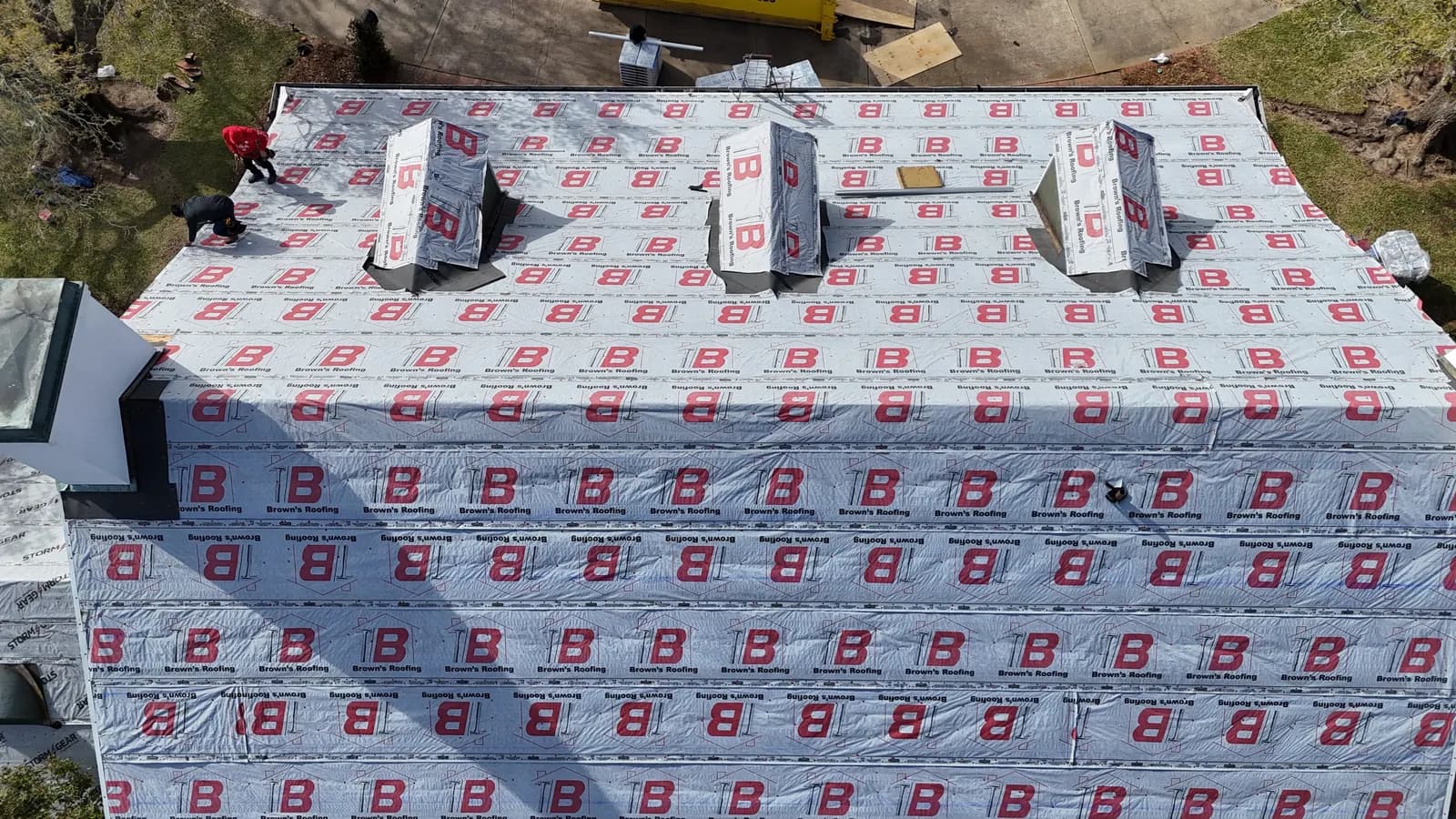
Residential Roof Replacement
Done Once. Done Right.
Most homeowners only replace their roof once or twice in their lifetime. The decisions on material, impact rating, FORTIFIED upgrade, ventilation, and flashing detail shape your home's protection for the next 25 years. We're the experts who walk you through your options and install at manufacturer spec.
When Replacement Is the Right Call
Repair Until You Can't. Then Replace Right.
Most roofs don't fail all at once. They degrade gradually — granules wash away, shingles curl, flashings separate — until there are enough failure points that repair becomes a game of whack-a-mole. When you're fixing the same roof twice a year, or the damage is widespread across the field, replacement is usually the more cost-effective decision over a five-year horizon.
Brown's Roofing gives you a straight answer. We measure the actual condition of your decking, shingles, ventilation, and underlying system — not just the symptom you called about. If your roof is 12 years old and showing one failed pipe boot, that's a routine repair conversation, not a full-replacement conversation. If it's 22 years old with widespread granule loss in the gutters and three active leak points, replacement protects your home and your budget long-term. Many of the replacements we install are not insurance-driven — they're homeowners on their own timing who decided the roof had run its course.
Replacement is the natural moment for upgrades that pay back over the ownership horizon. Class 4 impact-rated shingles add a modest premium to project cost and qualify for significant homeowners premium discounts in hail-active markets — frequently penciling inside a 4–7 year window. FORTIFIED designation adds a modest premium over standard re-roof (often grant-eligible in Louisiana through the Fortify Homes Program) and qualifies for state-mandated wind discounts in LA, AL, MS, and SC. Standing-seam metal costs more up-front but lasts roughly 2× the service life of architectural asphalt and handles sustained wind exposure better than nearly any alternative. We walk you through the trade-offs with real numbers — not generic claims.
Storm damage — hail, wind, falling trees, hurricane — is one path to replacement among several. If a covered peril caused damage that exceeds your deductible, your homeowners policy typically covers replacement if the damage exceeds your deductible. Once your claim is approved, we complete the replacement to manufacturer specification and the approved scope. But plenty of replacements are simply end-of-life projects on the homeowner's timing, and that's most of what we do. We'll tell you which path fits.
10 Signs You Need a Full Replacement
- Roof is 20+ years old with widespread granule loss in gutters
- Multiple active leaks or repeated leaks at different locations
- Sagging or soft spots when walking the roof
- Documented hail or wind damage across the field (claim-eligible)
- Repair costs are approaching or exceeding 50% of replacement
- Daylight visible through the decking from inside the attic
- Curling, cupping, cracking, or missing shingles across the roof
- Selling the home; buyer financing requires a clear inspection report
- Insurance carrier requires a roof of certain age or condition
- Existing two layers of shingles already (overlay no longer permitted)
Repair vs. Replace?
Under 15 years old, localized damage, structurally sound — repair. Over 20 years, widespread damage, multiple leaks, soft decking — replace. Storm damage triggering claim-eligible replacement falls in either bucket depending on scope.
View Roof Repair →Replacement Material Options
Six Residential Replacement Systems
Every material has a different cost, lifespan, and performance profile. We help you choose based on your home, climate, ownership horizon, and insurance carrier's discount structure.
Asphalt Shingles (Architectural & Class 3/4)
The default residential replacement. Class 3 impact-rated as our recommended baseline; Class 4 in hail belts. Manufacturer-certified install with system warranties from GAF, Owens Corning, and CertainTeed.
Learn more →
Metal Roofing
Standing seam, exposed-fastener, stamped shingle, or stone-coated steel. Long-term ownership horizon, hurricane-coast or hail-belt markets, deepest insurance discounts available.
Learn more →
Tile Roofing (Clay & Concrete)
Hurricane-coast and Mediterranean architecture default. FBC HVHZ-rated installation methods deliver 150 mph wind ratings. Structural review required for full-weight tile.
Learn more →
Slate Roofing (Natural & Synthetic)
Historic restoration, premier estate construction, and Class 4 synthetic for hail markets. Specialty trade required; we maintain a dedicated slate crew.
Learn more →
FORTIFIED Roof™ Designation
IBHS-certified construction standard. Documented insurance discounts in LA, AL, MS, SC. Louisiana Fortify Homes Program grants up to $10,000 for eligible homes.
Learn more →
Solar + Roof Replacement
Bundle solar with replacement to capture the federal 30% tax credit on supporting roof work. Avoids the costly remove-replace-reinstall cycle of solar over an aging roof.
Learn more →
Recent Replacements
Before, During, After
Documented tear-off and reroof on three recent residential projects. Same crew, same standard. Architectural shingle replacement on aged or storm-damaged roofs.
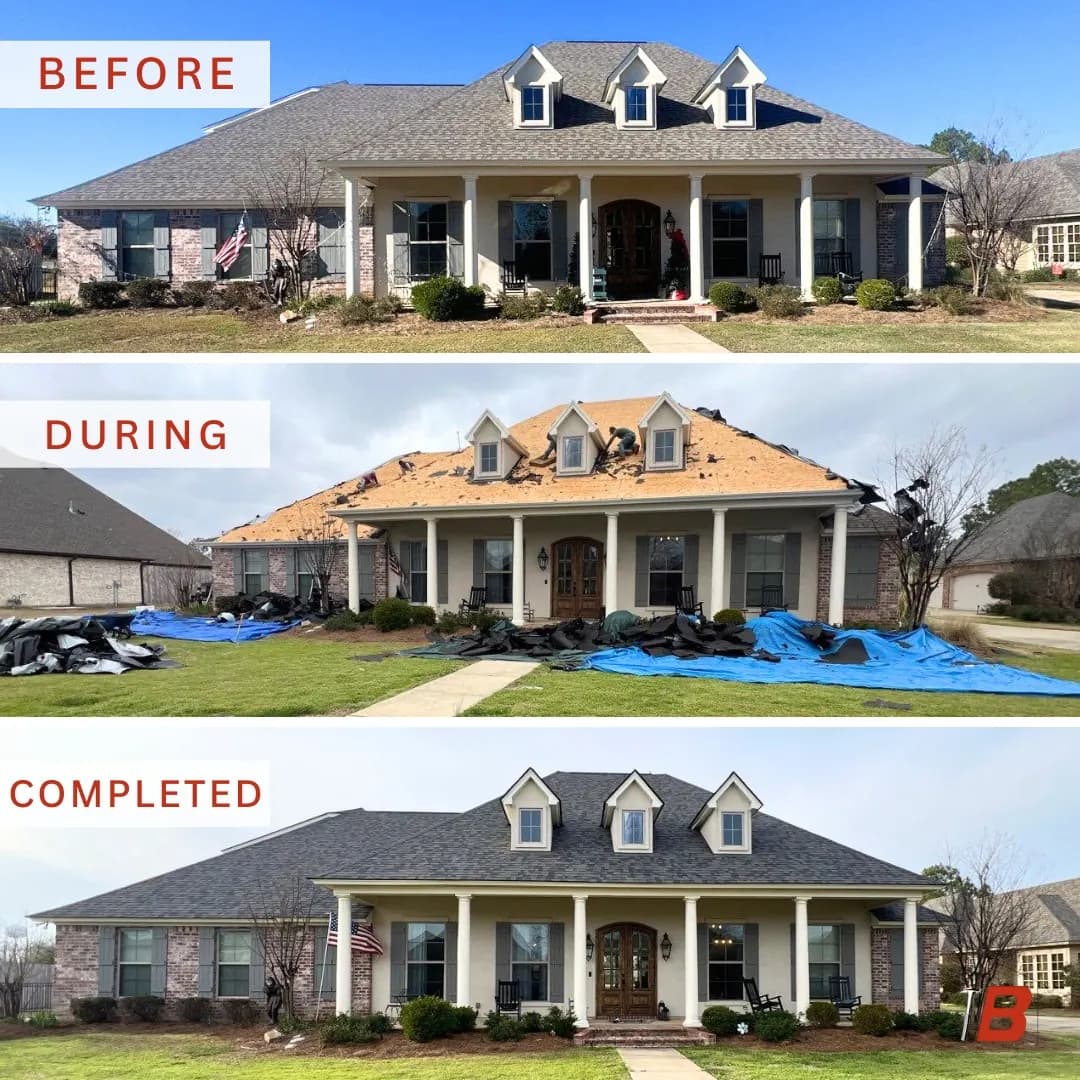
Before · During · After
Acadian-Style Three-Dormer Home
Full tear-off and architectural shingle reroof. Tarps and debris management on the during frame.
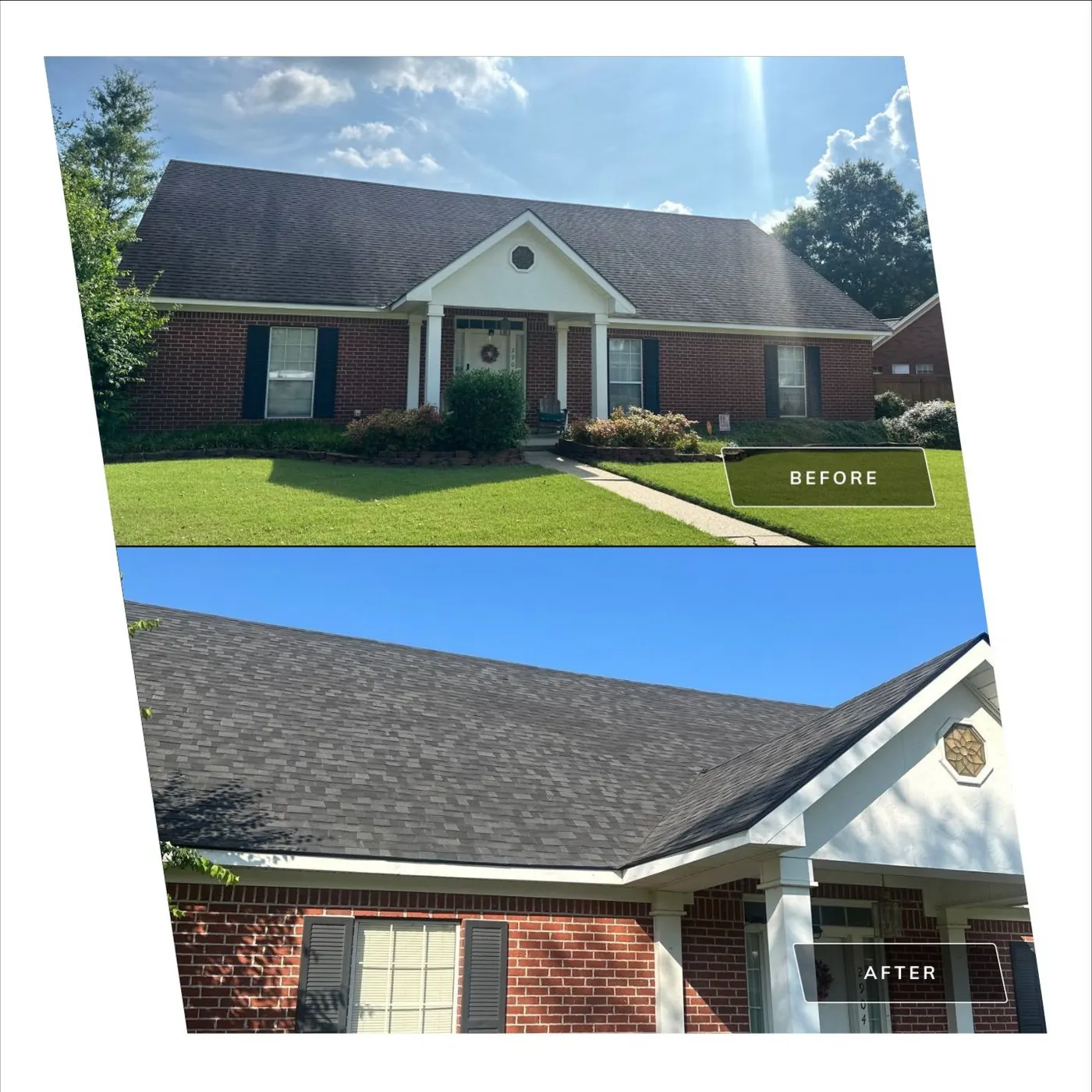
Before · After
Red-Brick Ranch Reroof
Aged shingles replaced with new architectural shingles in a darker palette. Crisp ridge and rake detail.
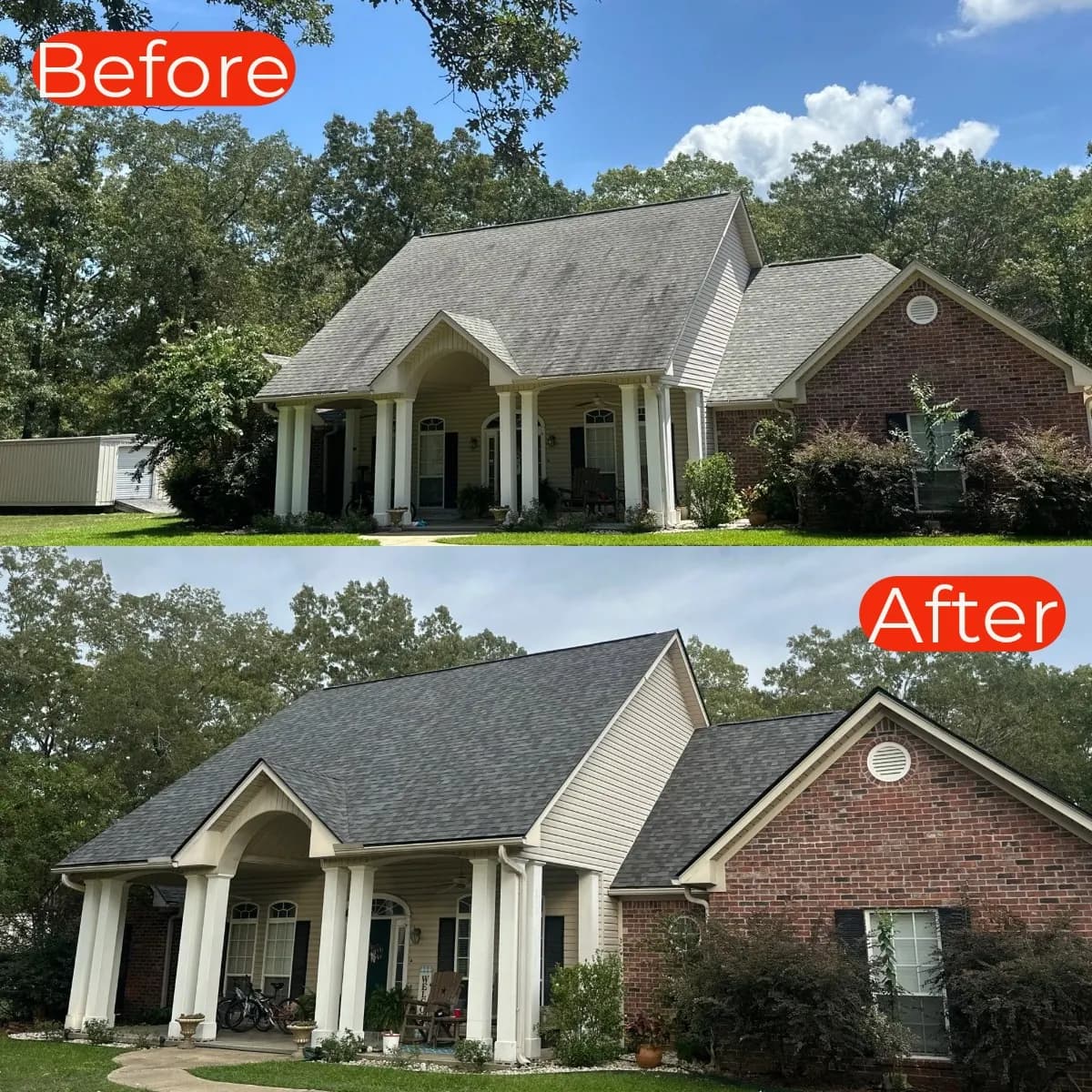
Before · After
Stained-Roof Replacement
Streaked and biologically stained roof replaced with clean architectural shingles. Soft-wash service is available as an alternative on roofs with life remaining.
What to Expect
The Brown's Roofing Replacement Process
Eight steps from first call to final cleanup. Documented at every stage so the next homeowner who buys the property has the records too.
Free Inspection & Honest Assessment
We inspect from the surface and the attic, document with photos, and give you a straight answer: repair, partial replacement, or full replacement. We don't push replacement when repair is right, and we don't skip replacement when the roof is at end of life and putting your home at risk.
Material Selection & Written Estimate
You receive a written, itemized estimate with material options at each tier — Class 3 vs Class 4 shingle, asphalt vs standing-seam metal, tile and slate where appropriate, FORTIFIED upgrade pricing. We walk you through trade-offs (lifespan, warranty, insurance-discount eligibility, cost-of-ownership) so you can decide based on real numbers, not marketing.
Storm-Damage Documentation (When Applicable)
If storm damage drove the replacement, we document damage with photos and a written report. You initiate the claim process with your insurer. We attend your adjuster's inspection at no charge to point out the damage we've documented, and complete the replacement to the approved scope once your claim is settled. Most replacements aren't insurance-driven — but when documentable damage is present, we document it thoroughly.
Permitting & Scheduling
We pull required permits in every jurisdiction we serve, coordinate with HOA architectural review where applicable, and schedule your project. Most residential replacements complete in 2–4 working days; weather can extend that. Solar bundling and FORTIFIED designations require additional inspection coordination.
Tear-Off & Deck Inspection
We tear off the existing roofing material, dispose responsibly, and inspect the decking for rot, soft spots, or previous water damage. Any decking that needs replacement is documented, photographed, and addressed before underlayment goes down — no unpleasant surprises after the new roof is on.
Underlayment & Detail Work
Synthetic underlayment (or peel-and-stick high-temp on premium specs and FORTIFIED), drip edge, ice-and-water shield at vulnerable areas, valley flashing, step flashing at walls, chimney crickets and saddles. The detail work is what determines whether the roof lasts the full warranty period or fails early.
Field Installation
Roofing material installed to manufacturer specification — proper nailing pattern, exposure, and sealing. Class 3 / Class 4 shingles use specialized fastener placement; FORTIFIED installs use ring-shank nails at code-plus spacing. We don't cut corners on the steps that determine warranty validity.
Final Inspection, Cleanup & Documentation
We walk the finished roof with you, point out what was done and where, and complete a thorough site cleanup including magnetic nail sweeps. You receive your warranty documentation, manufacturer system registration, and a written completion report with before-and-after photos before we leave.
Cost Factors
What Determines Replacement Pricing
Replacement pricing is driven by ten specific variables. We provide a written, itemized estimate after a free on-site inspection. Insurance-claim replacements typically cost the homeowner only the deductible plus elected out-of-pocket upgrades.
Relative tiers for a typical Southern home (1,800–2,400 sq ft of roof area):
- Architectural asphalt: Lower-cost baseline
- Class 3 / Class 4 impact-resistant: Modest premium over base asphalt
- Standing seam metal: Higher tier
- Tile and slate: Premium to top-of-market
- FORTIFIED upgrade: Modest premium over base
Pricing depends on roof size, slope, complexity, access, and material specification — we provide a written estimate after a free on-site inspection.
Request a Written Estimate10 Variables That Drive Replacement Cost
- 01Roof size (squares — 100 sq ft each — drive material and labor)
- 02Material chosen (asphalt baseline, metal/tile/slate ascending premium)
- 03Roof complexity (valleys, hips, dormers, turret transitions)
- 04Pitch (steeper roofs require fall protection and slow installation)
- 05Tear-off scope (single layer, double layer, decking replacement)
- 06Decking condition (rotten sheathing replacement adds cost and time)
- 07Underlayment specification (synthetic, peel-and-stick, high-temp)
- 08Flashing replacement (chimney saddles, valleys, step flashing)
- 09Code upgrades and FORTIFIED designations (where applicable)
- 10Insurance scope vs. out-of-pocket upgrades (often a hybrid)
Representative Project
Monroe, LA — Hail Claim + Class 4 Upgrade + FORTIFIED
Home Type
Two-story colonial, 4 bed
Roof Area
32 squares (3,200 sq ft)
Spec
Class 4 architectural + FORTIFIED Roof™
Out-of-Pocket
Deductible + modest upgrade differential
13-year-old asphalt roof with significant hail bruising following a spring storm event. Homeowner contacted Brown's Roofing for a roof inspection; we documented hail damage with photos and a written report. The homeowner filed a claim; we attended the adjuster's inspection to point out the documented damage. Carrier approved full replacement. Homeowner elected to upgrade to Class 4 impact-rated shingles and add FORTIFIED Roof designation, bundling the upgrades on top of the insurance scope. We applied for and received a Louisiana Fortify Homes Program grant covering most of the FORTIFIED differential. Total out-of-pocket was the deductible plus a modest Class 4 differential after the grant. Insurance carrier confirmed a 24% wind/hail premium reduction at next renewal — meaningful projected lifetime savings over the new roof's service life.
FAQ
Residential Roof Replacement FAQ
- Most residential architectural-asphalt replacements complete in 2–4 working days, weather permitting. Larger or more complex roofs (3,000+ sq ft, multiple slopes, decking replacement) can run 4–7 days. Standing-seam metal typically takes 4–8 days. Tile replacement averages 5–10 days. Slate is a multi-week project for full re-roofs. We give you a project timeline in the written estimate and update if conditions change.
- Pricing depends on roof size, complexity, material, decking condition, and code/FORTIFIED requirements. Relative tiers for a typical Southern home (1,800–2,400 sq ft of roof area): architectural asphalt is the lower-cost baseline; Class 4 impact-resistant adds a modest premium; standing-seam metal sits higher; full-weight tile is premium; natural slate sits at the top of the residential market. We provide a written, itemized estimate after a free roof inspection — no per-square-foot phone quotes.
- We strongly recommend tear-off in almost all replacement scenarios. Overlay (installing over an existing layer) saves a small amount short-term but compounds problems: the new roof can't be inspected for decking issues, warranty terms are typically shorter, ventilation is compromised, and the next replacement is more expensive. Most building codes prohibit overlay over two existing layers, and many manufacturer warranties exclude overlay installations. We'll quote both if you ask, but we'll explain why tear-off is almost always the right answer.
- Often yes, depending on your market and tenure. Class 4 impact-rated shingles add a modest premium and qualify for meaningful homeowners-insurance premium discounts in hail-active markets — payback typically lands inside a 4–7 year window. FORTIFIED designation adds a modest premium over standard re-roof (grant-eligible in Louisiana through the Fortify Homes Program in many cases) and qualifies for state-mandated wind discounts in LA, AL, MS, and SC. Ask your carrier or agent which discounts these upgrades qualify for so the after-discount math is real, not theoretical.
- Every roof replacement we install comes with two warranties: the manufacturer's product warranty (20–50 years on shingles, 30–50 years on metal, 50+ years on tile, 75–150+ years on natural slate) and our workmanship warranty (10 years standard on full replacements; extended terms available on premium installations). Brown's Roofing holds top-tier residential manufacturer certifications — GAF Certified Contractor, Owens Corning Platinum Preferred, CertainTeed SELECT ShingleMaster, IKO ROOFPRO Select — which means we register enhanced system warranties covering both materials and workmanship for 25–50 years on a single document.
- Four factors: climate exposure (hail belt, hurricane coast, freeze-thaw), ownership horizon (10 years vs. 30+), home's architectural style, and budget. Class 4 architectural asphalt is the right answer for most homeowners in hail-active markets — strong cost-per-year-of-service. Standing-seam metal pays back over long horizons and handles wind better than nearly anything. Tile and slate fit specific architectural and heritage settings. FORTIFIED makes sense on hurricane-coast properties where carrier discount and grant programs apply. There's no single right answer — we walk you through the trade-offs in person.
- If your roof has documented storm damage (hail, wind, falling debris, hurricane) and the damage exceeds your deductible, in most cases yes — homeowners insurance covers replacement minus your deductible. We document damage with photos and written report at your request. You contact your insurer to file the claim. We attend your adjuster's inspection at no charge to point out the damage we've documented. Once your claim is approved, we complete the replacement to manufacturer specification and the approved scope. We also help eligible homeowners apply for Louisiana Fortify Homes Program (LFHP) grants for FORTIFIED upgrades. Most replacements we install are not insurance-driven — they're homeowners on their own timing.
- Yes — when your replacement is part of a storm-damage claim, we attend the adjuster's inspection at no charge to point out the damage we've documented with photos and written reports. We provide our documentation as supporting evidence for your claim. We do not inflate estimates of damage, and we repair only to the scope your insurer approves.
Roof Replacement in Your Area
Local roofing crews with permanent offices — serving homeowners across Louisiana, Arkansas, Kansas, Alabama, Mississippi, Texas, and Florida.
Free Assessment
Time for a New Roof?
Free inspection, honest assessment, and a written estimate with no obligation. We'll tell you whether replacement is needed, walk you through your material options, and tell you which upgrades make economic sense for your home and tenure.