
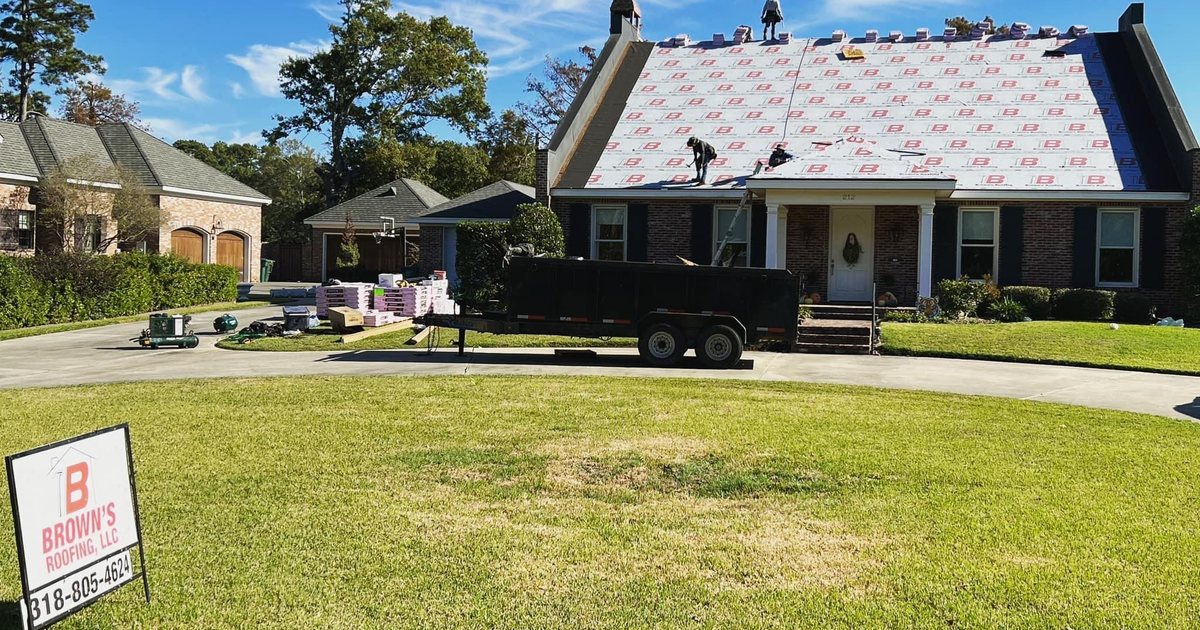
Most homeowners assume roof replacement is a spring-and-summer job. It isn't. Asphalt shingles can be installed in cold weather, and in much of our region winter is a perfectly workable season — as long as the crew changes how it handles, nails, and seals the shingles. The difference between a good winter roof and a bad one comes down to those procedures.
Here's what actually changes when the temperature drops, and how to tell whether your roofer is accounting for it.
The Short Answer: Yes, With the Right Precautions
Shingle manufacturers don't prohibit cold-weather installation. GAF's technical bulletin on temperature extremes states there's no practical lower temperature limit for applying asphalt shingles when appropriate precautions are taken, while noting that handling is easiest above 40°F.
That last part matters. Below roughly 40°F, shingles don't stop working — they just require more care. Cold asphalt is stiffer, more brittle, and slower to seal, and each of those has a specific fix.
What Cold Weather Changes About a Roof Install
Shingles Get Brittle
In very cold weather, shingles can crack, break, or delaminate when they're bent, and stiff shingles may not lie flat. That's a problem at hips, ridges, and valleys, where shingles have to be bent or folded. Good crews keep bundles in a warm place before installation, avoid throwing or dropping them, and handle hip and ridge caps with extra care.
The Seal Strip Takes Longer to Activate
Every modern asphalt shingle has a heat-activated sealant strip that bonds each course to the one below it. Sun and warmth activate it. In cold weather, that bond forms slowly, and how long it takes depends on roof slope, orientation, and sun exposure.
Until the strips seal, shingles depend on their nails alone to resist wind. When it's too cold for the sealant to activate reasonably quickly, manufacturers call for hand-sealing: applying dabs of approved asphalt roofing cement under the shingle tabs. That's slower work, and it's the step most often skipped by crews in a hurry.
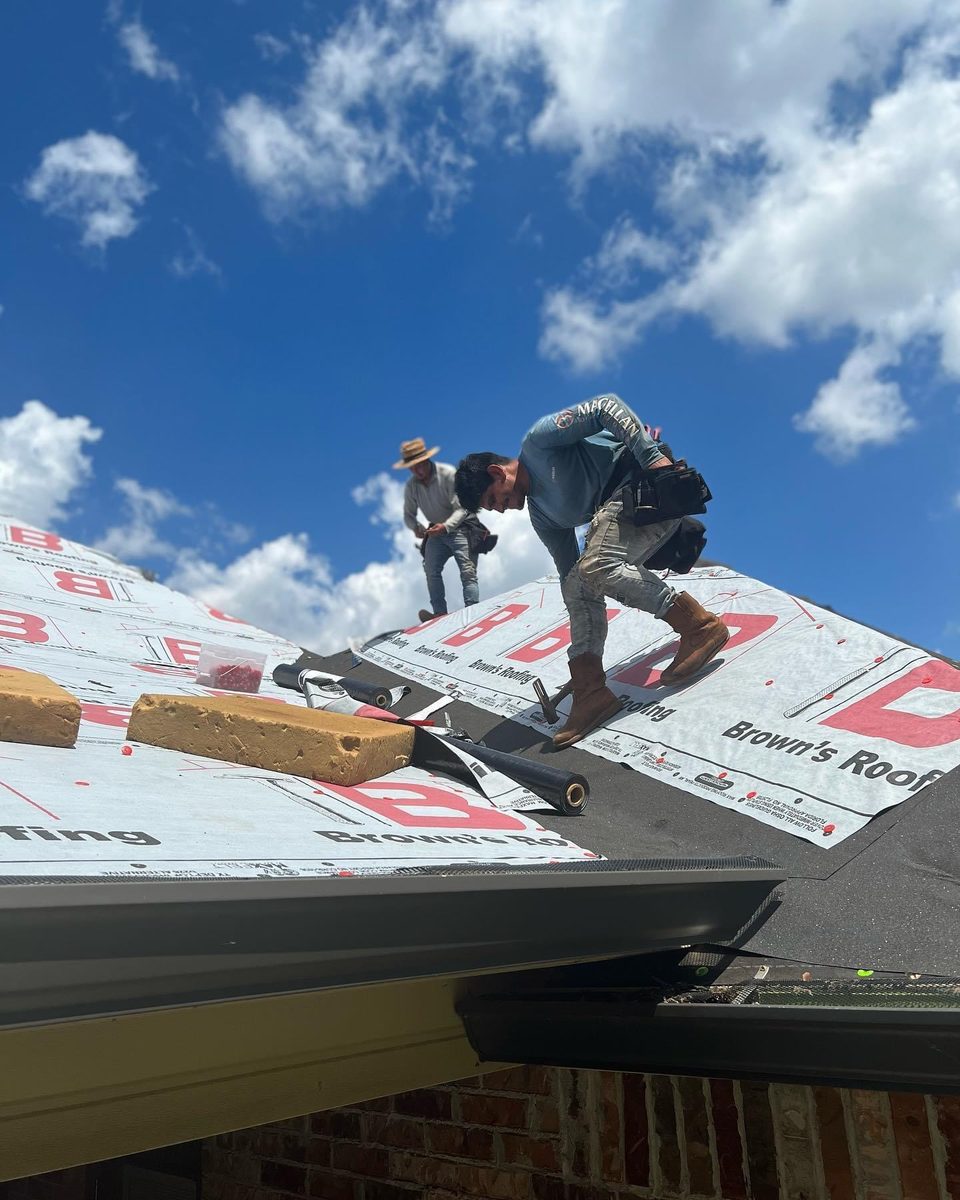
Above: shingles going down over synthetic underlayment. In cold weather, the seal strips on each course may need hand-sealing to bond before warmer days arrive.
Nailing Has to Be Precise
Cold shingles that don't lie flat are easy to overdrive. A nail driven through a shingle that's bowed off the deck can break through the surface and lose holding power. Crews need to confirm each shingle is flat before nailing and adjust air pressure on pneumatic nailers for stiffer material.
Valleys and Frost Need Attention
Because woven and closed-cut valleys require bending shingles, the Asphalt Roofing Manufacturers Association recommends open metal valleys for cold-weather work. Frost and ice also have to clear off the deck before work starts, which often means a later start on winter mornings and slightly shorter working days.
Winter Roofing in Louisiana, Arkansas, and Kansas
Winter isn't the same across our six markets, so the precautions vary too.
South and Central Louisiana
In Baton Rouge and Lafayette, many winter days are mild enough that shingles handle normally and seal within days. The bigger variables are rain and the occasional hard cold front. Crews schedule around wet days and hand-seal when a cold snap follows installation.
North Louisiana and Arkansas
Monroe, Shreveport, and Little Rock see more freezing nights and the occasional ice event. Morning frost delays are common, and hand-sealing is more often part of the plan. A roof installed in December may not fully self-seal until spring warmth arrives, which is exactly why hand-sealing exists.
Wichita
Wichita winters are genuinely cold, with stretches where shingles won't self-seal for weeks. Expect careful material storage, more hand-sealing, and more weather days on the schedule. In regions prone to ice damming, self-adhering ice-barrier underlayment at the eaves helps protect against water backing up under the shingles.
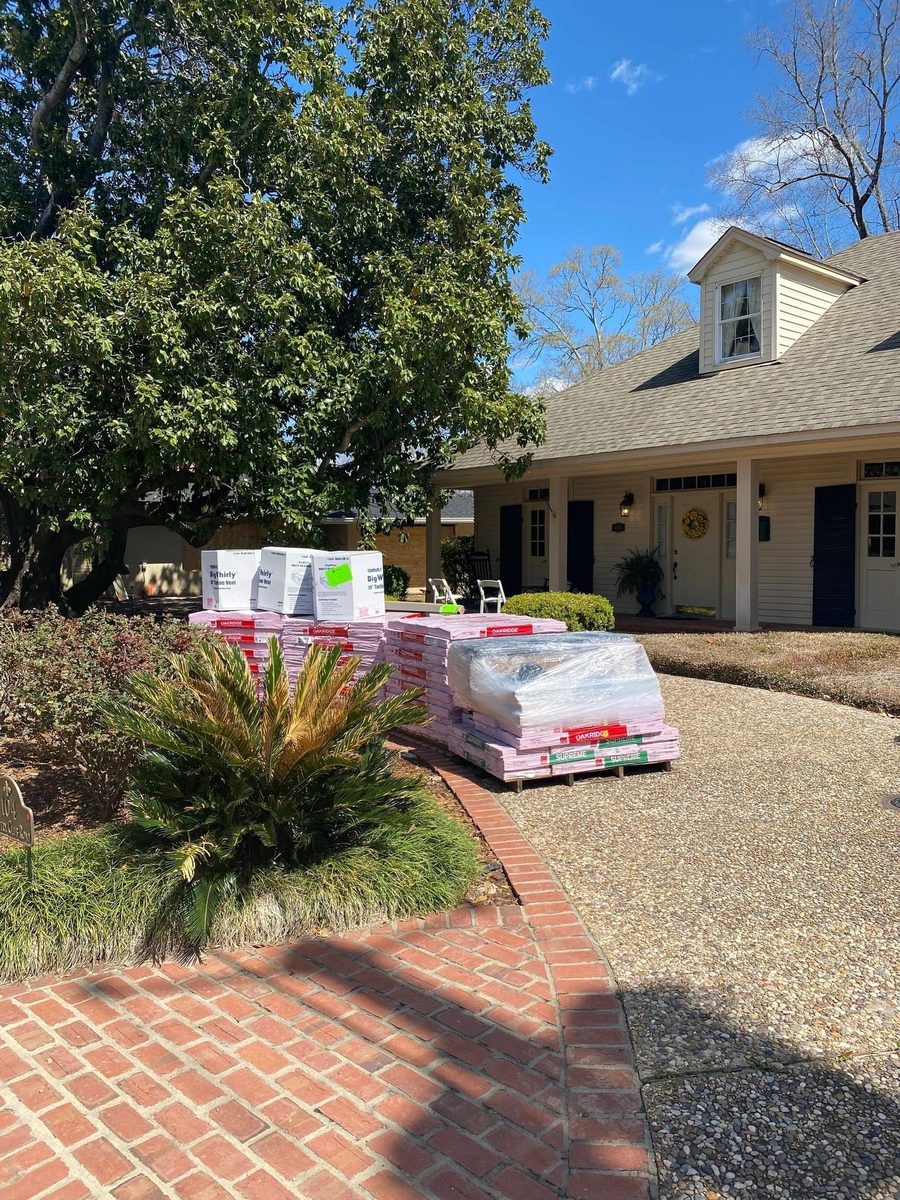
Above: shingle bundles staged before a replacement. In winter, how and where bundles are stored affects how well they install.
Advantages of Replacing Your Roof in Winter
- Scheduling. Spring storm season tends to fill roofing calendars quickly. Fall and winter often offer more flexibility on install dates.
- Ready before spring storms. A roof installed in winter is in place before hail and severe-weather season returns.
- No need to wait on a failing roof. A roof that's actively leaking or losing shingles won't get better by spring. Waiting usually means more deck rot and interior damage.
- Easier on the crew in some ways. Summer heat makes shingles soft and easy to scuff. Mild winter days are often comfortable working conditions.
When Waiting Makes Sense
Winter installation isn't right for every situation. Waiting a few weeks can be the better call when:
- A long stretch of hard freezes or ice is in the forecast
- Your roof is sound and you're replacing it for appearance or an upcoming sale with no deadline
- The specific product you've chosen has installation temperature requirements that a forecast won't meet
- Your project involves low-slope membranes or adhesives with minimum application temperatures
A good roofer will tell you plainly whether your dates work, rather than squeezing your roof in on a bad day. For more on what the season does to existing roofs, see our guide to common winter roof problems.
Questions to Ask Before a Winter Roof Replacement
- How will you store the shingles before installation? Warm, dry storage keeps them pliable.
- Will you hand-seal, and where? The answer should reference the manufacturer's instructions for your specific shingle.
- What valley method will you use? Open metal valleys avoid bending cold shingles.
- What happens if weather turns mid-project? Ask how the roof is protected overnight and on rain days.
- Does cold-weather installation affect my warranty? Following the manufacturer's cold-weather instructions keeps you covered. Skipping them can leave gaps, such as blow-offs that occur before the sealant activates.
Frequently Asked Questions
What is the minimum temperature for installing shingles?
There's no single code minimum. GAF states there's no practical lower limit with proper precautions, though shingles handle most easily above 40°F. Always follow the specific manufacturer's instructions for the product being installed.
Will my new shingles seal if they're installed in winter?
Yes, once temperatures and sun exposure are high enough to activate the sealant. Until then, hand-sealing and correct nailing keep the shingles in place.
Does a winter installation void my roof warranty?
Not when the manufacturer's cold-weather procedures are followed. Damage from skipped steps, like blow-offs before the sealant activates, may not be covered.
Does a winter roof replacement take longer?
Often slightly. Frost delays, shorter daylight, and hand-sealing can add time compared with the same roof in spring.
Can metal roofing be installed in winter?
Yes. Metal roofing panels aren't affected by cold the way asphalt is, though sealants, underlayment adhesion, and icy working surfaces still need attention.
Should I wait until spring to replace my roof?
Only if your roof is sound and the forecast is poor. If it's leaking or losing shingles, replacing it now protects the deck and interior.
Schedule a Free Winter Roof Inspection
If you're weighing a roof replacement this winter, Brown's Roofing will inspect your roof at no cost and give you a straight answer on timing. We work from local offices in Monroe, Shreveport, Baton Rouge, Lafayette, Little Rock, and Wichita. Pricing depends on roof size, slope, complexity, access, and material specification — we provide a written estimate after a free on-site inspection. Call (318) 329-6579.