
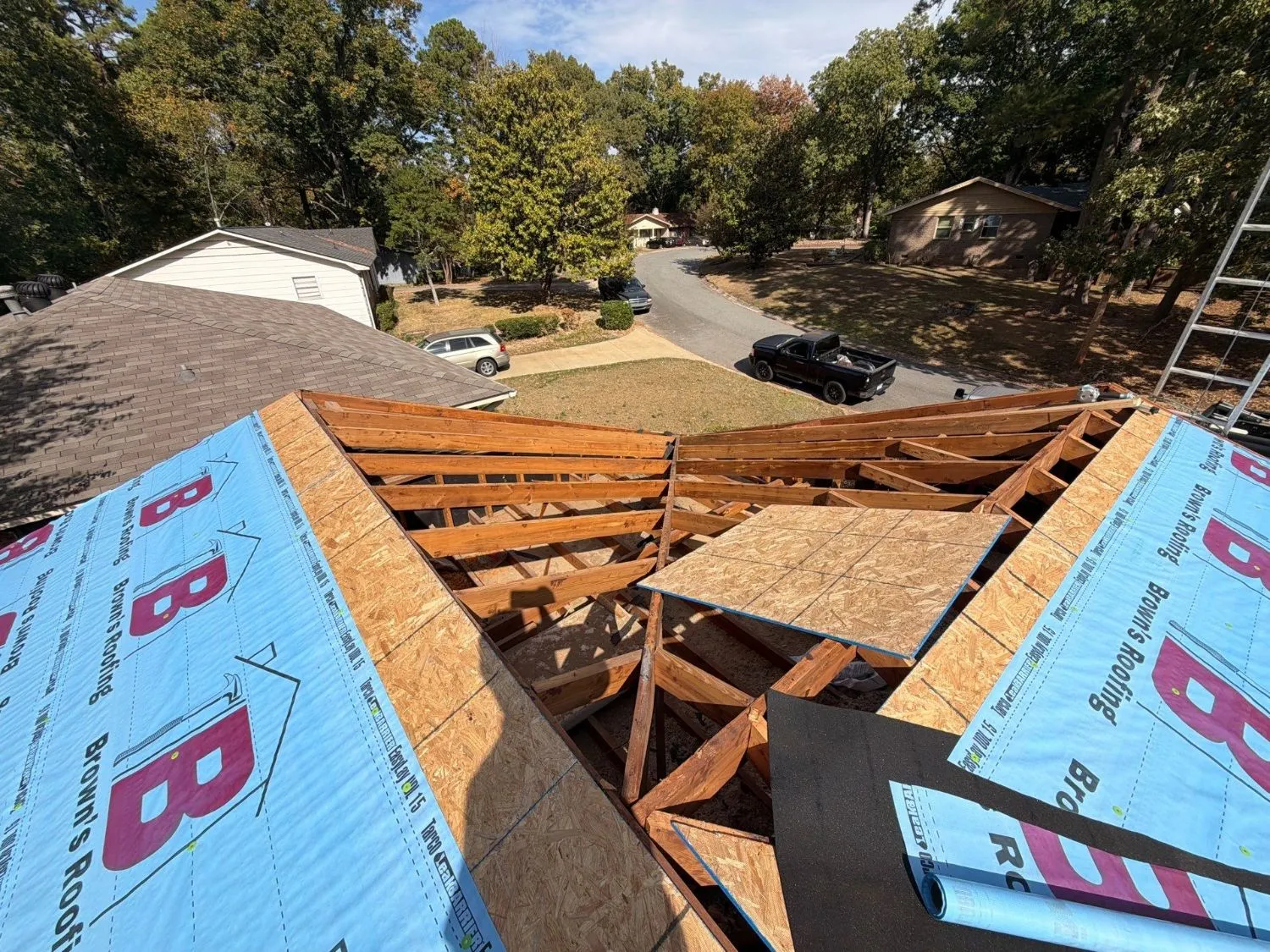
Yes, you can replace just one section of a shingle roof — when the damage is isolated, the remaining roof still has real service life, and the new section can be tied into the existing system correctly. When any of those three conditions fails, a partial replacement becomes a patch on a roof that's going to need the full job soon anyway. The decision comes down to what actually failed, what's under it, and what the roof you're keeping looks like up close.
Repair vs. Partial Replacement vs. Full Replacement
These get used interchangeably, but they're three different scopes of work:
| Option | What it involves | When it fits |
|---|---|---|
| Repair | Replacing individual shingles or fixing one flashing or penetration detail | The problem is small and the surrounding materials are sound |
| Partial replacement | Tearing off and re-roofing a defined area — usually one full roof slope | Damage is concentrated on that slope and the rest of the roof has years left |
| Full roof replacement | Tearing off and re-roofing every slope, with flashing, ventilation, and edge details addressed throughout | Wear or damage is widespread, or smaller fixes buy very little time |
A roof slope (also called a roof plane) is one continuous sloped surface running from eave to ridge or hip. When we do a partial replacement, we almost always replace a complete slope rather than cutting an irregular patch out of the middle of one. Hips, ridges, and valleys are natural stopping points; the middle of a field of shingles is not.
When Replacing One Section Makes Sense
The damage is truly isolated
A limb that came down on the back slope, wind that peeled shingles off one exposure, or an installation defect confined to one area can all leave the rest of the roof in good shape. The key word is isolated. A ceiling stain over the kitchen doesn't tell you where the water entered — it can run along the deck and rafters for several feet before it shows up indoors. A real inspection traces the leak to its entry point and checks the surrounding shingles, flashing, underlayment, and any accessible decking before anyone defines the scope.
The remaining shingles can survive the tie-in
Tying a new slope into an old one means working directly on the shingles that stay. At hips and ridges, the existing shingles on the adjacent slope have to be lifted and their nails pulled so the new underlayment can slide underneath. If those shingles are brittle — and in the Gulf South, years of heat and UV make that common on older roofs — they crack or tear when handled. Then the job grows past the line on the estimate.
Roof age is useful context, but condition decides it. A well-ventilated 12-year-old roof can be in better shape than a poorly ventilated 8-year-old one.
The replacement shingles are compatible
A replacement shingle has to fit the existing roof in more than color. Its dimensions, exposure, and nailing zone need to work alongside what's already there, especially where courses meet at a hip or valley. A good contractor identifies the existing product where possible and confirms the replacement will actually integrate before ordering material.
The new section can be integrated correctly
Shingles are the visible layer, not the whole system. A proper partial replacement also accounts for:
- Underlayment and how the new layer laps under the existing roof
- Hip and ridge caps, including any ridge vent
- Valleys where the new slope meets an old one
- Step and wall flashing, chimney flashing, and pipe boots
- Drip edge and other roof-edge details
- Decking that turns out to be soft or damaged once the old roofing comes off
Manufacturers publish specific procedures for this. GAF's technical bulletin on replacing a single roof plane, for example, calls for the new underlayment to extend roughly 4 to 6 inches over the hip or ridge and tuck beneath the shingles on the adjacent slope. Any nails pulled from existing shingles get relocated, and any shingle whose sealant bond was broken gets hand-sealed. It also notes that once a shingle has been fully removed, it shouldn't be reinstalled. That's the level of detail your estimate should reflect — not just "replace back slope."
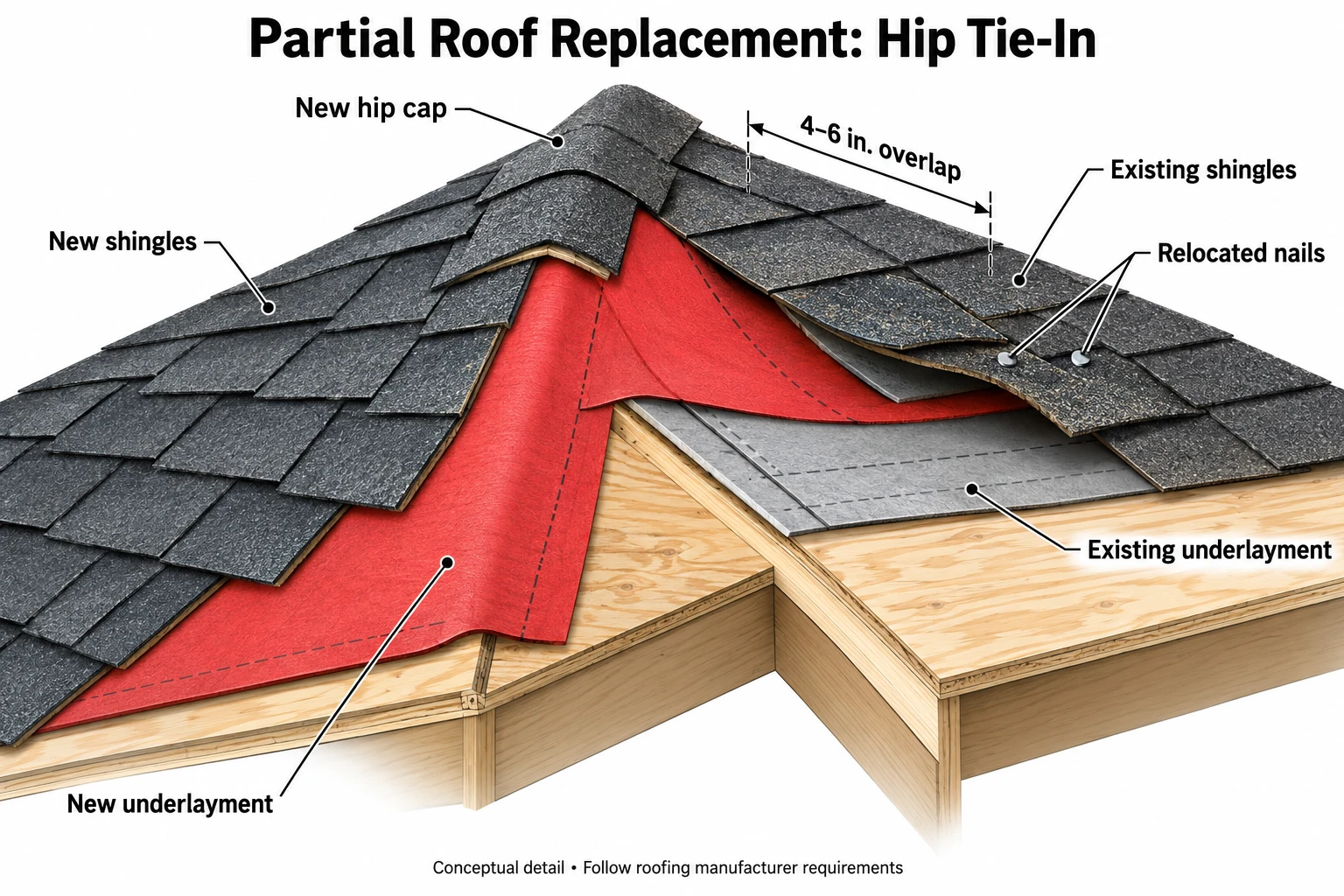
Above: a conceptual hip tie-in. The new underlayment laps over the hip and tucks under the existing slope's shingles before the new hip cap goes on. Always follow the shingle manufacturer's requirements.
When a Full Replacement Is the Better Call
A partial replacement loses its value when the slopes you're keeping are close behind the one you're replacing. Consider a full roof replacement when:
- Wear shows up on multiple slopes, not just one
- Shingles across the roof are brittle, cracked, curling, or shedding granules heavily
- Leaks keep appearing in different spots
- The existing shingles can't be lifted for a tie-in without breaking
- Decking or ventilation problems extend beyond one section
- The rest of the roof has little useful life remaining
Replacing one damaged slope on an otherwise healthy roof can be a smart, proportionate fix. Replacing that same slope on a roof that's a few seasons from failing usually means paying for mobilization twice — once now, and again when the rest goes.
Will the New Shingles Match the Old Roof?
An exact match isn't guaranteed — even when the original color is still in production.
Existing shingles have been weathering since the day they went on: sun fading, granule loss, and staining all shift their appearance. New shingles of the same name and color will typically look different side by side, at least at first. On top of that, manufacturers track every production run with a color code, and GAF's color-code bulletin explains that bundles with different codes shouldn't be mixed because visible shading differences are likely. Products and colors also get updated or discontinued over time.
This is a big reason we prefer to replace complete slopes. A color shift that changes at a hip or ridge reads as a natural break. A shift in the middle of a slope reads as a patch.
Before approving a partial replacement, ask your contractor:
- Is the original shingle product still available, and how close is the replacement in profile and color?
- Where will the transition be visible from the street?
- Would replacing a different or additional slope put the transition somewhere less noticeable?
Keep appearance and performance separate. A visible color difference doesn't mean the roof was installed wrong — but you should know what to expect before the crew shows up.
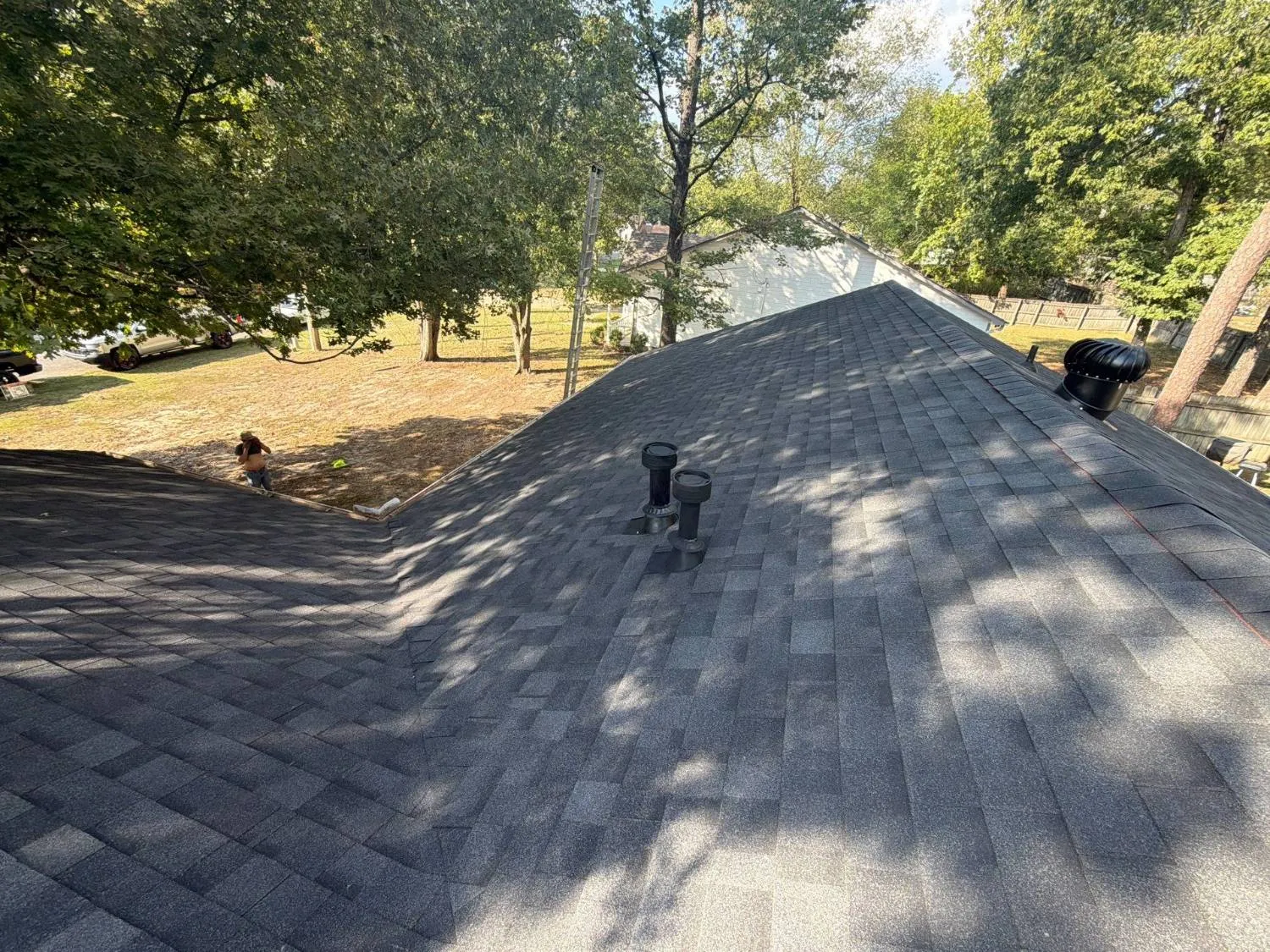
Above: hips and valleys are natural stopping points for a new section — any shading difference between slopes lands on a break line instead of mid-slope.
Is Replacing Part of a Roof Cheaper?
Upfront, a partial replacement generally costs less than a full replacement when the scope is meaningfully smaller. But replacing half a roof doesn't cost half as much. Both jobs carry fixed costs — crew mobilization, material delivery, property protection, debris removal, and permits where required — and the tie-in work at hips, ridges, and valleys takes careful labor that a full tear-off doesn't need.
When you compare estimates, look past the total:
| Question to ask | Why it matters |
|---|---|
| What exactly is included in each scope? | Square footage alone doesn't describe the work |
| How is damaged decking handled and priced? | Rot or delamination often isn't visible until the shingles come off |
| How will the new section tie in at hips, ridges, and valleys? | This is where partial replacements leak if done poorly |
| What condition is the roof you're keeping in? | It determines how soon you'll be paying for the rest |
| What warranty applies — and to which part of the roof? | New-material coverage applies to the new section, not the old |
That last point matters. A manufacturer's shingle warranty covers the new product you buy. It doesn't extend to the existing roof, and GAF's own guidance notes that damage tied to reused shingles, ridge caps, or underlayment isn't covered. Workmanship coverage on the tie-in comes from your contractor, so ask how they back it.
Pricing depends on roof size, slope, complexity, access, and material specification — we provide a written estimate after a free on-site inspection.
How to Decide Between Partial and Full Roof Replacement
- Find the real source of the problem. Trace the leak or damage to its entry point instead of assuming it's directly above the stain.
- Assess the slopes you'd be keeping. Check shingle flexibility, granule loss, curling, and prior repairs on every other slope — not just the damaged one.
- Check the decking and ventilation. Soft spots, delamination, or a poorly vented attic can turn a one-slope problem into a whole-roof problem.
- Confirm a compatible replacement shingle. Identify the existing product and confirm the replacement's size, exposure, and color.
- Plan the tie-in. Decide where the new section stops — ideally a hip, ridge, or valley — and how underlayment, flashing, and caps will be handled.
- Compare total value, not just price. Weigh the partial cost against the remaining life of the rest of the roof and the likelihood of a second project soon.
Frequently Asked Questions
Can you replace just one side of a shingle roof?
Yes. Replacing one full slope is the most common form of partial replacement. It works best when the damage is confined to that slope, the remaining shingles are still flexible enough to handle the tie-in, and the new underlayment, flashing, and ridge or hip caps are integrated to the manufacturer's procedures.
Will new shingles match my existing roof?
Rarely exactly. Weathered shingles fade and lose granules, and even new bundles from different production runs can shade differently. Ending the new section at a hip or ridge makes any difference far less noticeable than a patch in the middle of a slope.
Is a partial roof replacement cheaper than a full replacement?
Usually lower upfront, but not proportionally. Mobilization, disposal, and tie-in labor mean half the roof rarely costs half the price. If the rest of the roof is near the end of its life, a full replacement often delivers better long-term value.
Does a partial replacement affect my shingle warranty?
The manufacturer's warranty covers the new shingles on the replaced section — not the existing roof. Damage caused by reusing old shingles, caps, or underlayment generally isn't covered. Ask your contractor what workmanship warranty applies to the tie-in.
How do I know if my roof damage is isolated?
You need an on-roof inspection. Water often travels along the deck before it shows up as a ceiling stain, so the visible damage inside isn't a reliable guide. An inspector should check the entry point, the surrounding shingles and flashing, the decking, and the condition of every other slope.
Why do roofers recommend replacing a full slope instead of a patch?
A full slope gives the new roofing a clean stopping point at a hip, ridge, or valley, where underlayment and caps can be lapped correctly and any color difference reads as a natural break. Patching the middle of a slope creates more seams, more disturbed shingles, and a more visible mismatch.
Get a Straight Answer on Your Roof
Whether one slope is the right fix or the whole roof is due, the answer starts on the roof — not in a sales pitch. Brown's Roofing's local crews in Monroe, Shreveport, Baton Rouge, Lafayette, Little Rock, and Wichita install asphalt shingles to manufacturer specifications as a GAF, Owens Corning, CertainTeed, and IKO certified contractor. We'll inspect every slope, tell you whether a repair, a partial replacement, or a full replacement makes sense, and put it in writing. Call (318) 329-6579 for a free roof inspection — no obligation, same-day response.