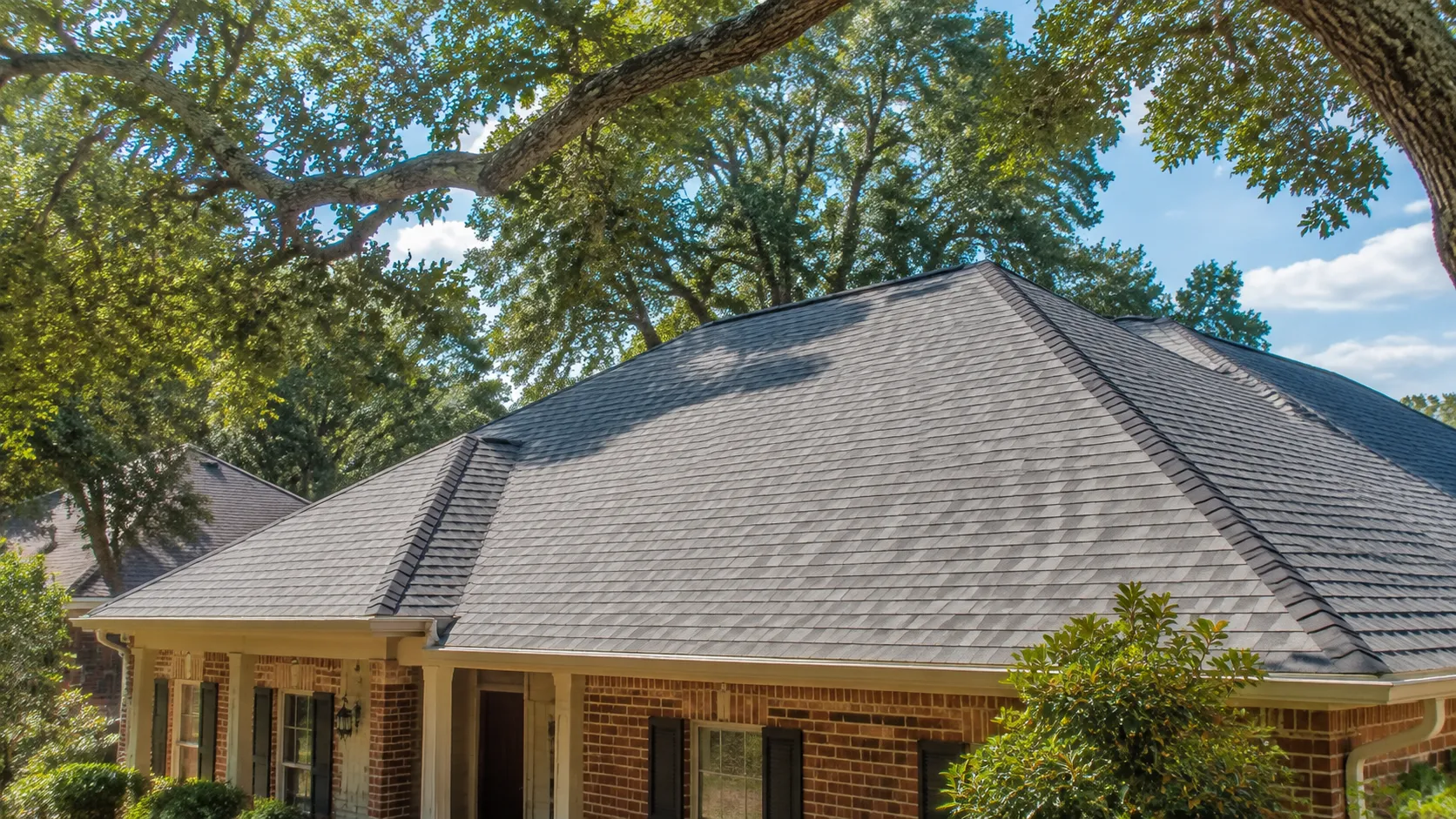
Most articles on this topic could have been written about anywhere. They list five materials, say metal lasts longest and asphalt is affordable, and stop. That is not useful if your roof is in Baton Rouge, because the thing that kills roofs here is not the thing that kills roofs in Denver. Understanding the specific failure mode changes which material you should pick and — more importantly — changes which version of that material you should pick.
The Three Things That Destroy Baton Rouge Roofs
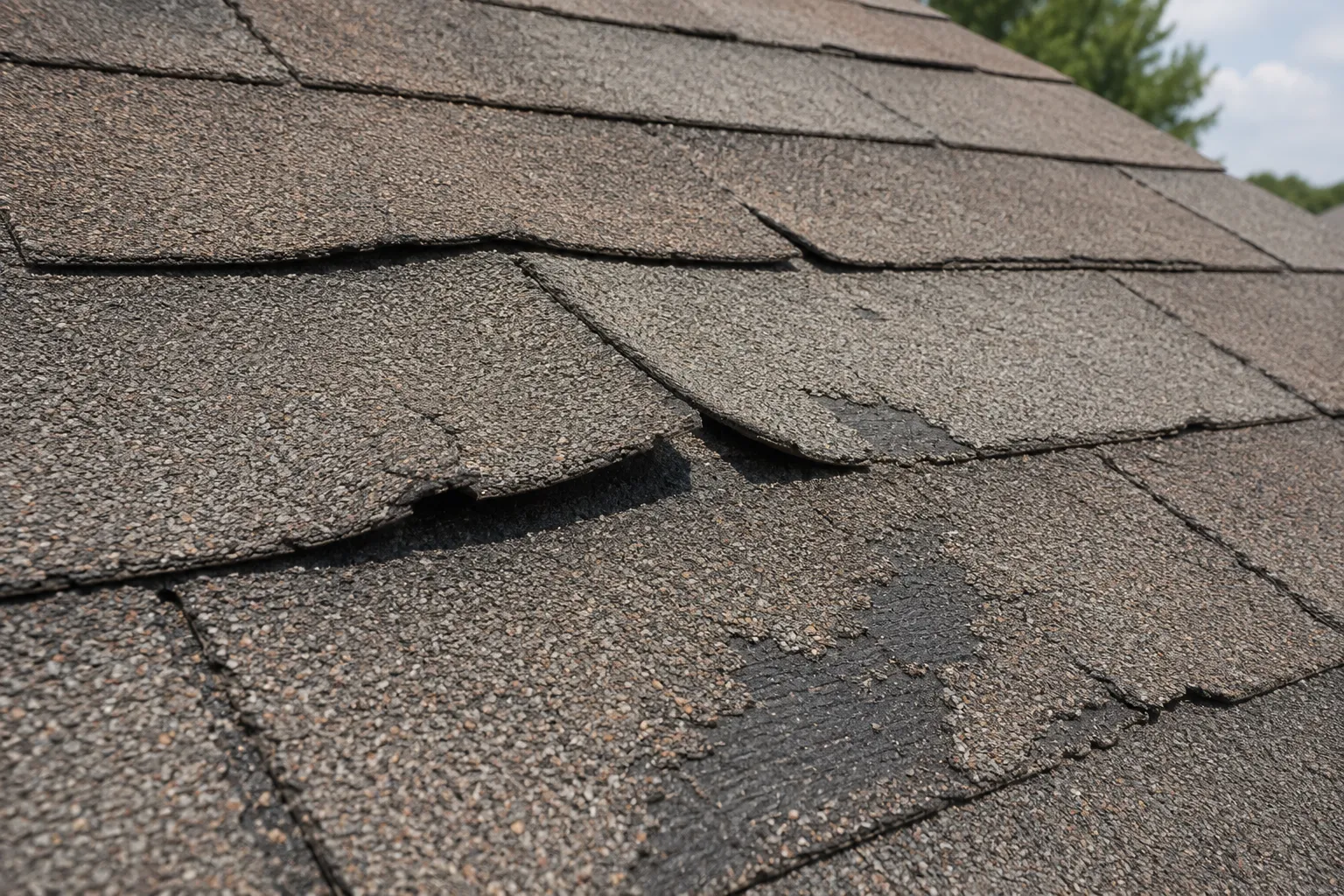
Thermal cycling. Baton Rouge sits in a hot-humid climate zone. A dark asphalt roof surface here can run 150°F or hotter on a July afternoon, and an unconditioned attic underneath it will sit at 130°F to 150°F for months. Asphalt shingles are a petroleum product. Sustained high temperature drives off the volatile oils in the binder and the shingle gets brittle. Then it expands in the afternoon heat and contracts overnight, thousands of cycles a year. Brittle plus cycling equals cracking, curling, and granule loss.
This is the single biggest reason Baton Rouge roofs do not reach their warranty life. A shingle sold as a "30-year" product is rated under test conditions, not under a decade of Louisiana Augusts.
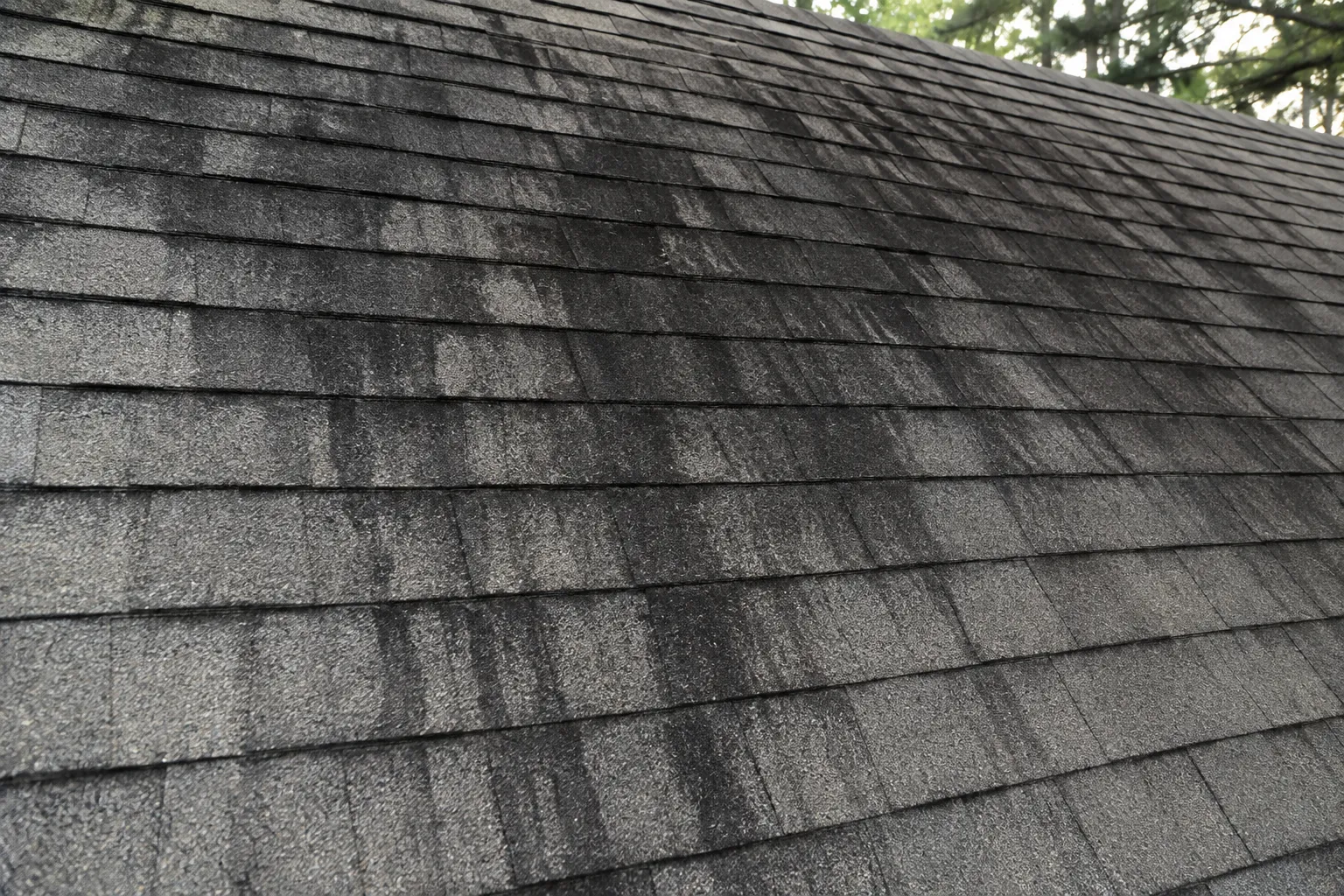
Algae. Those black streaks running down roofs all over town are not dirt and not mold. They are Gloeocapsa magma, a cyanobacteria that thrives in warm, humid, shaded conditions and feeds on the limestone filler used in asphalt shingles. Baton Rouge is close to a perfect environment for it: high humidity nearly year-round, and a mature live oak canopy across a lot of the older neighborhoods that keeps roof surfaces damp and shaded well into the morning. Algae is mostly cosmetic in the short term, but it darkens the roof surface, which raises surface temperature, which accelerates the thermal problem above.
Wind-driven rain. Baton Rouge is inland enough to escape storm surge and far enough north to see tropical systems arrive as rain events rather than wind events. That sounds better. For a roof it often isn't. A slow, stalled tropical rainstorm pushes water sideways for eight or twelve hours straight, and it finds every marginal flashing detail, every under-lapped valley, and every place the underlayment was the cheap option.
Hail and extreme wind matter here too, but they are episodic. Heat, humidity, and rain are constant.
Material by Material
Architectural asphalt shingle with algae-resistant granules
Verdict: the right default for most Baton Rouge homes — but only the right version of it.
Architectural (laminated) shingles are the practical choice for the large majority of homes here, on cost, on weight, and on the fact that virtually every roof in the parish is already framed and detailed for them. The specifications that actually matter in this climate:
- Algae resistance is not optional. Look for AR-rated shingles with copper- or zinc-infused granules. Manufacturers warrant the algae resistance separately from the shingle itself, typically for 10 to 25 years. If a bid does not specify an AR shingle, ask why. The price difference is small and the streaking is not.
- ASTM D7158 Class H wind rating. Under the asphalt roofing industry's wind-classification guidance, Class D corresponds to a 90 mph basic wind speed, Class G to 120 mph, and Class H to 150 mph. Class G meets most requirements. Class H costs little more and is the sensible floor in south Louisiana.
- Lighter colors and reflective granules. Weathered wood and driftwood tones run meaningfully cooler than charcoal and black. Solar-reflective shingle lines are rated by the Cool Roof Rating Council for initial and aged solar reflectance — worth asking for by name. The attic temperature difference is real, though it matters less if your attic is well insulated and well ventilated.
- Skip 3-tab entirely. Single-layer 3-tab shingles are thinner, have lower wind ratings, and degrade faster under UV. In this climate they are false economy.
Realistic service life in Baton Rouge with a good installation and a properly ventilated attic: 18 to 25 years on a quality architectural shingle. Less if the attic runs hot.
Standing seam metal
Verdict: the best-performing option in this climate, if the budget allows it.
Metal roofing addresses all three Baton Rouge failure modes at once. It does not support algae growth. A PVDF (Kynar 500) finish reflects a large share of solar radiation and re-emits heat rather than holding it, so attic temperatures drop. And a concealed-fastener standing seam system has no exposed penetrations for wind-driven rain to work into. Service life is 40 to 60 years, which in practice means one metal roof instead of two or three shingle roofs.
The honest trade-offs:
- Installed cost runs roughly two to three times that of architectural shingle.
- Condensation management matters. A metal panel over a humid, poorly ventilated attic will sweat on the underside. This is an assembly problem, not a metal problem, but it has to be handled with the right underlayment and ventilation.
- Oil canning — visible waviness in flat panel areas — is a characteristic of the product, not a defect. Striations or a heavier gauge reduce it.
- Complex roofs with many valleys, dormers, and penetrations drive metal cost up faster than they drive shingle cost up.
Stone-coated metal and metal shingle
Verdict: a reasonable middle path, with fewer good installers.
You get most of metal's longevity and algae immunity with a profile that reads as tile or shake from the street. Cost lands between architectural shingle and standing seam. The catch is that installation quality varies more widely because fewer crews install it regularly. Ask who is actually doing the work and what else they have installed.
Clay and concrete tile
Verdict: excellent thermally, rarely practical as a retrofit.
Tile performs beautifully in heat. The profile creates an air gap that ventilates the roof surface, it does not host algae, and it lasts 50-plus years. The problem is weight — concrete tile runs roughly 900 to 1,100 pounds per square against about 240 to 350 for architectural shingle. Most Baton Rouge homes are not framed to carry it, and structural reinforcement usually erases the cost argument. Tile is a strong choice on new construction designed for it, and an expensive one on an existing house.
Low-slope sections: TPO and modified bitumen
Verdict: not optional to get right.
A lot of Baton Rouge houses have a low-slope section somewhere — a rear addition, a carport, a porch roof. These do not shed water; they hold it. Shingles do not belong on anything under a 2:12 pitch and are marginal under 4:12. A single-ply TPO membrane or a properly installed modified bitumen system is the correct answer, and white TPO reflects heat well besides. The low-slope section is where a disproportionate share of Baton Rouge roof leaks originate, usually because someone shingled it.
Wood shake
Verdict: don't.
Warm, humid, shaded, and heavily treed is the worst possible combination for wood roofing. Rot, algae, insect activity, high maintenance, fire risk, and insurance complications. There is no case for it here.
The Part That Matters More Than the Material
Two roofs with identical shingles can be a decade apart in service life. The difference is underneath.
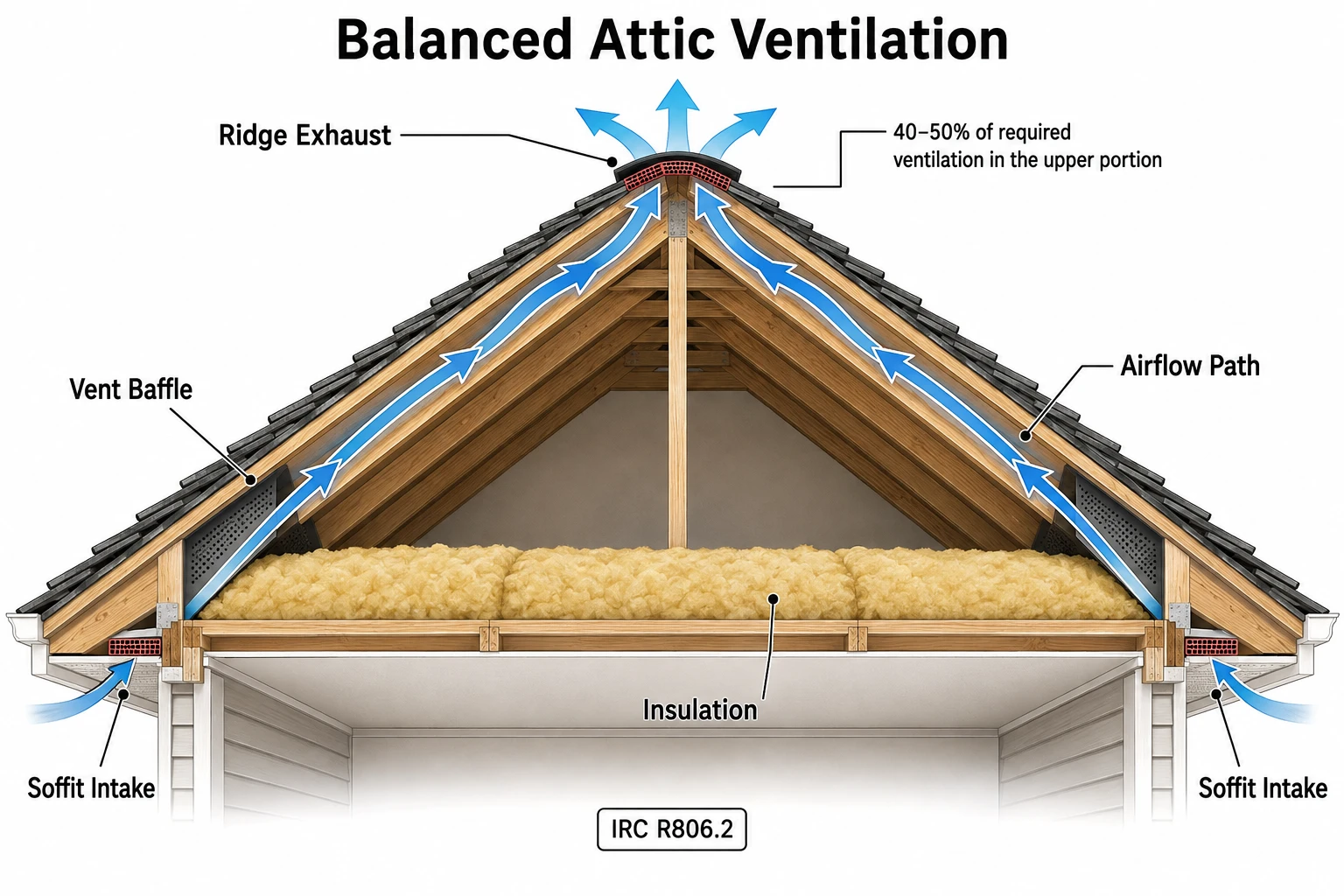
Attic ventilation. Balanced intake and exhaust — continuous soffit vents feeding a ridge vent — is what keeps attic temperature and moisture down. The IRC baseline is one square foot of net free ventilating area per 150 square feet of attic floor, reduced to 1 per 300 when 40 to 50 percent of the required area sits in the upper portion of the attic within three feet of the ridge, with the balance at the eaves. Undersized or blocked soffit intake is extremely common and quietly cooks the roof from below. Powered attic fans are usually a mistake in this climate; they can pull conditioned air out of the house and draw humid air into the attic.
Underlayment. Organic felt wrinkles, absorbs moisture, and degrades in heat. Synthetic underlayment holds up far better. For wind-driven rain, self-adhered membrane in the valleys, at the eaves, and around every penetration is worth the upgrade.
Decking. If the deck is being replaced anyway, radiant barrier sheathing meaningfully reduces attic heat gain in a climate zone like ours. It is one of the better dollar-for-dollar upgrades available during a re-roof.
Spray foam attics. If your attic is encapsulated with closed-cell foam, the ventilation rules above do not apply and the roof assembly has to be approached differently. Tell your contractor before they bid.
A Note on FORTIFIED and State Programs
The IBHS FORTIFIED Roof standard focuses on sealed roof decks, ring-shank nailing patterns, and edge detailing — the things that keep a roof attached in high wind. It is a legitimate upgrade regardless of any funding attached to it, and Brown's is a FORTIFIED Certified Contractor, so we can tell you whether a proposed assembly would meet the standard. The independent evaluation and certification are performed by a third-party FORTIFIED Evaluator, not by us.
On the money side, be careful with what you read. The Louisiana Fortify Homes Program grants up to $10,000 toward a FORTIFIED Roof, but it operates in rounds by lottery and is limited to a defined list of coastal and wind-prone parishes — a list that has not included East Baton Rouge Parish. Louisiana also has a separate state income tax credit for FORTIFIED work with its own rules and filing windows. Eligible areas, funding rounds, and deadlines change, so check the current status directly with the Louisiana Department of Insurance rather than relying on any contractor's summary, including ours. We can tell you what a roof assembly meets. We cannot tell you what you qualify for.
The Short Answer
If cost is the deciding factor: an architectural shingle with AR granules, Class H wind rating, in a lighter color, over synthetic underlayment, with the soffit intake actually opened up and a continuous ridge vent.
If cost is not the deciding factor: standing seam metal with a PVDF finish, and you are likely done thinking about your roof for good.
Everything else is a specific answer to a specific house.
Frequently Asked Questions
What is the longest-lasting roofing material for Baton Rouge?
Standing seam metal with a PVDF (Kynar 500) finish, at 40 to 60 years of service life. It resists algae, reflects solar heat rather than storing it, and has no exposed fasteners for wind-driven rain to exploit. Clay and concrete tile last as long but are usually too heavy for existing framing here.
Are algae-resistant shingles worth it in Louisiana?
Yes. Copper- or zinc-infused granules are the only practical defense against Gloeocapsa magma, which thrives in Baton Rouge's humidity and shade. The upcharge over a standard shingle is small, and the algae warranty is written separately from the shingle warranty — typically 10 to 25 years.
What wind rating should shingles have in Baton Rouge?
ASTM D7158 Class H, which corresponds to a 150 mph basic wind speed. Class G (120 mph) satisfies most code requirements, but Class H costs little more and gives you real margin in south Louisiana.
How long does an asphalt shingle roof last in Baton Rouge?
Realistically 18 to 25 years for a quality architectural shingle with good installation and a properly ventilated attic — noticeably short of the marketed warranty term. Sustained attic heat is the reason. A hot, poorly vented attic can cut that by five years or more.
Can I put shingles on my patio or carport roof?
Not below a 2:12 pitch, and they are marginal below 4:12. Low-slope sections hold water rather than shedding it, and they need a single-ply TPO membrane or a modified bitumen system. Shingled low-slope sections are one of the most common sources of leaks we find in Baton Rouge.
Does a metal roof make a house hotter?
No — the opposite. A PVDF-finished metal panel reflects a large share of solar radiation and releases absorbed heat quickly, so attic temperatures typically drop compared with dark asphalt. The real issue with metal in a humid climate is underside condensation, which is handled through underlayment and ventilation design.
Get a Straight Assessment
Brown's Roofing works throughout the Baton Rouge market with local crews and a permanent office — not a truck passing through after a storm. If you want a straight answer on what your roof is, what it needs, and which specification actually makes sense for your house, we'll come out and walk you through it. Pricing depends on roof size, slope, complexity, access, and material specification — we provide a written estimate after a free on-site inspection. Call (318) 329-6579 for a free roof check with same-day response.