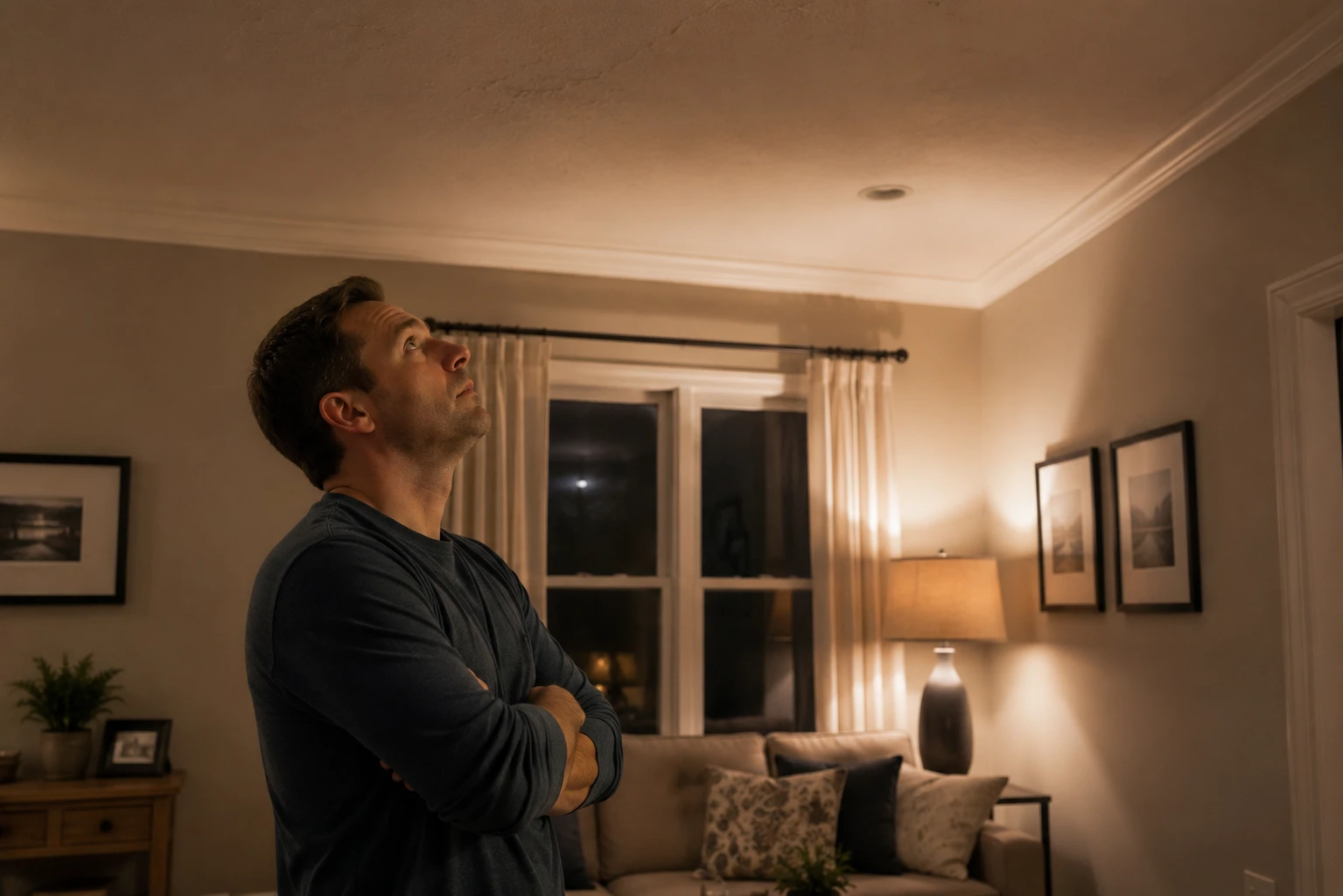
Most of the time, a cracking ceiling is just wood framing and drywall expanding and contracting as the temperature changes. It's normal, and it isn't your roof falling in. Attics heat up in the sun and cool fast after sunset, and that movement makes the ceiling pop and crack. It's almost always cosmetic. There are a few red flags worth checking, and we'll cover those below — but take a breath first. If you have no water stains, no sagging, and the cracks aren't growing, what you're hearing is a house doing exactly what houses do. Here's why.
What's Actually Making That Cracking Sound?
Your ceiling isn't one solid piece. It's a system of parts — wood trusses or rafters up top, drywall panels screwed to the bottom, joint compound and tape holding the seams, and trim tying it all to the walls. Every one of those materials expands when it warms and shrinks when it cools, and they don't do it at the same rate.
That mismatch is where the noise comes from. Wood swells and moves one way, drywall moves another, and the metal screws holding them together stay put. When the tension builds up enough, something suddenly slips — and you hear a crack or a pop. It's the same physics as a boardwalk creaking in the afternoon sun or ice cracking on a pond: stored-up stress releasing all at once.
Attic temperature swings are the biggest driver. Across the Ark-La-Tex, an attic in Shreveport can push past 130°F on a July afternoon and drop 40 or 50 degrees by the middle of the night. That's a large daily swing, and your framing moves with it. Poorly ventilated attics run even hotter, which makes the movement — and the noise — worse.
Why It's Louder at Night
This is the number-one question we hear, and the answer is simple: temperature drops fast after sunset. During the day the heat builds gradually, so the wood expands slowly and quietly. Once the sun goes down, everything cools and contracts quickly. Fast movement means more sudden slips, and a quiet house at night means you actually hear them. The same crack at 2 p.m. gets drowned out by the AC, the TV, and daily life.
So if your ceiling only seems to talk at night, that isn't a bad sign. That's the physics working exactly as it should.
Truss Uplift: Why Ceilings Crack in Dry Weather
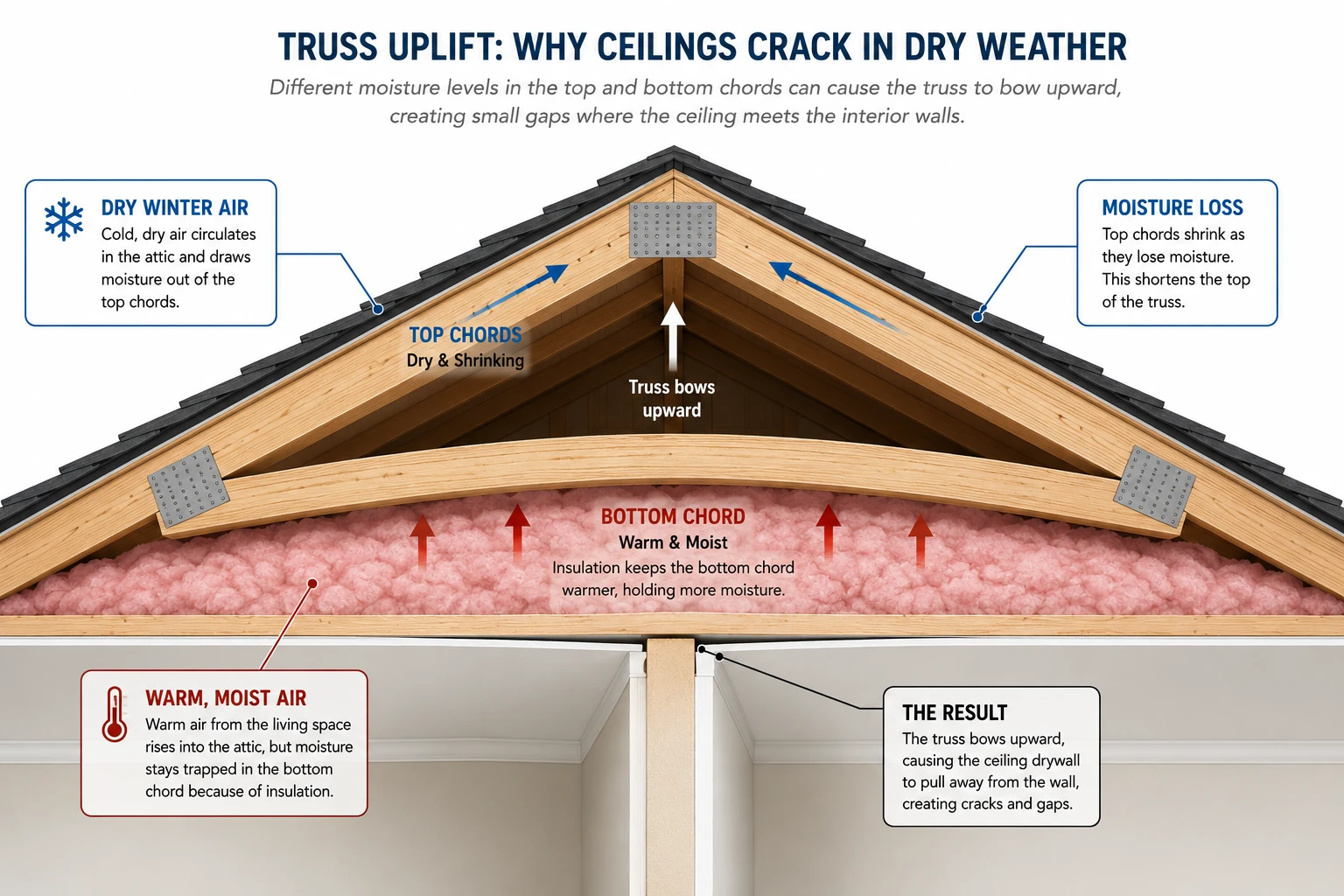
Here's a specific one that trips people up, especially anyone with an open-truss roof — which covers most homes built in the last few decades. It's called truss uplift, and it explains why some ceilings crack right along the wall during winter or a dry spell.
A roof truss is a triangle of wood boards. The bottom chord — the flat piece your drywall attaches to — is buried in attic insulation, so it stays warmer and holds moisture. The top chords sit up in the cold, dry attic air. When the two parts of the truss carry different moisture levels, they expand and shrink by different amounts. The top chords dry out and shrink, which bows the whole truss upward in the middle and lifts the bottom chord off the interior walls. A gap can open right where the ceiling meets an interior wall, and you'll hear it crack as it moves. Per the National Roofing Contractors Association, this is typically a cosmetic problem rather than a structural one.
Here's the important part for our climate: it's seasonal, and it reverses. In the dry weeks of winter — more pronounced in the drier corners of our region like Little Rock and Wichita than along the humid Gulf Coast — the top chords lose moisture and lift. When humid summers roll back in, the wood takes on moisture, swells, and the truss settles back down. The gap closes. It looks like the house is breaking, but the truss is doing its structural job the whole time. It's just moving at the joint where you can see it.
The standard fix, if the gap bothers you, isn't to nail the ceiling down harder — that only cracks the drywall worse. It's crown molding, or a floating-corner drywall detail that lets the ceiling move without showing a line. Cosmetic problem, cosmetic solution.
Is a Cracking Ceiling Normal or a Sign of a Problem?
Let's draw a clean line.
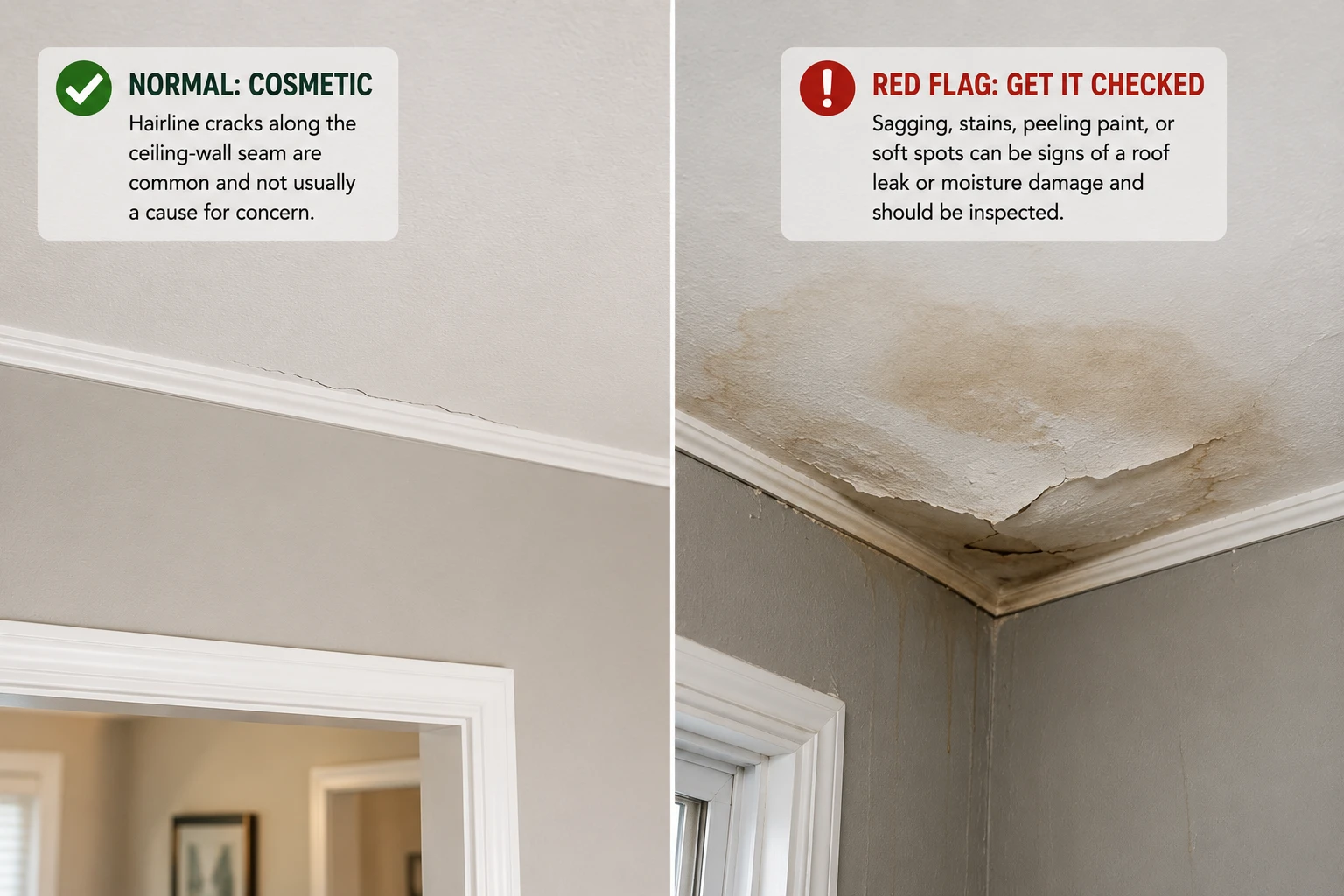
Normal (thermal and seasonal):
- Random pops and cracks, mostly at night or when the weather changes
- A hairline gap at the ceiling-wall corner that comes and goes with the seasons
- No visible damage, no stains, no sagging
- Noise that's been happening for years without anything getting worse
Worth a closer look:
- Water stains, sagging, or a musty smell
- Cracks that keep getting longer or wider
- Noises that started right after a storm
One of the best things you can do to quiet the normal thermal noise is make sure your attic is breathing right. Balanced attic ventilation — intake at the soffits, exhaust at the ridge — keeps attic temperatures closer to the outside air instead of building to oven levels. Less temperature swing means less expansion and contraction, which means less popping and cracking. As ENERGY STAR notes, good attic airflow protects the whole system, not just your peace and quiet.
One more distinction. A cracking ceiling is the drywall and framing below you moving. A popping roof deck is the plywood and shingles up top expanding and pulling on their nails. They're cousins — same thermal cause, different parts of the house — and both are usually harmless.
Red Flags: When Ceiling Noises Warrant an Inspection
Most cracking is nothing. But some ceiling sounds come with company, and that's when you want eyes on it. Call a professional if you notice any of these alongside the noise:
- Water stains or discoloration. Brown, tan, or yellow rings mean water is getting in from somewhere — a roof leak, flashing failure, or plumbing above. The cracking sound might be drywall giving way as it soaks up moisture.
- A musty or damp smell. You can't always see a leak. A persistent musty odor in a room or closet often means water is sitting in the attic insulation or a wall cavity.
- Visible sagging or a bowing ceiling. A ceiling that dips or bulges is holding weight it shouldn't — usually trapped water or a fastener problem. Don't wait on this one.
- Cracks that grow. Hairline seasonal cracks that open and close are fine. A crack that gets longer or wider month over month is telling you something is still moving.
- Doors and windows sticking, or new wall cracks too. When ceiling noise shows up with jammed doors, sticking windows, or fresh drywall cracks running at 45 degrees from door corners, that can point to structural or foundation movement, not just thermal.
- Noise right after a storm, hail, or high wind. If the cracking started after severe weather, your roof may have taken storm damage that's now letting water or wind move through the structure. Get it checked before the next storm.
That last one matters around here. After a hailstorm or a hurricane band pushes through, we field a lot of calls from homeowners who suddenly hear new ceiling sounds. Storm damage doesn't always announce itself with a hole — sometimes the first sign is a noise, and a stain a week later.
What to Do If You're Worried
You can run a quick check yourself before calling anyone.
- Look for stains. Walk your ceilings in good daylight and check for discoloration, especially in corners, around vents, and near the chimney or bathrooms.
- Take a peek in the attic, only if it's safe to get up there. Bring a flashlight and look for wet insulation, water tracks on the wood, daylight coming through the deck, or dark mold-like staining. Dry, clean wood is a good sign — that random cracking is just thermal movement.
- Note the pattern. Is it seasonal and reversing, or steadily getting worse? Random popping, or always the same spot? That detail helps a roofer or engineer a lot.
When to call a roofer: if you see stains, sagging, a musty smell, or the noise started after a storm, that's roof territory. A leak or storm damage is exactly what a roof repair or inspection is meant to catch. If you've got active water coming in, don't wait on the weather — get emergency help to protect the inside of your home until a crew can get out.
When to call a structural engineer: if the cracking comes with sticking doors, new diagonal wall cracks, sloping floors, or a ceiling that's genuinely bowing, that's beyond a roof issue. A structural engineer diagnoses framing and foundation movement. A good roofer will tell you when it's an engineer's job — we'd rather point you to the right person than guess.
A Brown's roof inspection covers your shingles and flashing, the roof deck, attic ventilation, signs of moisture intrusion, and the overall condition of the system. If the cracking is just thermal, we'll tell you straight — no upsell, no scare tactics. And while we're up there, we'll flag anything else worth knowing, like the algae and lichen staining that shows up on so many Gulf-Coast roofs.
Frequently Asked Questions
Is it normal for a ceiling to make cracking noises at night?
Yes — it's one of the most common and harmless house sounds. After sunset, temperatures drop fast, so the framing and drywall contract quickly and release built-up tension with a pop or crack. The quiet at night just makes it easier to hear. No stains and no sagging means nothing's wrong.
Can a cracking ceiling mean my roof is leaking?
It can, but only if the cracking comes with water stains, a musty smell, or sagging. Dry drywall that's just popping with temperature changes isn't a leak. If you see discoloration or wet insulation in the attic, get it inspected — that's water finding its way in.
Why does my ceiling crack more in winter or during dry weather?
That's usually truss uplift. In dry air, the top of the roof truss loses moisture and shrinks, bowing the whole truss upward and lifting the ceiling slightly off the interior walls. When humidity returns in summer, the wood swells and settles back down. It's seasonal, cosmetic, and it reverses.
When should I worry about ceiling cracking sounds?
Worry when the noise comes with company: water stains, a bowing or sagging ceiling, a musty smell, cracks that keep growing, sticking doors, or noises that started right after a storm. Random seasonal popping with no visible damage is not a concern.
Does attic ventilation reduce ceiling popping and cracking?
It helps a lot. Balanced intake and exhaust ventilation keeps your attic from building up extreme heat, which shrinks the daily temperature swing your framing goes through. Less swing means less expansion and contraction, and less noise. It also extends the life of your roof.
Should I call a roofer or a structural engineer about ceiling noises?
Call a roofer if you see stains, sagging, a musty smell, or the noise started after severe weather — that's usually a moisture or roof-damage issue. Call a structural engineer if you're also seeing sticking doors, diagonal wall cracks, or a ceiling that's visibly bowing. A good roofer will tell you which one you actually need.
Still Not Sure? Get an Honest Look
If the cracking has you second-guessing — or you spotted a stain you can't explain — we're happy to come take a look. A Brown's roof check is a straight, honest assessment of what's really going on up there, whether that's a real problem or just your house talking in the cold. We serve homeowners across Louisiana, Arkansas, and Kansas, and we'll tell you the truth either way. Call (318) 329-6579 or request a free inspection online to get started.