
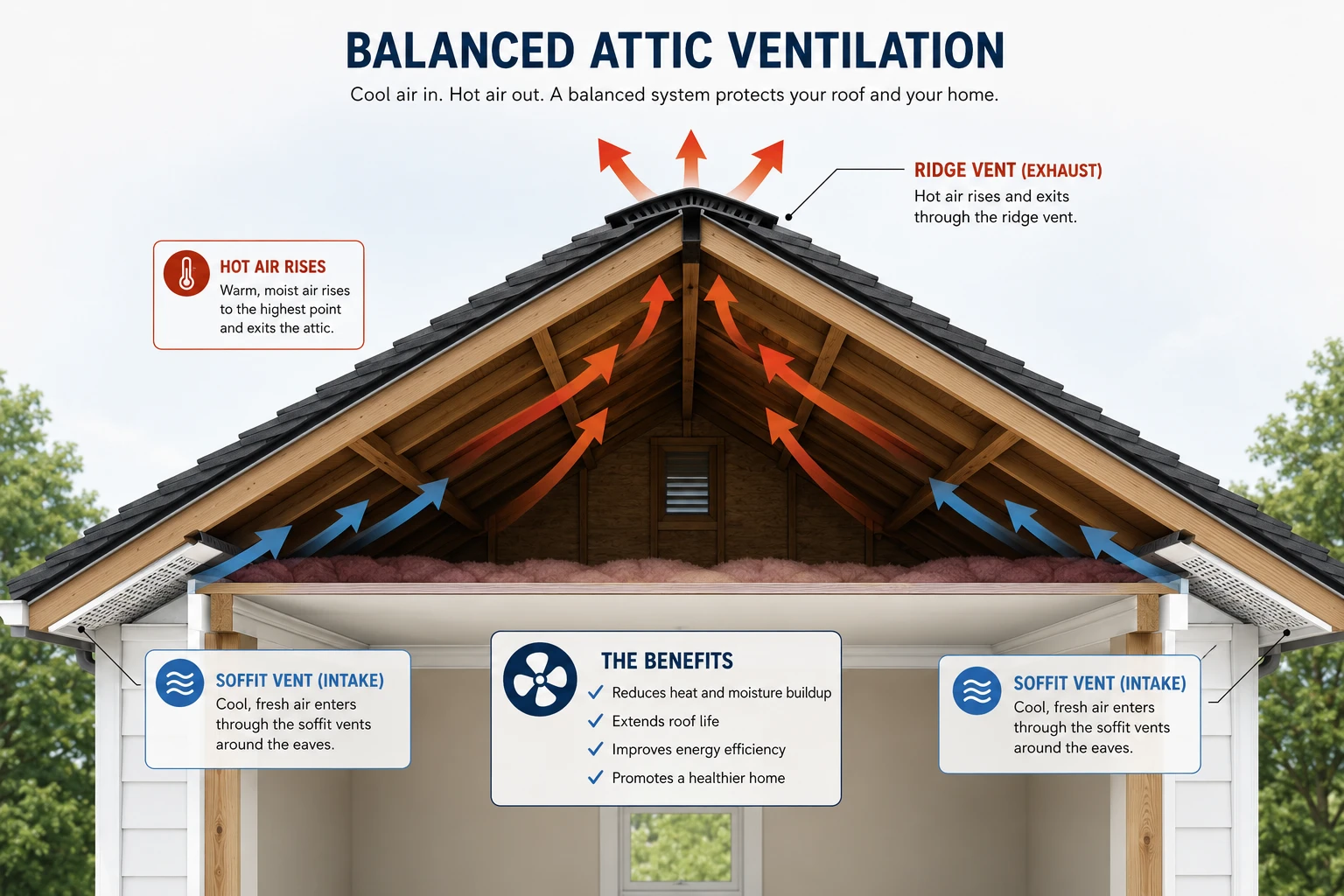
If your roof feels hotter every summer and the upstairs never quite cools down, the cause almost always traces back to attic ventilation and trapped heat — not the shingles themselves. Dark asphalt shingles getting hot is normal and expected. Heat that has nowhere to go, radiating down into your living space and running your air conditioner ragged, is the part you can actually fix. In Wichita, where long stretches of upper-90s and low-100s put real load on south- and west-facing slopes, the difference between a roof that sheds heat and one that stores it comes down to how well the attic breathes.
What Actually Makes a Roof Hot in Kansas Summers
Three things stack up on a hot Wichita afternoon, and only one of them is a problem.
First, solar load on the shingles. A dark asphalt shingle surface typically runs 50 to 60 degrees hotter than the surrounding air. On a 100-degree day, that puts the shingle surface north of 150 degrees. That's normal — shingles are engineered to take it.
Second, trapped attic heat. Once the sun heats the roof deck, that heat radiates down into the attic. If air can't move through and carry it out, the attic turns into an oven. Readings of 120, 130, even 140 degrees are common in a poorly vented Wichita attic in July.
Third, radiant heat pushing down. All that trapped attic heat doesn't just sit there — it radiates through the ceiling into the rooms below. That's why the upstairs bedroom is always the hottest room in the house and the AC never seems to catch up.
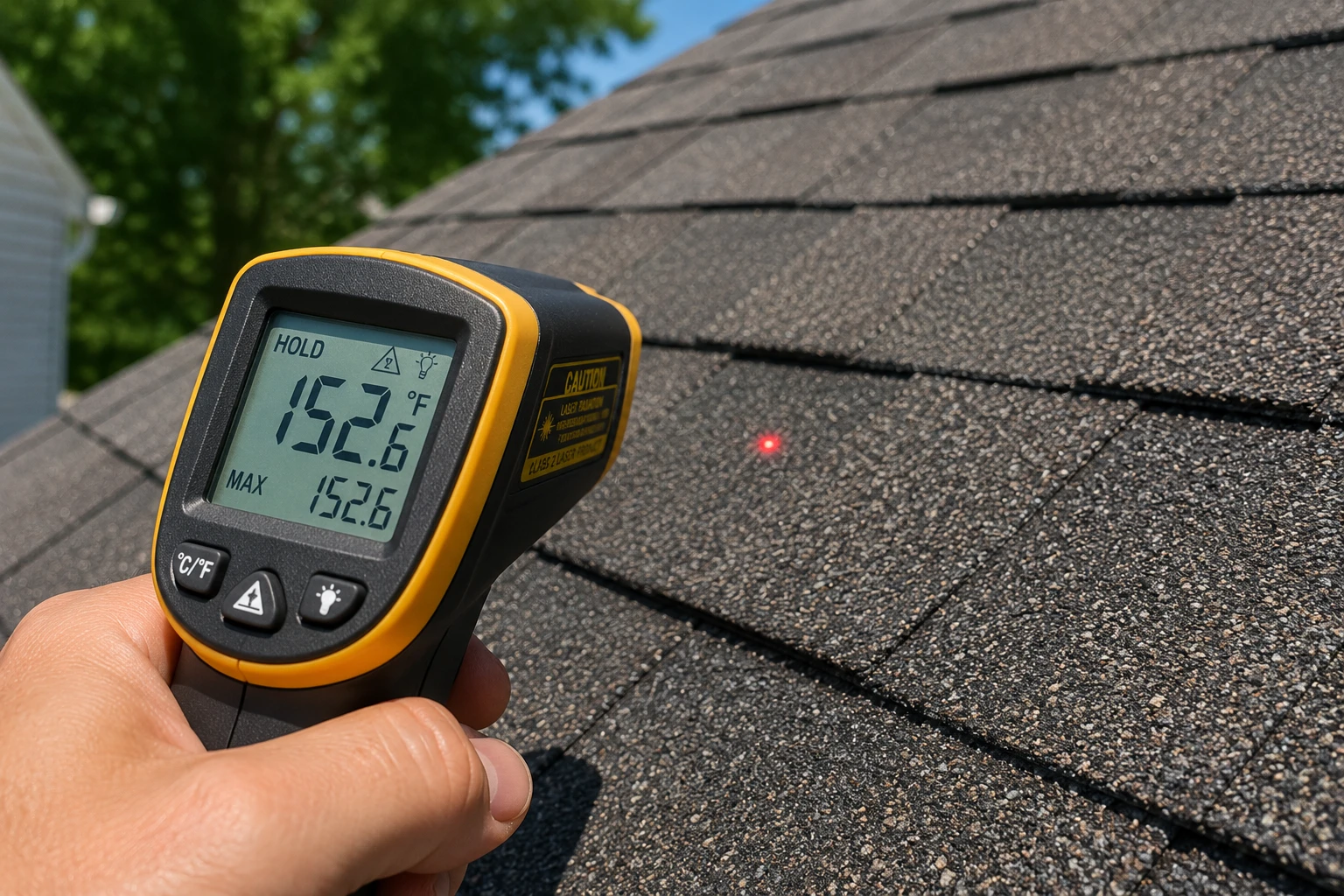
Your Shingles Are Supposed to Get Hot — Your Bedroom Isn't
Here's the distinction that matters: a hot roof is normal, a hot house is a problem. The shingles are built to run hot in direct sun. Your living space isn't. When the heat is getting through to you, that's a ventilation and insulation issue — and it's fixable, usually without touching the shingles at all.
The Real Culprit: Attic Ventilation
Attic ventilation works as a system, not a single part, and it needs two halves working together: intake and exhaust. Cool air enters low, through the soffit vents tucked under your eaves. Hot air rises and escapes high, through a ridge vent at the peak (or box vents, turbines, or a powered fan). That natural bottom-to-top airflow flushes heat and moisture out continuously, and it keeps the attic much closer to the outdoor temperature instead of cooking.
The word that matters is balanced. Intake and exhaust have to roughly match. If you have a beautiful ridge vent but your soffits are blocked, the system can't pull air through — the exhaust starts drawing air from inside the house instead, which does nothing for the attic and can pull your conditioned air up into it. ENERGY STAR's attic ventilation guidance makes the same point: the most common homeowner mistake is choking off airflow at the eaves.
Common Wichita Ventilation Failures
The same handful of problems show up on inspection after inspection around Sedgwick County:
- Blocked soffits — insulation pushed into the eaves during an attic job, burying the intake vents.
- Painted-over soffit vents — a repaint seals the little openings shut and air can't get in.
- Too few exhaust vents — three box vents on a large roof won't move the air a full ridge vent will.
- Mixed exhaust fighting itself — a ridge vent and a powered fan on the same attic can short-circuit, pulling air from each other instead of from the soffits.
- No baffles — nothing holding insulation back off the intake, so it creeps into the eaves over time.
The 1:300 Rule, in Plain English
Roofing pros size ventilation with a simple ratio. The building-code baseline is 1 square foot of net free vent area for every 150 square feet of attic floor. That requirement relaxes to 1 square foot per 300 when the venting is properly balanced — roughly 40 to 50 percent of it up high as exhaust and the rest down low as intake — and a vapor retarder is in place on the ceiling. The Asphalt Roofing Manufacturers Association publishes the shortcut math if you want to run your own numbers.
You don't have to do the arithmetic. Just know this: a 1,500-square-foot attic needs somewhere around 5 square feet of vent area, split top and bottom. Most underventilated homes we inspect have maybe a third of that, and nearly all of the shortfall is on the intake side.
Ventilation Options That Actually Work
Not all vents are equal. Here's the honest rundown for a Kansas roof:
- Ridge vent plus continuous soffit intake — the gold standard. Runs the full length of the peak, no moving parts, vents evenly across the whole attic. Paired with open soffits, it's what we recommend on almost every re-roof.
- Box vents (turtle vents). They work, but each covers only a small area, so you need several. Useful on complex roofs where a continuous ridge line isn't possible.
- Turbines (whirlybirds). They spin and pull air when there's wind — and Wichita has plenty. Effective, but noisy, and one more moving part to fail.
- Powered attic fans. They move a lot of air, but they can pull conditioned air out of the house if the attic isn't sealed, and they can short-circuit a ridge vent. Use with care.
- Solar attic fans. These make sense on a sun-soaked Kansas roof with no easy power source at the peak. They run hardest exactly when you need them — the hottest part of a sunny afternoon — and add nothing to the electric bill.
- Baffles (rafter vents). Cheap chutes that keep insulation from choking off the soffit intake. On a lot of "we already have soffit vents, why is it still hot?" calls, missing baffles are the answer.
Heat, Blistering, and Your Shingle Warranty
When an attic runs hot for years, the shingles pay for it from below. One sign is blistering — small raised bumps on the shingle surface, some open, some closed. Blisters can come from trapped moisture or manufacturing, but chronic attic heat makes them worse and speeds premature aging: brittle shingles, granule loss, and curling at the edges.
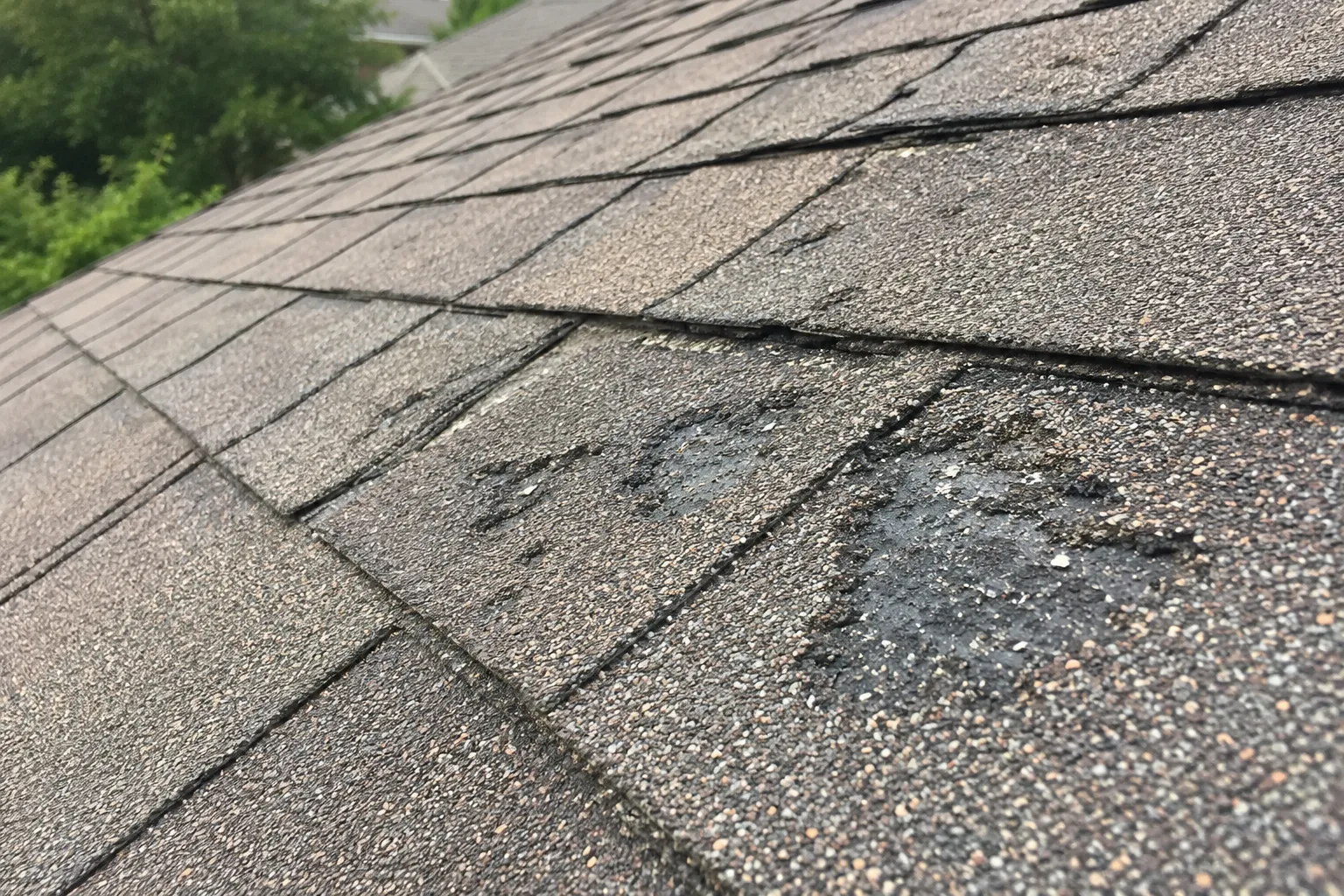
Here's the part homeowners don't always hear. Poor ventilation can shorten a roof's life and jeopardize the warranty. GAF, Owens Corning, and CertainTeed all require adequate ventilation as a condition of coverage. Bake an attic long enough and you're not only losing years off the roof — you may be losing the manufacturer's backing on it, too.
In the Wichita hail belt, heat isn't the only threat. If you're planning a roof replacement anyway, it's worth pricing out impact-resistant shingles that stand up to both hail and sun. The same Class 4 products that hold up across the region apply here, and a heavier premium shingle can also shrug off heat cycling better than a builder-grade three-tab.
A Real Wichita Re-Roof
On a completed re-roof in the Wichita area, the homeowner's complaint was the classic one: upstairs rooms that never got comfortable in summer and an AC that never caught up. From the ground it looked like a shingle problem. It wasn't.
Up in the attic, we found the story most of these jobs tell — plenty of exhaust up high, but intake that couldn't keep pace. Insulation had drifted into the eaves and choked off the soffit airflow, so the attic had no reliable way to pull cool air in from below. The deck was sound, but the shingles on the sun-loaded slopes were aging faster than their years.
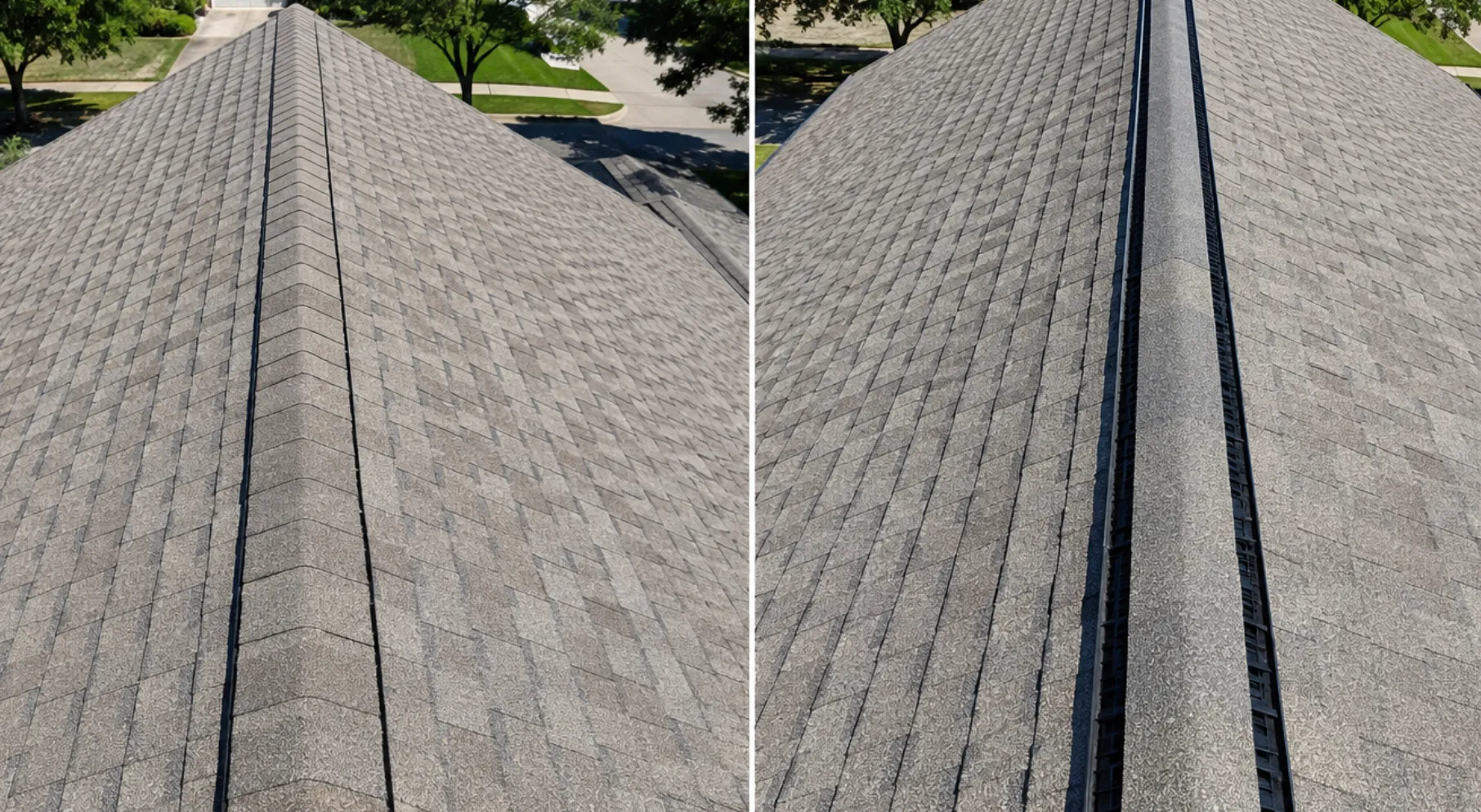
The fix wasn't complicated: clear and restore the intake, add baffles to hold the insulation back off the soffits for good, and balance the exhaust so the whole system actually breathed. The point wasn't a fancier vent. It was a balanced one — the difference between a roof that dumps heat and one that traps it.
How to Tell If Your Roof's Heat Is a Ventilation Problem
You don't need to climb into a 140-degree attic to get a read. Watch for:
- An upstairs that won't cool down no matter how hard the AC runs
- Ceilings you can feel warmth radiating from in the afternoon
- AC bills climbing faster than a neighbor's for a similar house
- Blistered, curling, or prematurely aged shingles, especially on south and west slopes
- Ice dams in winter — the flip side of the exact same problem
That last one surprises people. A hot attic in winter melts rooftop snow, which refreezes at the cold eaves and backs water up under the shingles. Good ventilation keeps the attic cold in winter and cool in summer: one fix, two seasons.
Frequently Asked Questions
Is it normal for my roof to be hot in the summer?
Yes. Dark asphalt shingles are designed to run 50 to 60 degrees above air temperature, so a 150-degree-plus surface on a 100-degree Wichita day is normal. What's not normal is that heat making your living space uncomfortable — that points to an attic ventilation or insulation problem.
How do I know if my attic has enough ventilation?
The working rule is roughly 1 square foot of vent area per 300 square feet of attic floor when the system is balanced, split between soffit intake and ridge exhaust. Signs you're short: a hot upstairs, blistering shingles, and an attic that feels like an oven. A quick inspection confirms it fast.
Will adding a ridge vent make my house cooler?
Only if you have matching soffit intake to feed it. A ridge vent with blocked or missing soffits can't pull air through and may even draw conditioned air out of your home. Ventilation only works as a balanced intake-and-exhaust system.
Can poor ventilation shorten the life of my shingles?
Yes, and it can jeopardize your warranty. GAF, Owens Corning, and CertainTeed all require adequate ventilation for coverage. Chronic attic heat bakes shingles from below, causing blistering, granule loss, and early curling — often years before the roof should fail.
Do lighter-colored shingles keep a Kansas roof cooler?
A little. Lighter and "cool roof" shingles reflect more sun and run cooler at the surface, which helps. But color makes a smaller difference than ventilation. A dark, well-vented roof will outperform a light, poorly vented one every time.
Does a hot attic in summer cause ice dams in winter?
It's the same underlying problem. A poorly ventilated attic traps heat in summer and leaks heat in winter, melting rooftop snow that refreezes into ice dams at the eaves. Fixing the ventilation solves both seasons at once.
Talk to a Local Wichita Roofer
If your upstairs never cools down and the AC is working overtime, the answer is usually up in the attic — and it's usually fixable without a whole new roof. Brown's Roofing runs local crews out of Wichita, so you get an honest look from people who've actually been on the roof, not a storm-chaser passing through. We'll check your intake-and-exhaust balance against the numbers and tell you straight whether you've got a ventilation issue, a shingle issue, or nothing to worry about.
We offer a free, no-pressure roof and attic check for Wichita-area homeowners. If it's a simple ventilation adjustment, we'll say so. Call (318) 329-6579 or request an inspection online to get started.