A tropical system is organizing in the southwestern Gulf, and Louisiana could feel it as early as Friday night. If you own a home or run a business in South Louisiana, the next 72 hours are your window to get ready. Here is what we know and the ten things worth doing now.
What's Happening in the Gulf
As of Tuesday, October 6, the National Hurricane Center is tracking a disturbance called Invest 92L. Forecasters give it a high chance, around 80 percent or better, of becoming a tropical depression within two days. If it reaches tropical storm strength, it will be named Isaias.
The system is expected to drift east-northeast through midweek, then turn north toward the Gulf Coast. Early model guidance points at a landfall zone somewhere between eastern Louisiana and the western Florida Panhandle, and some of it strengthens the system into a strong tropical storm or a hurricane before it arrives.
Two things to keep in mind:
- There is no official forecast cone yet. The track and strength will shift. Don't lock onto one model run.
- Watches could go up within a day or two. By then, stores are crowded and contractors are booked.
It has been a quiet season, with no Atlantic hurricanes so far this year. Quiet seasons make people relax. Don't let this be the one that catches you flat-footed.
Forecast details reflect the National Hurricane Center's October 6 outlook. For the latest, check the National Hurricane Center and your parish emergency office.
What It Could Mean for South Louisiana
Even a tropical storm that never becomes a hurricane can do real damage here. The exact impacts depend on the track, but these are the four to plan around:
- Wind. Tropical-storm-force gusts lift loose asphalt shingles, peel back flashing, and turn patio furniture into projectiles. Damage usually starts at the edges and ridges of a roof.
- Heavy rain. Slow-moving Gulf systems can drop many inches in a day. Clogged gutters and drains send that water under shingles and into walls. On flat commercial roofs, it ponds and adds weight.
- Storm surge and flooding. Low-lying and coastal parishes carry the highest risk. Know your evacuation zone before a watch is issued.
- Power outages. Days without power mean no AC, no refrigeration, and for businesses, no revenue.
Your roof is the first thing a storm hits and the last thing most people check. Small problems, like a few lifted shingles or a cracked pipe boot, are what let wind and water in. That is why the roof shows up all through the list below.
How to Prepare Your Home or Business: The Top 10 Hurricane Prep List
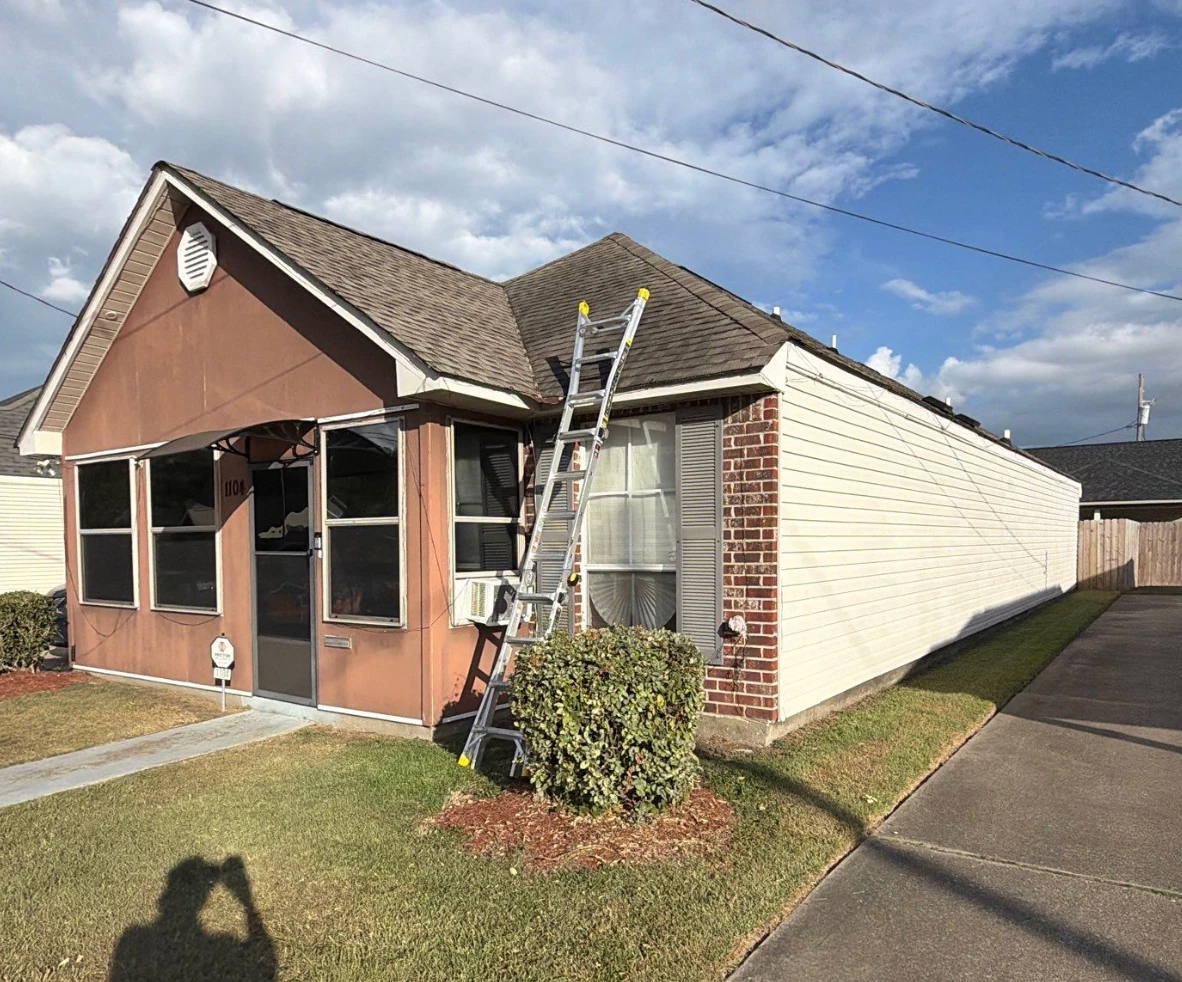
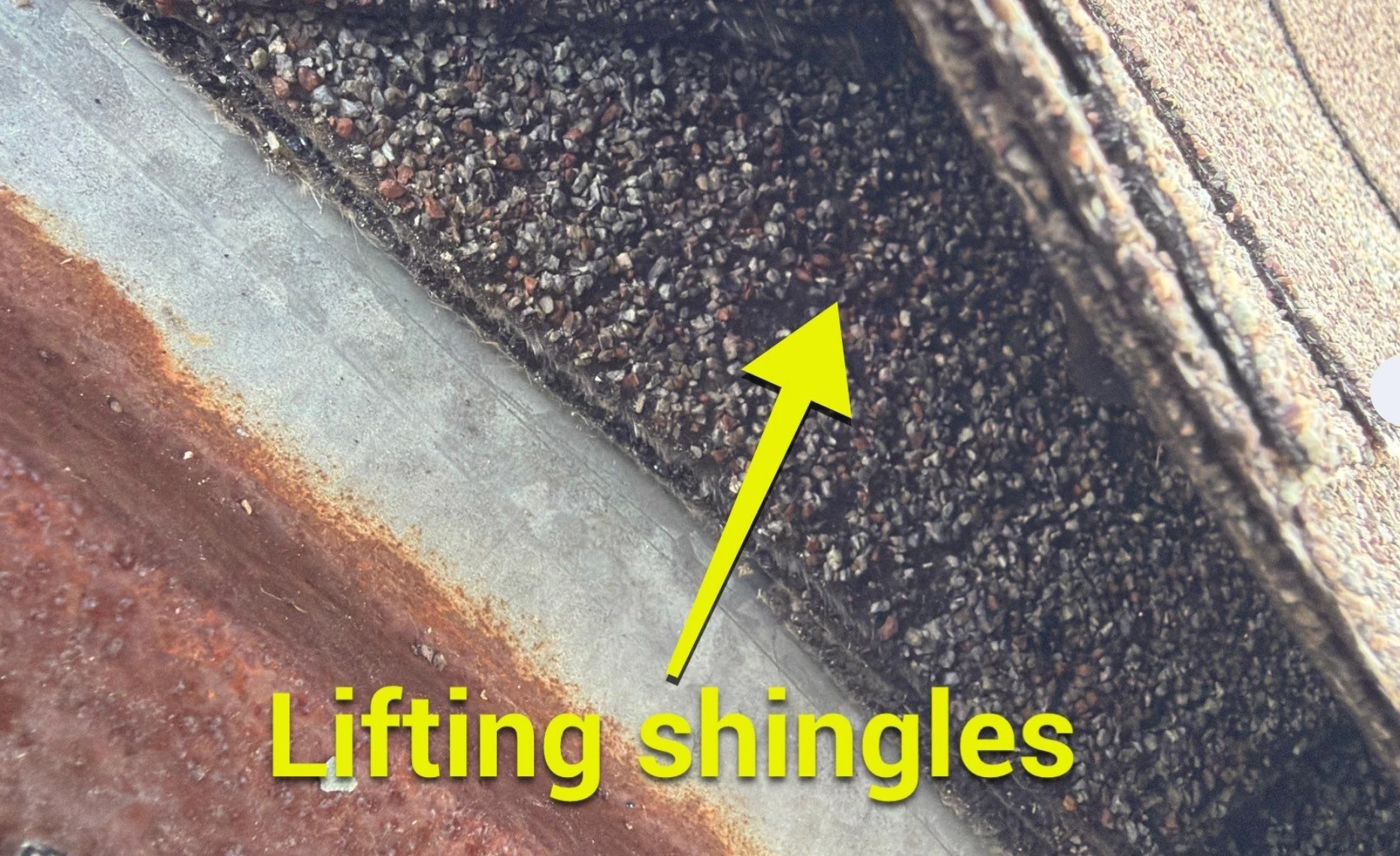
- Look at your roof from the ground. Walk the property with binoculars or your phone's zoom. Look for missing, curled, or lifted shingles, bent flashing around chimneys and vents, and sagging spots. On metal roofing, look for loose panels and backed-out fasteners. Stay off the roof. If something looks wrong, call a roofer before the weather turns.
- Clean gutters, downspouts, and roof drains. Water that can't drain goes where you don't want it. Clear leaves and debris and make sure downspouts push water away from the foundation. Business owners: check scuppers and drains on flat roofs. A blocked drain on a commercial roof can hold thousands of pounds of water.
- Trim trees and clear the yard. Cut back limbs hanging over the roof. Bring in or tie down anything the wind can pick up: grills, trampolines, trash cans, signs, pallets. What blows around in a storm tends to land on a roof, yours or your neighbor's.
- Take "before" photos today. Photograph your roof, siding, windows, fences, and the inside of each room, ceilings included. Date-stamped photos show the condition of your property before the storm, which makes any conversation with your insurance company simpler. For businesses, add equipment, inventory, and rooftop units.
- Read your insurance policy now. Check three things: your named-storm or hurricane deductible, whether you carry flood coverage (standard policies do not include it), and how to reach your insurer. Save the number in your phone. Coverage questions go to your agent or insurance company.
- Protect windows, doors, and the garage. Install shutters or pre-cut plywood for windows. Check that exterior doors latch firmly. Garage doors are a common failure point in high wind. When one gives way, pressure builds inside the house and pushes up on the roof. Brace it if yours isn't wind-rated.
- Check the attic and ceilings. Go up with a flashlight. Water stains, damp insulation, or daylight coming through the decking all point to a leak that a storm will make worse. Move anything valuable out of the attic or cover it with plastic.
- Stock supplies for at least three days. Water (one gallon per person per day), non-perishable food, medications, flashlights, batteries, phone chargers, cash, and a full tank of gas. Add a few tarps and a roll of plastic sheeting so you can protect belongings inside if a leak starts. Ready.gov's hurricane guidance has a full supply list.
- Make a plan for people and for the business. Know your evacuation route and where you will go. Decide now what triggers leaving. Business owners: back up data offsite, secure rooftop equipment, move inventory off the floor, and make sure employees know who to call and when to report.
- Line up a local roofer before you need one. After every storm, out-of-state crews knock on doors across Louisiana. Some do good work. Some take a deposit and disappear. Save the number of a licensed, local, insured roofing contractor now. Be cautious with anyone who pressures you to sign on the spot.
After the Storm: If Your Roof Takes a Hit
Wait until the weather has fully passed and it is safe to go outside. Then:
- Stay off the roof. Wet, damaged roofs are dangerous. Check from the ground and from inside the attic.
- Photograph everything before anything gets moved or repaired. Match the angles of your "before" photos if you can.
- Stop more water from getting in. Catch drips, move belongings, and have a professional tarp the roof if there is an opening.
- Contact your insurance company to report the storm damage. Your insurer and agent are the ones to answer coverage and claim questions.
- Get a written inspection and repair estimate from a licensed local roofer. Keep receipts for any emergency work.
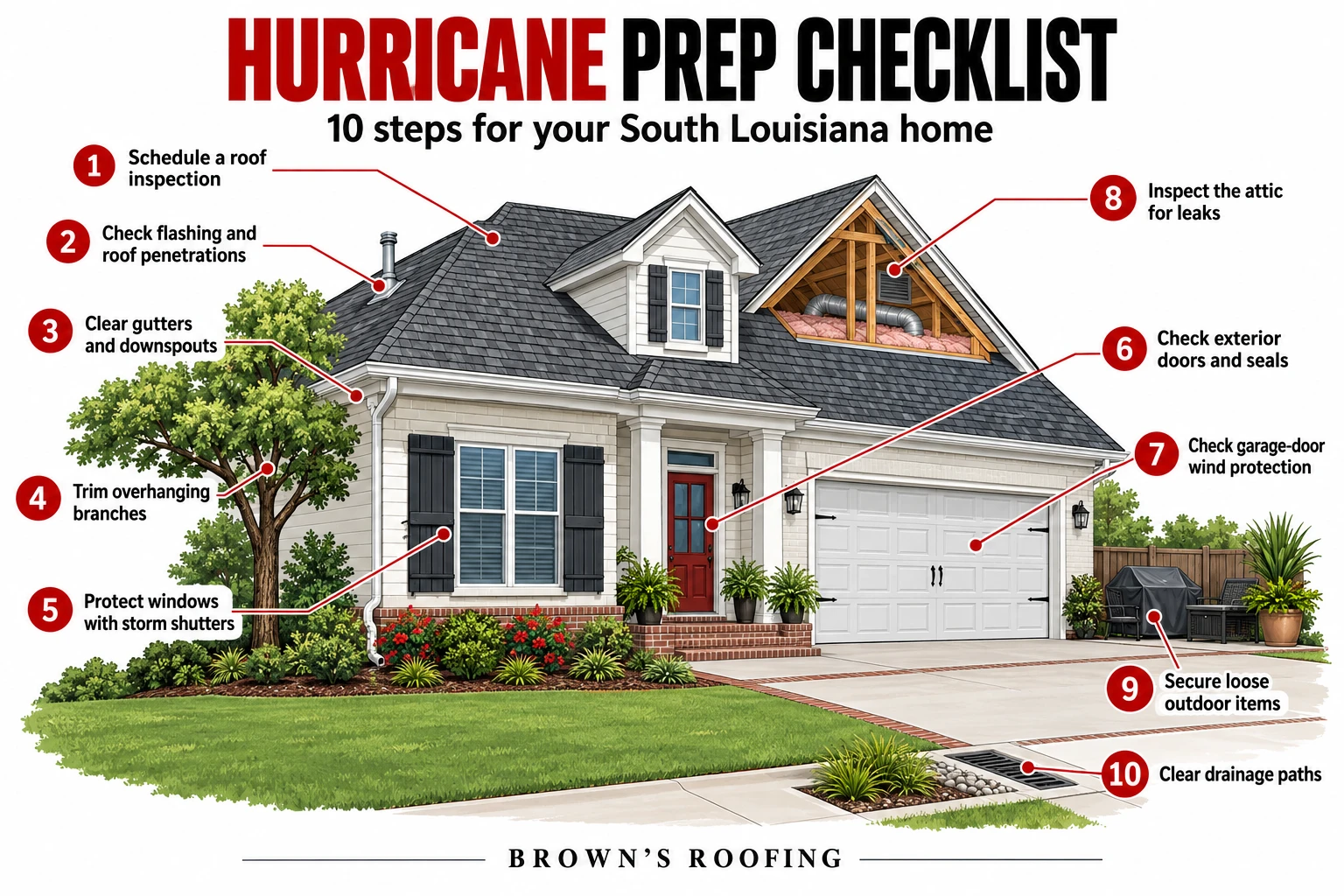
Not all damage is obvious. Shingles can lose their seal in high wind and look fine from the yard, then leak months later. If the storm comes through your area, a post-storm inspection is worth it even when nothing looks wrong.
Frequently Asked Questions
When should I start preparing my roof for a tropical storm?
Now, while it is dry and calm. Once a watch is issued, stores empty out and roofers' schedules fill. A ground-level walk-around and a gutter cleaning take an afternoon and catch most of what a storm would exploit.
Can a tropical storm damage a roof, or only a hurricane?
A tropical storm can do plenty. Gusts well below hurricane strength lift aging or poorly sealed shingles and loosen flashing, and heavy rain finds every weak point. Most of the roof damage we see after Gulf systems starts at edges, ridges, and penetrations.
Should I get on my roof to check it before the storm?
No. Check from the ground with binoculars or a phone camera, and from inside the attic with a flashlight. If you see something that concerns you, have a roofer look at it.
Does homeowners insurance cover flood damage from a hurricane?
Standard homeowners policies do not include flood coverage; it is a separate policy. Wind and named-storm coverage, and the deductible that applies, vary by policy. Your agent or insurer is the one to confirm what you have.
What should a business owner do to protect a flat roof?
Clear every drain and scupper, remove loose debris and materials from the roof, and secure rooftop units and their access panels. Ponding water is the main risk on low-slope roofs, and a single blocked drain can create it.
How do I avoid roofing scams after a storm?
Choose your contractor before the storm. Afterward, verify a Louisiana license and insurance, insist on a written scope, and don't sign under pressure or hand a large deposit to someone who showed up at your door unasked.
Get Ahead of It
The best time to find a roof problem is before the wind and rain do. Brown's Roofing has offices in Baton Rouge and Lafayette, and our local crews serve homes and businesses across South Louisiana.
If you spotted something during your walk-around, or you just want a professional set of eyes on your roof before the weekend, call our Baton Rouge office at (225) 424-2109 or our Lafayette office at (337) 408-1089 for a free roof inspection with same-day response and no obligation. And if the storm does come our way, we will be here after it passes.
Stay safe, stay informed, and follow the guidance of your parish officials.