Louisiana property owners tend to ask the same question every June: what does the season ahead hold, and is the roof overhead ready for it? For 2026, forecasters have given an early answer — along with a caveat that every Gulf Coast homeowner, apartment manager, and commercial property owner should take to heart.
What the 2026 Hurricane Season Forecast Says
NOAA released its official 2026 Atlantic hurricane season outlook on May 21, and the headline is a below-average season. Forecasters put the odds at 55% for below-normal activity, 35% for near-normal, and 10% for above-normal, with a predicted range of 8 to 14 named storms, 3 to 6 hurricanes, and 1 to 3 major hurricanes rated Category 3 or stronger. Colorado State University's April outlook pointed the same direction, calling for roughly 13 named storms and 6 hurricanes — among the quietest forecasts CSU has issued in years.
A below-average season is welcome news. It is not a guarantee. Seasonal outlooks describe how busy the basin is likely to be; they say nothing about where a storm will actually go. Several of the costliest hurricanes in Louisiana history formed in seasons that were otherwise unremarkable, and as NOAA's forecasters are quick to point out, a single landfall is all it takes to turn a quiet year into a catastrophic one. You can read the full NOAA 2026 outlook for the complete numbers.
El Niño, La Niña, and Why ENSO Drives the Forecast
The pattern behind this year's outlook is ENSO — the El Niño-Southern Oscillation, a cycle of warming and cooling in the equatorial Pacific that shapes weather across the Atlantic basin and Gulf of Mexico. 2026 is shaping up as a developing El Niño, which is the main reason both NOAA and CSU expect a quieter Atlantic.
El Niño years
El Niño tends to increase upper-level wind shear and promote sinking air over the Atlantic. Both of those work against tropical development, which generally means fewer storms and fewer major hurricanes reaching the Gulf Coast.
La Niña years
La Niña reverses the picture: reduced wind shear, more favorable conditions for development, a greater chance of Gulf landfalls, and a higher risk of rapid intensification near the coast. Historically, several of Louisiana's most active seasons have lined up with La Niña conditions.
Here is the part property owners should hold onto: ENSO helps predict the storm count, not your individual risk. A below-average year with one Category 3 landfall over your parish is, for your roof, a bad year. The forecast is a planning tool, not a reason to skip preparation.
Why Roof Condition Matters More Than the Forecast
Most major roof failures don't begin during the storm. They begin years earlier. During inspections across Monroe, Baton Rouge, Shreveport, and Lafayette, our crews routinely find the same vulnerabilities:
- Loose or lifting shingles
- Aging, cracked pipe boots
- Deteriorated or lifting flashing
- Exposed or backed-out fasteners
- Corrosion on metal roofing
- Damaged ridge vents
- Improper previous repairs
A roof can shrug off ordinary weather for years and still fail when hurricane-force wind and wind-driven rain find one of those weak points. The forecast doesn't change what's already wrong with a roof — it only changes how much time you have to address it. A small, inexpensive fix made in calm weather is often the difference between a minor roof repair and a major insurance claim later. It's also a matter of timing: routine work scheduled now is straightforward, while the same repair after a storm competes with thousands of others for a contractor's attention.
What a FORTIFIED Roof Adds
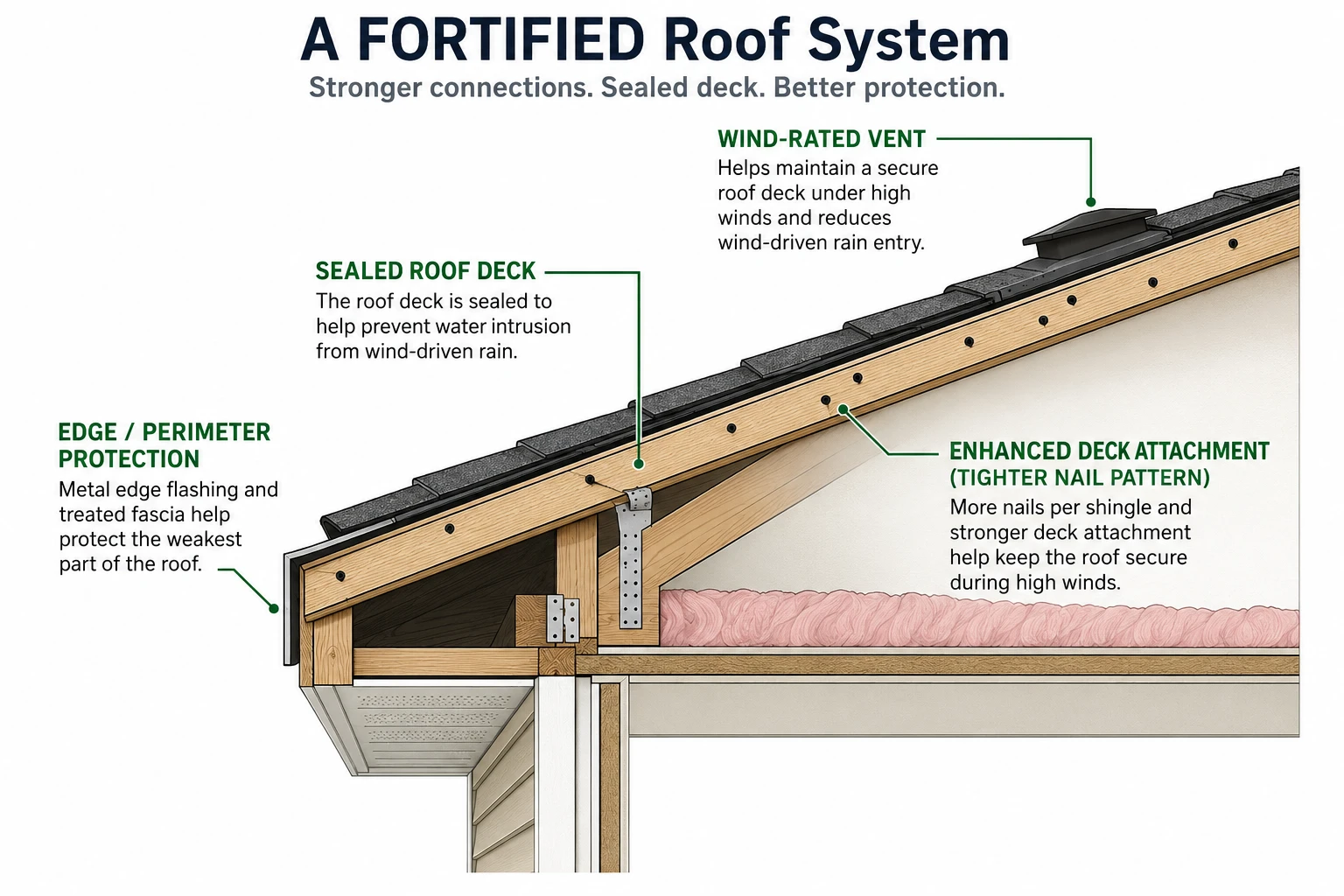
FORTIFIED is a voluntary, beyond-code roofing standard developed by the Insurance Institute for Business & Home Safety (IBHS) to help roofs withstand high winds, hurricanes, and wind-driven rain. A FORTIFIED roof system focuses on a handful of upgrades that matter most when a storm hits:
- A sealed roof deck that keeps water out even if the outer covering is torn away
- Enhanced deck attachment using a tighter nailing pattern
- Improved edge and perimeter protection, where wind uplift starts
- Wind-rated vents that resist wind-driven rain intrusion
- Stricter installation tolerances overall
Brown's Roofing is an IBHS FORTIFIED Certified Contractor, which means our crews are trained and certified to build to the standard. Worth understanding: the FORTIFIED designation itself is issued by an independent third-party evaluator after the work is documented and reviewed — that separation between the installer and the evaluator is exactly what gives the program its credibility. Many carriers offer premium credits or discounts for a designated FORTIFIED roof, so it can pay for itself over time. You can learn how the program works on the IBHS FORTIFIED Roof page.
Inside a Large-Scale FORTIFIED Re-Roof in Alexandria
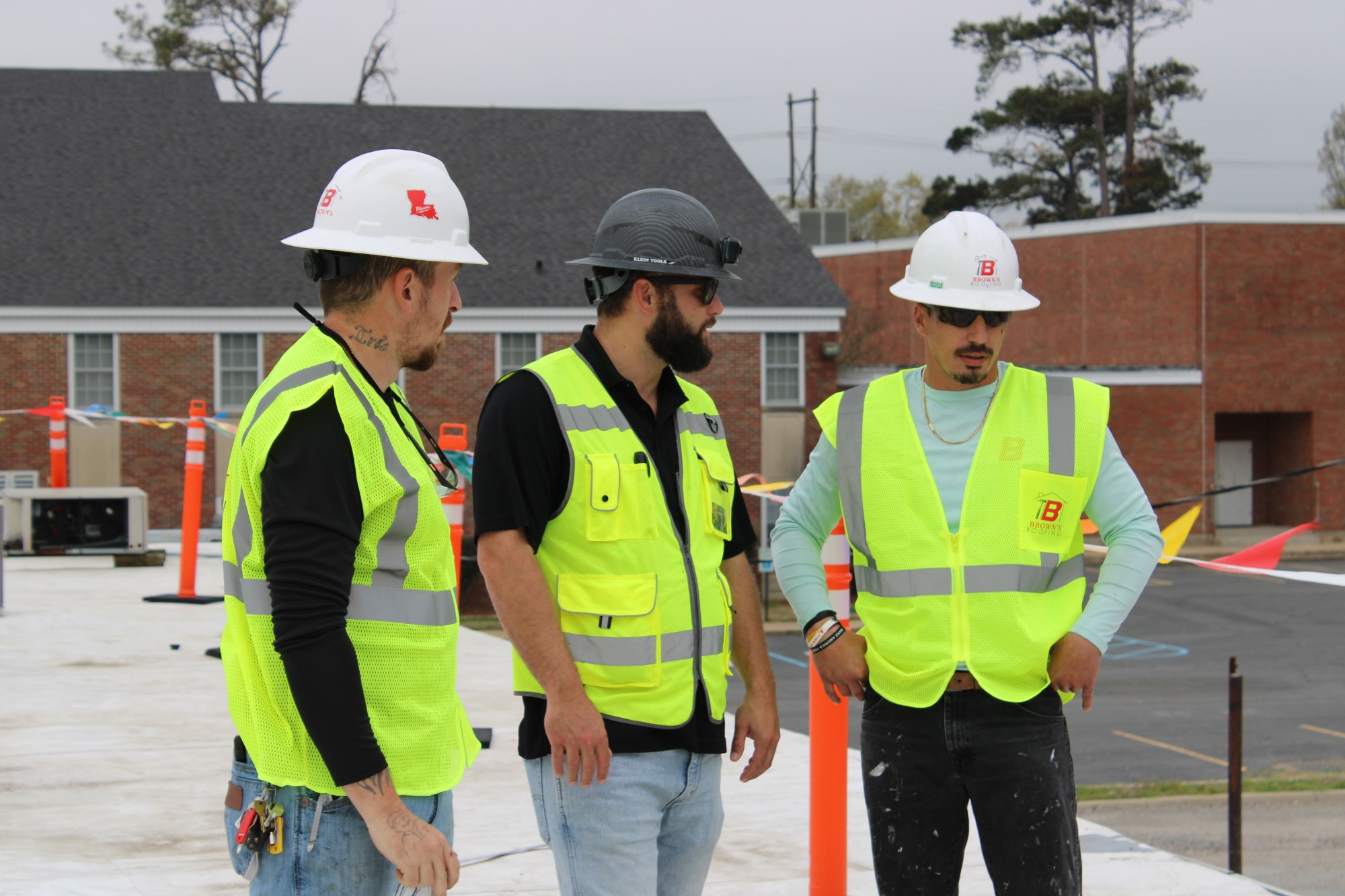
Demand for storm-resilient roofing isn't limited to single-family homes. This summer our production team is coordinating a large-scale multifamily FORTIFIED re-roofing project in Alexandria, Louisiana — on the order of 125 buildings — ahead of peak hurricane season.
Projects of that scale are as much logistics as roofing: material staging and delivery, resident communication and access, crew safety coordination, quality-control inspections at every stage, and scheduling around Louisiana's summer weather windows. The goal is straightforward — deliver roofing systems built to better withstand future storms while keeping disruption to residents to a minimum. It's also a useful signal of where the market is heading, as more apartment owners and multifamily operators invest in stronger roofing systems before the season intensifies rather than after.
Emergency Roof Tarping After a Storm
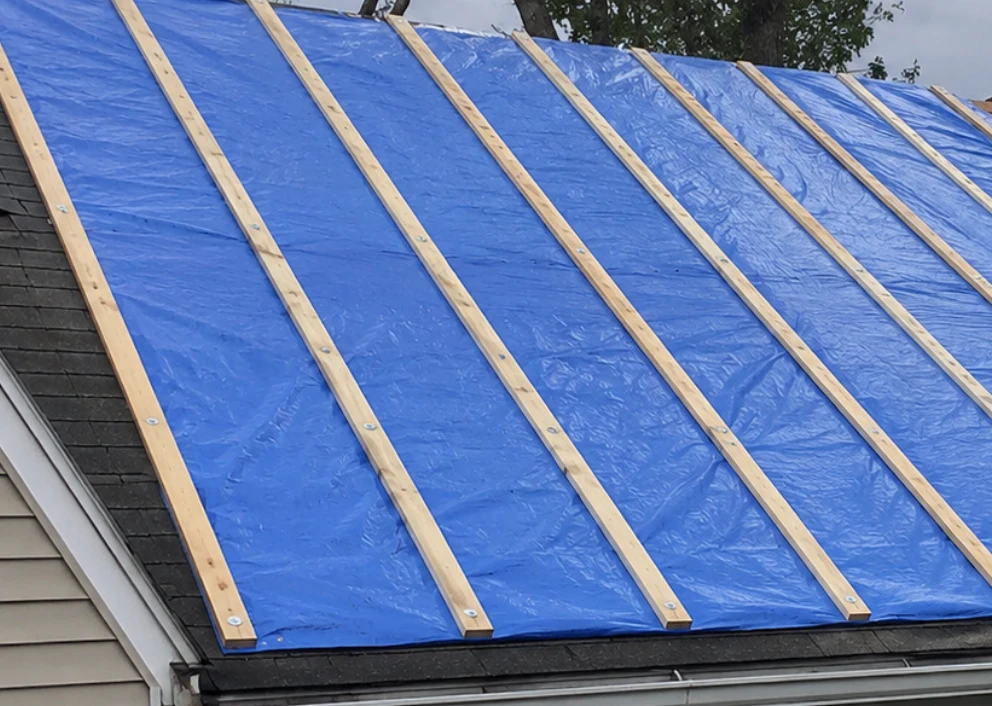
When a storm does open up a roof, emergency tarping is usually the first move. A properly installed tarp helps prevent interior water damage, protects belongings and finishes, limits additional structural damage, and supports the documentation that an insurance claim depends on.
The method matters. We install storm tarps using nail-and-batten construction: 1×4 wood battens nailed through the tarp and into the roof deck, which holds the tarp flat and secure through follow-on wind and rain far better than a tarp simply weighted or tied down. After a major storm, qualified contractors book up fast, and tarping is almost always step one — a stabilization measure that buys time before permanent repairs can begin.
How to Respond If Your Roof Suffers Hurricane Damage
If a storm impacts your property, a calm, documented response protects both your safety and your claim.
- Stay safe and stay off the roof. Storm damage can hide structural instability, punctures, saturated decking, and electrical hazards. Assess from the ground.
- Document everything. Photograph missing shingles, downed trees, water intrusion, and any interior and exterior damage before anything is moved or cleaned up. Thorough documentation is critical to the claims process.
- Schedule a professional roof inspection. A roofing contractor can identify wind and hail damage, flashing failures, structural concerns, and what temporary stabilization is needed — including damage that isn't visible from the ground.
- Mitigate further damage. Emergency tarping and temporary repairs help prevent additional losses while the insurance evaluation is underway. Most policies expect reasonable steps to limit ongoing damage.
Understanding Hurricane Insurance Claims
Whether storm damage qualifies for coverage depends on several factors — policy language, the cause of loss, the roof's pre-storm condition, your deductible, and any hurricane-specific provisions in the policy. A professional inspection helps identify genuinely storm-related damage and produces the documentation that supports a claim. Common hurricane-related roof claims include wind damage, uplifted or missing shingles, lost roofing materials, water intrusion, metal roof damage, and flashing failures.
Our approach is built around clean documentation, not pressure. We're glad to be on-site during your carrier's inspection at no charge, document the damage thoroughly, and scope the repair honestly — no assignment of benefits, no inflated scopes. The goal is accurate documentation for the claim you file so your roof gets properly restored.
Frequently Asked Questions
Does a below-average forecast mean I don't need to prepare?
No. A seasonal outlook predicts how many storms form, not where they go. A single landfall over your area is all it takes for a "quiet" season to become a costly one for your roof. Preparation is about your property's resilience, not the basin-wide count.
Will a FORTIFIED roof lower my insurance premium?
It often can. Many carriers offer premium credits or discounts for a designated FORTIFIED roof, and the savings can offset the upgrade over time. The exact incentive depends on your carrier and location, so it's worth confirming with your insurer before you start.
When is the best time to schedule a hurricane-readiness inspection?
Before the season ramps up. The busiest day to call a roofer is the day after a storm; the best day is well before one arrives, when small issues can still be corrected calmly and on your schedule. A proactive inspection finds the weak points before the wind does.
How do I know if my roof damage qualifies for a claim?
A professional inspection is the starting point. It identifies storm-related damage and documents it in a form you can submit with a claim, then your policy terms, deductible, and cause of loss determine coverage. We're glad to inspect, document, and be on-site during your carrier's inspection.
Get a Hurricane-Readiness Roof Inspection
The strongest roofing decisions are made before the storm, not after it. Brown's Roofing serves homeowners, commercial property managers, apartment owners, churches, schools, and multifamily operators across Louisiana — from our offices in Monroe, Baton Rouge, Shreveport, and Lafayette — along with Little Rock and Wichita and the broader Gulf South. Whether you need a readiness inspection, a repair assessment, a maintenance plan, FORTIFIED roofing, or storm and claims support when you need it, our team is ready to help you prepare. Call us at (318) 329-6579 for a free, no-obligation roof inspection with same-day response.