Over the past few years, private equity firms have been buying local roofing companies and combining them into regional and national platforms. A lot of homeowners, and a lot of people who work in the trade, suspect that after the sale the customer becomes a number on a spreadsheet. The honest answer is more nuanced than either side likes to admit: ownership alone doesn't decide whether you get good service, but the business model behind a roll-up creates real pressures, and when those pressures win, homeowners and crews feel it first.
How Private Equity Is Reshaping the Roofing Industry
Private equity (PE) firms raise money from investors, buy companies, and aim to sell them later for more than they paid. In roofing, the most common approach is the roll-up: buy a "platform" company, acquire more local roofers around it, merge back-office functions like accounting, marketing, and call handling, then sell the larger combined business.
Roofing fits that playbook well. Every roof eventually needs replacing, demand is steady, and the industry is made up of thousands of small, owner-run companies. The pace has been fast. Trade-press reporting in Roofing Contractor counted 17 PE-backed roofing contractor platforms at the start of 2023 and 56 by the end of 2024.
That means the company name on the yard sign may not tell you who owns the business anymore. Many acquired roofers keep their original name, phone number, and logo after the sale.
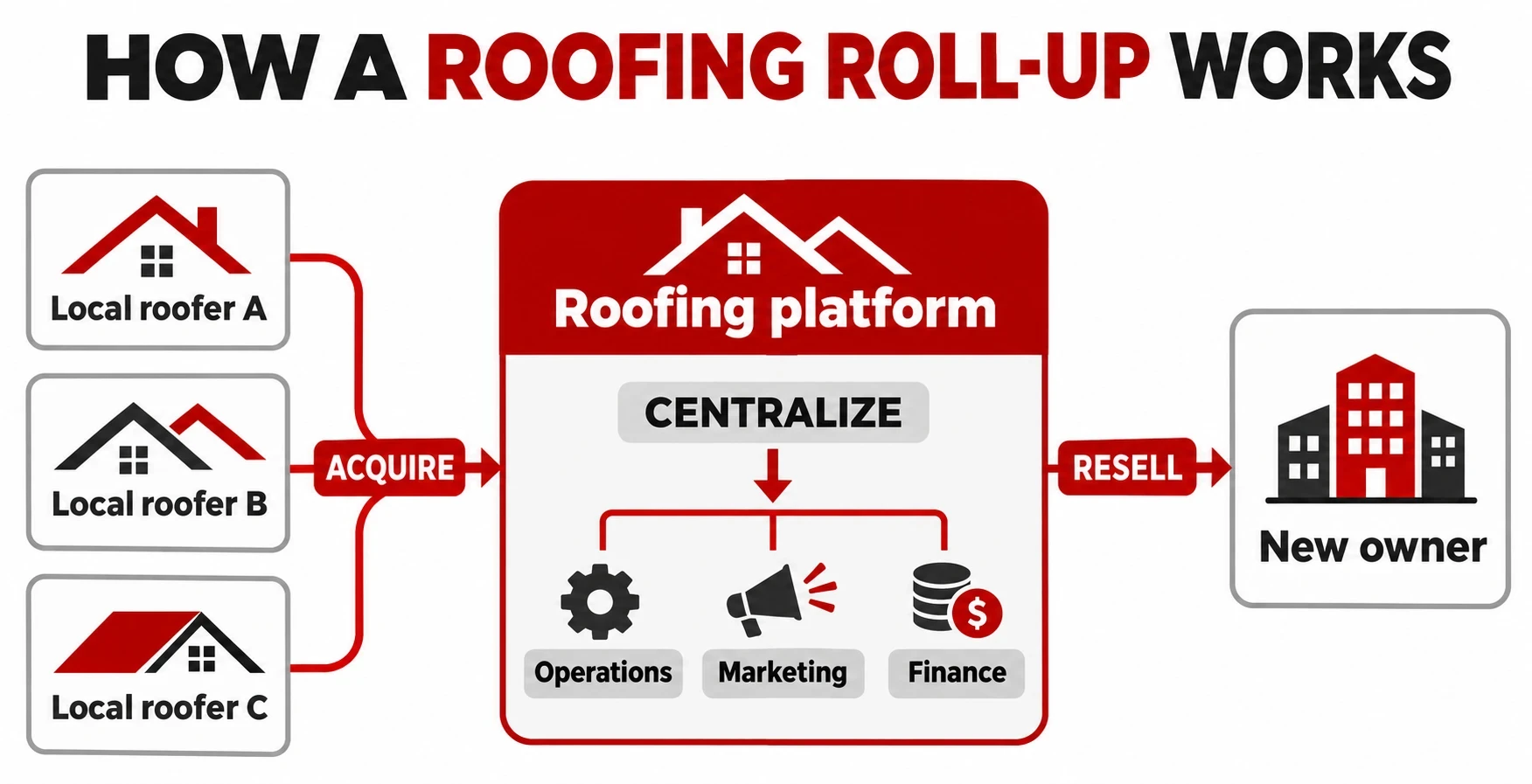
A roll-up acquires several local roofers, centralizes operations, marketing, and finance into one platform, then resells the combined business.
Does the Customer Really Become a Number?
Not automatically. It's worth being fair here, because the evidence doesn't support a blanket claim that every PE-backed contractor delivers worse service.
- A 2026 mystery-shopping study by Pied Piper evaluated how 31 large home-services brands handled new customer inquiries. Several of the top performers were franchise brands under PE-backed parent companies.
- Researchers at the University of St. Gallen found that consumers view private equity ownership more negatively than other ownership types, but online reviews at acquired retail businesses didn't get measurably worse after the deals.
So a PE label isn't proof of bad service, and local ownership isn't proof of good service. What the label does tell you is how the business is built to make money. That's where the real risks show up.
Debt and the exit clock
Roll-ups are often financed with significant borrowing, and the investors plan to sell the business within a set window. That combination pushes management toward fast growth and higher margins on a timeline. When interest rates rise or sales slow, the pressure lands somewhere, and it's usually on staffing, training, or how long a crew gets to spend on your roof.
Centralized decisions, far from your roof
Industry observers have pointed to the friction between roll-up structures (central call centers, national marketing, quarterly growth targets) and roofing work that depends on local judgment. A roof in Lafayette deals with humidity and hurricane-season wind; a roof in Wichita deals with hail and hard freezes. The people closest to those conditions should be the ones making calls on your project.
Losing the people you trusted
Acquisitions are hard on employees. A 2025 TalentLMS and WorkTango survey of 1,200 U.S. workers who went through a major change like an acquisition found that about half said it damaged their trust in leadership, and more than a third said they were more likely to look for another job. In roofing, the estimator who knew your house and the crew lead who did your last repair are the service. When they leave, the relationship leaves with them.
When the Model Breaks: The Renovo Collapse
The clearest warning came in late 2025. Renovo Home Partners, a home-improvement roll-up formed with private equity backing in 2022, shut down abruptly and filed for Chapter 7 liquidation. According to the Minnesota Attorney General's consumer alert, the shutdown closed 16 affiliated companies operating in at least nine states at the same time, including Minnesota Rusco, a remodeler that had been locally owned for most of its 70-year history.
Customers were left with unfinished projects and paid deposits. In a Chapter 7 liquidation, homeowners with deposits are generally treated as unsecured creditors, which means they're near the back of the line and often recover little. Employees found out the same day the doors closed.
Not every roll-up ends this way, and plenty of PE-backed contractors are well run. But Renovo shows what happens when the financial structure fails: the companies that customers had trusted for decades disappeared overnight, along with any workmanship warranty those companies had written.
That last point matters for roofing. A manufacturer's warranty covers the materials. Workmanship coverage generally comes from the contractor, and it's only as good as the company standing behind it ten years from now.
Technology Isn't the Dividing Line — Accountability Is
Private equity platforms often arrive with modern software: centralized CRMs, automated follow-up, digital estimates, and increasingly AI tools. That's a real advantage, and independent roofers who ignore it will lose ground. Fast, organized communication is one of the main ways customers judge a contractor, and the same Pied Piper study found that 42% of customer inquiries across the home-services brands it tested failed to get an effective response. Slow callbacks aren't a PE problem or an independent problem. They're an industry problem.
The strongest position for a homeowner is a contractor that has both:
- Modern systems so your first call gets answered, your inspection is documented, and your project doesn't fall through the cracks.
- Local accountability so the people making decisions about your roof live in your market, answer to you rather than to a sale timeline, and will still be here for a warranty call years from now.
That's the model we've built at Brown's Roofing. We're independently owned, with six permanent offices and local crews in Monroe, Shreveport, Baton Rouge, Lafayette, Little Rock, and Wichita. We've invested in our own systems so inquiries get a same-day response and every inspection is documented, but the decisions about your roof are made by people who work in your market. Technology should make a roofer more responsive. It shouldn't replace the person who knows your roof.
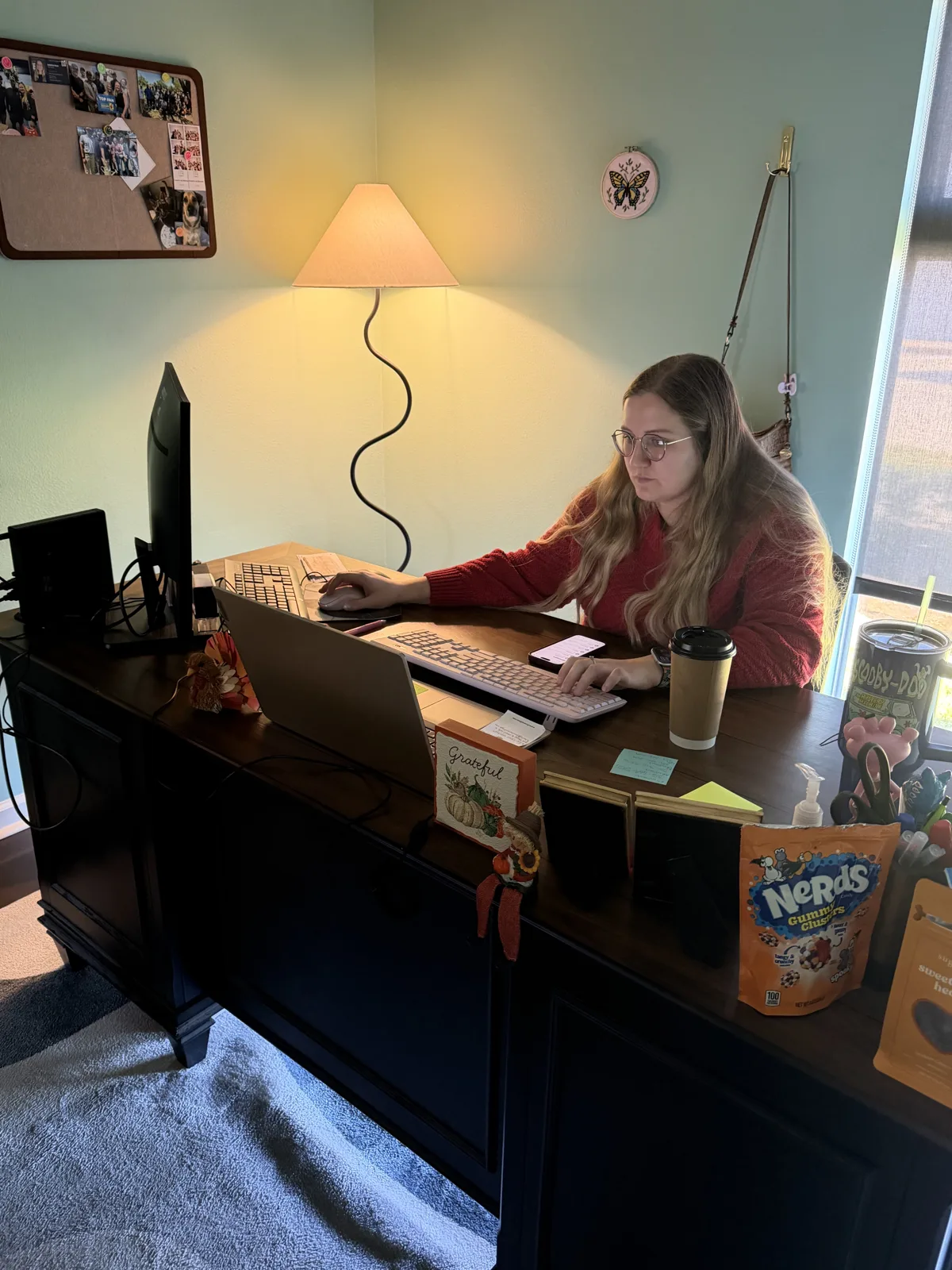
Customer inquiries are handled by our own team in our local offices, not a national call center.
How to Find Out Who Owns Your Roofing Company
- Check the website footer and About page. Look for phrases like "a [platform name] company," "proud member of," or "partner of." Acquired roofers often disclose the parent company there.
- Search the company name with "acquired" or "private equity." Acquisitions are usually announced in press releases and trade publications.
- Look up the business registration. Your state's contractor licensing board or Secretary of State business search can show the registered owner or parent entity.
- Ask directly. Who owns the company? Where are decisions about my project made? Who answers the phone if I have a warranty problem in year eight?
- Ask how deposits work. How much is due upfront, when, and is it tied to material delivery? Be cautious of large deposits long before work starts.
- Get the workmanship warranty in writing. Ask who backs it, and what happens to it if the company is sold.
A good contractor answers all six without hesitation. For a broader checklist on licensing, insurance, and certifications, see our guide to vetting roofing contractors in Little Rock, which applies in any market.
Frequently Asked Questions
Is private equity bad for the roofing industry?
Not across the board. Some PE-backed contractors are well run and invest in training, benefits, and technology. The risks come from the model itself: heavy borrowing, a planned resale, and centralized decision-making can push cost-cutting and turnover. When a heavily leveraged roll-up fails, as Renovo did in 2025, customers and employees absorb the damage first.
How do I know if my roofer is owned by private equity?
Check the website footer and About page, search the company name with "acquired" or "private equity," and look up the business registration with your state. Many acquired companies keep their original name, so asking the contractor directly is often the fastest way to find out.
What happens to my roof warranty if my roofing company is sold?
The manufacturer's material warranty stays with the product. Workmanship coverage depends on the contractor, so ask in writing whether the new owner honors existing workmanship warranties. If a company closes entirely, its workmanship warranty may close with it.
What happens to my deposit if a roofing company goes bankrupt?
In a Chapter 7 liquidation, customers with deposits are generally unsecured creditors and often recover little. To limit exposure, keep deposits reasonable, tie payments to material delivery or project milestones, and get the payment schedule in writing.
Are locally owned roofers more expensive than national companies?
Not necessarily. Pricing depends on roof size, slope, complexity, access, and material specification — we provide a written estimate after a free on-site inspection. Compare written scopes line by line rather than assuming either ownership model is cheaper.
Do independent roofing companies use modern technology?
The good ones do. Digital inspections, organized follow-up, and fast response times aren't exclusive to large platforms. Ask any contractor how quickly they respond to inquiries, how they document an inspection, and who your point of contact will be during the job.
Talk to a Roofer Who'll Still Be Here
If you want a straight answer on your roof from the people who will stand behind the work, Brown's Roofing offers free inspections with a same-day response across our Louisiana, Arkansas, and Kansas markets. We'll tell you what we see, put it in writing, and answer any question on the checklist above, including who owns the company. Call (318) 329-6579 to schedule your free roof inspection.