
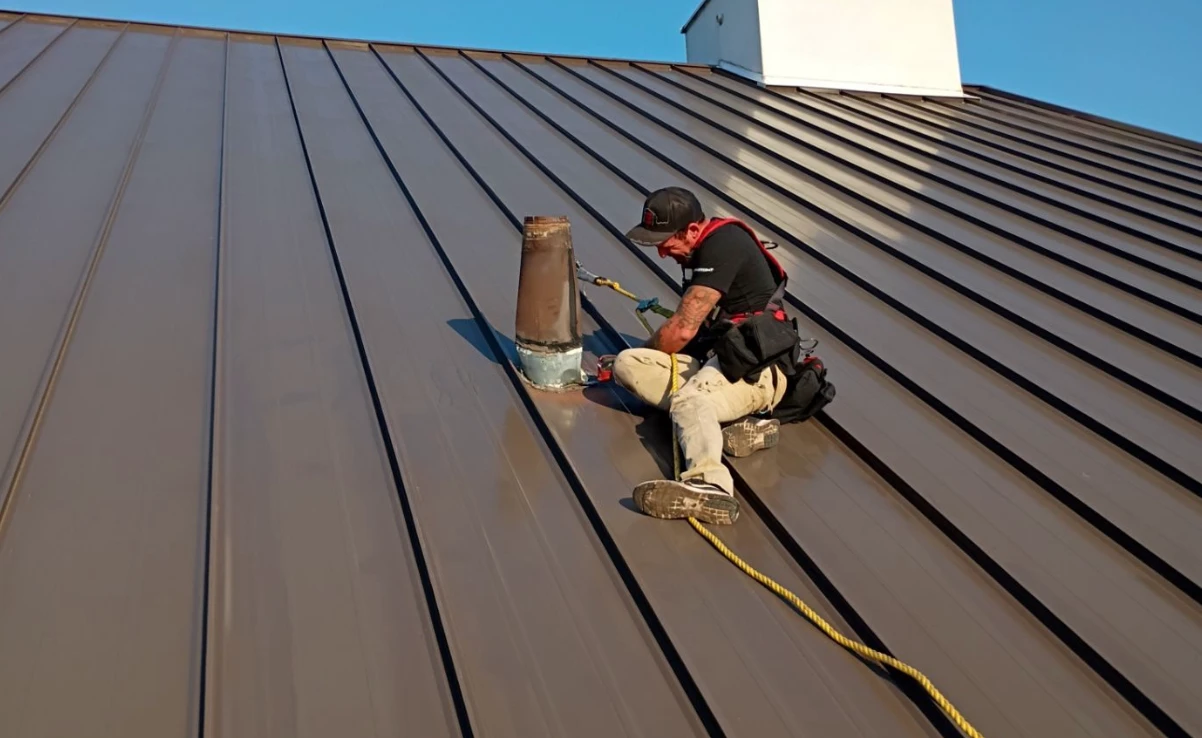
A metal roof overlay — also called a metal roof recover or retrofit — means installing a new roof system directly over your existing metal roof instead of tearing the old one off. The new system can be new metal panels or a single-ply membrane like TPO or PVC. It works when the existing panels are structurally sound, dry underneath, and the framing can carry the added load. It fails — and gets you in trouble — when there's widespread rust, trapped moisture, or sagging structure.
That's the short version. The rest of this guide is the tailgate conversation: when we recommend an overlay, when we tell a building owner to tear it off, what the code actually allows, and how the numbers shake out against a full replacement. We'll also walk through two real assessments our crew ran recently in central and northwest Louisiana.
What Is a Metal Roof Overlay?
An overlay is a recover — you leave the old roof in place and build a new watertight system on top of it. That's different from two other things people mix it up with:
- A repair patches a specific failure: re-driving backed-out fasteners, replacing a rusted panel, resealing a seam or a curb. You're fixing a problem, not replacing the roof.
- A full replacement (tear-off) strips everything down to the deck or purlins, hauls it off, and starts over.
- An overlay/recover sits in the middle: the old metal stays, the new system goes on top.
There are two flavors of metal overlay, and they're genuinely different animals.
Metal-over-metal. New exposed-fastener panels (think PBR or R-panel) or standing-seam panels installed over the old roof, usually on a sub-purlin or hat-channel system — sometimes called a "roof hugger." These are secondary steel members that install over the existing panels to create a new attachment plane. That new plane lets you re-establish slope and get a fresh, clean fastening surface up off the tired old panel.
Single-ply-over-metal. A TPO or PVC membrane system built over the metal. The existing roof is thoroughly cleaned first, then a typical retrofit uses a three-part buildup: a layer of EPS foam that fills the ribs (flutes) so you've got continuous support, a cover board that gives a hard, flat bearing surface, and the single-ply membrane — usually TPO — that does the actual waterproofing.
If you're weighing metal-over-metal against a membrane recover, our deeper dive on why metal roof retrofits with single-ply systems are the future of commercial roof recovery breaks down the tradeoffs. And if you're actually converting a shingle roof to metal — a totally different job — that's covered in our comprehensive guide to shingle-to-metal conversions.
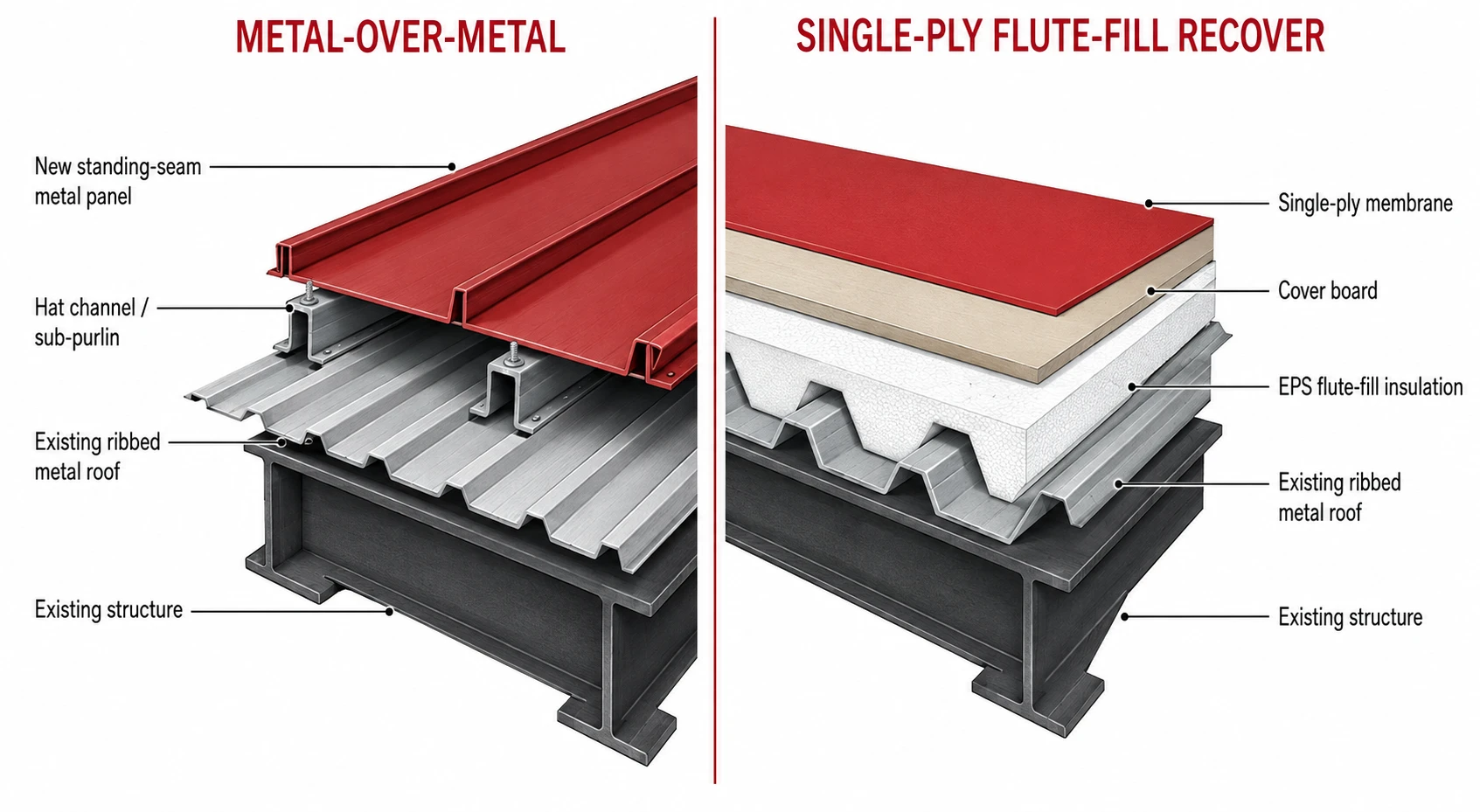
The two overlay assemblies side by side: new metal panels on hat-channel sub-purlins, or a single-ply membrane over EPS flute-fill and cover board.
When a Metal Roof Overlay Makes Sense
An overlay is the right call when the bones are good but the surface is tired. Here's what we look for before we'll recommend one:
- A sound substrate. The existing panels are still structurally intact. Surface rust or faded paint is fine; the metal isn't perforated or crumbling.
- No trapped moisture. The insulation and deck below are dry. This is non-negotiable, and we'll get to why.
- Structure that can carry the load. The purlins and framing have capacity for the added weight of a new system — and, for single-ply, for the wind uplift transferred through the fasteners into the purlins.
When those boxes are checked, an overlay is often the smarter money, especially on commercial buildings. The big driver is what an exposed-fastener metal roof does over time: it begins to fail from years of expansion and contraction that work the fastener connections loose. Older systems were designed with exposed fasteners, and when you replace them with a similar metal roof, those exposed-fastener systems generally don't come with a 20-year material warranty.
A single-ply recover flips that. Because replacement metal panels have gotten expensive, a single-ply metal retrofit is often the most cost-effective route that also carries a 20-year warranty.
There's a comfort payoff too. A white TPO membrane knocks down cooling load in a serious way — white TPO has an albedo of roughly 0.8, meaning it reflects about eighty percent of the sun's UV radiation. On a metal warehouse or church in the Ark-La-Tex, where summer roof-deck temperatures get brutal, that reflectivity shows up on the power bill.
And the biggest reason building owners choose it: you keep the doors open. No tear-off means no exposed deck, no rain risk to inventory, and far less disruption for an occupied building.
When You Should NOT Overlay — Tear It Off Instead
I'll be straight with you: an overlay is not a way to bury a bad roof. Capping problems doesn't make them go away — it hides them until they cost you double. Here's when we tell an owner to tear off.
Widespread rust and perforation. Once water has been getting through for years, you're past a surface issue. Once it penetrates the outer layer of metal, corrosion spreads into the insulation and decking below. If the panels are eaten up and the fasteners have lost their bite, there's nothing sound to build on.
Trapped or existing moisture. This is the one people underestimate. If the insulation under the old panels is wet, capping it seals that moisture in — and now you've got rot, mold, and rust progressing under a brand-new roof where you can't see it. The code agrees: if moisture in the insulation is confirmed by an infrared survey or core sampling, tear-off is required regardless of the number of layers.
Structural deficiencies. Sagging purlins, visible deflection, panels oil-canning under load. Adding weight to a frame that's already struggling is how you turn a roofing bill into an engineering emergency.
The way we settle the question isn't by eyeballing it from the parking lot — it's with a core sample and a hands-on inspection. A core cut lets us see exactly what's in the assembly and whether the insulation is dry. If you want to understand the tool, we wrote up what a core sample is in commercial roofing and why it settles the overlay-versus-tear-off debate before the first panel goes on.
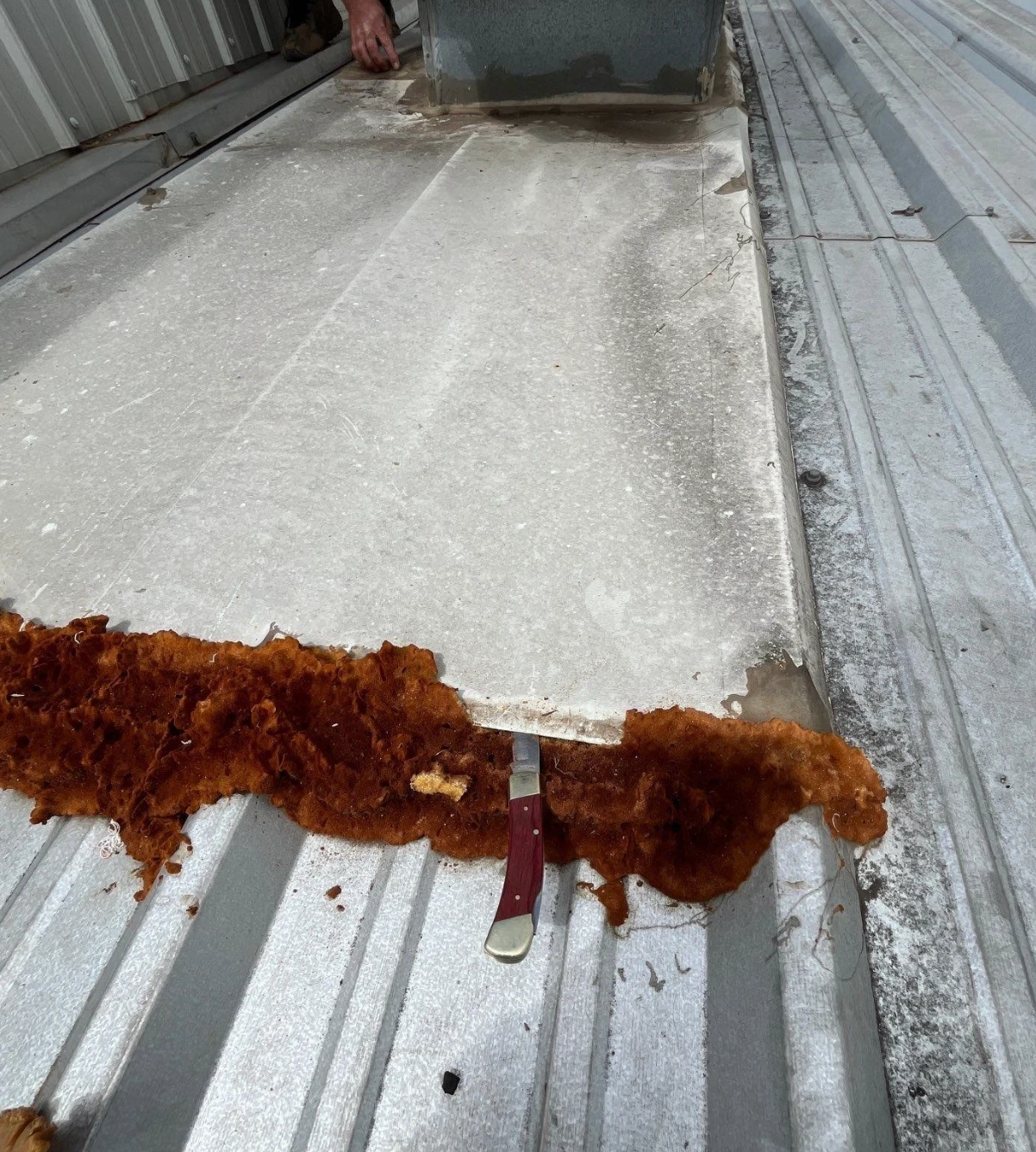
When corrosion has spread this far into the assembly, capping it with a new roof only hides the problem. This is a tear-off.
How Many Layers Can a Roof Have? Code Considerations
The general rule under the International Building Code's roof-recover provisions is two layers, then you tear off. The IBC allows recovering over existing low-slope roofing, but only one layer over the original — when two layers are already present, full tear-off to the deck is required. The IRC language for houses says the same thing: new roof coverings can't go on where the existing roof already has two or more applications of any type of covering, where the existing covering is water-soaked or deteriorated, or where it's slate, clay, cement, or asbestos-cement tile.
Metal panels get one important exception. Recovering is generally allowed only when there's a single existing roof in place — except when a recover metal panel system transmits its loads directly to the structural system, bypassing the existing roof. In plain terms: a properly engineered standing-seam or sub-purlin metal system that carries its own load straight to the structure can qualify as its own independent roof, which changes the layer math. The updated code language leans hard on the structural system's ability to carry those loads independently when you use a complete system like a standing-seam metal roof.
Two more things matter more than the layer count:
- Dead load. Metal-over-metal with sub-purlins adds real weight. The framing has to be checked for it.
- Wind uplift and warranty. Recover systems still have to meet current wind and impact requirements — metal reroofing has to satisfy the same fire, wind, and impact standards as new construction.
The manufacturer's warranty rides on fastener pull-out and spacing. On GAF's retrofit system for membranes over metal, for example, a minimum 1-inch fastener embedment is required and pull-out tests have to be performed. Skip the pull-out test and you can lose the guarantee.
Codes are adopted and amended locally, so what your parish or Kansas county enforces can differ. We pull the permit and confirm the specifics before we quote.
Metal Overlay vs. Single-Ply Recover Over Metal
Both keep the old roof out of the landfill. They win in different situations.
Metal-over-metal keeps a metal look and metal performance. It's a good fit when the owner wants panels for aesthetic or slope reasons, or the building is agricultural. These assemblies typically accept compressible unfaced fiberglass between the old and new panels, while single-ply systems need rigid board insulation to provide a suitable bearing surface. Slope matters here too: most compact metal retrofit panels want at least a 1/2:12 pitch, while single-ply membranes can work at lower slopes. If you're deciding between panel profiles for the new layer, our breakdown of R-panels versus PBR metal panels is worth a read.
Single-ply (TPO/PVC) recover is usually the better answer on low-slope commercial metal that's leaking at the fasteners and seams. The flute-fill approach solves the exact failure mode that kills old metal: the membrane is mechanically attached directly to the purlins, the fastening rate is increased around the perimeters to meet or exceed wind-uplift requirements, and all laps and joints are fully heat-welded into a continuous seal. No more exposed fasteners working loose every summer. The full component breakdown lives in key components of a TPO retrofit over metal roofs.
One design detail worth flagging: when you cap metal with a membrane, drainage changes. Equal loading across the purlins becomes critical, because water is no longer channeled by the ribs — the flow pattern shifts. Good retrofit design uses tapered insulation or the flute-fill to keep water moving to the drains instead of ponding.
What Does a Metal Roof Overlay Cost vs. Full Replacement?
Here's the honest answer: an overlay usually costs less than a tear-off and replacement, but how much less depends entirely on what's under the old roof. I'm not going to hand you a made-up per-square number, because the variables swing it too much — building size, slope, insulation R-value target, membrane thickness (45-mil, 60-mil, or 80-mil TPO), wind zone, and how much prep the old roof needs. Pricing depends on roof size, slope, complexity, access, and material specification — we provide a written estimate after a free on-site inspection.
The savings on an overlay come from three places you skip:
- Tear-off labor — pulling and hauling the old roof is a big line item.
- Disposal — dumpsters and landfill fees for old metal and insulation.
- Deck and structure repair — you're not exposing and rebuilding the substrate.
Although retrofit material can run higher per square foot than a basic replacement panel, total project cost typically favors the retrofit once you account for all of those categories. For occupied commercial buildings, add the value of not shutting down: no interior protection, no weather exposure to inventory, no lost production days.
But those savings evaporate the moment we find wet insulation or rusted-through deck. If we have to tear off anyway, you've paid for an assessment that saved you from a much more expensive mistake — capping a roof that would've failed in two years. That's exactly why we core it first.
How Brown's Assesses Overlay vs. Repair: Bunkie and Stonewall
Every recommendation we make starts on the roof, not in a sales script. Two recent central- and northwest-Louisiana jobs show how we sort it out.
Gibko Griffins — Bunkie, LA. Our repair division was brought in to evaluate an aging metal roof. The assessment work here is the whole point: before anyone talks overlay, we map where the fasteners are backing out, where the seams have opened, whether the panels themselves still have integrity, and — critically — whether water has already made it into the assembly below. On a metal roof, the fasteners and end-laps tell you most of the story.
Salem Baptist — Stonewall, LA. Same discipline, different building. This church roof, just south of our Shreveport market, got evaluated for the same failure modes: rust progression, fastener condition, and any sign of trapped moisture in the deck or insulation. For a congregation watching a budget, the difference between a targeted repair, a recover, and a full replacement is real money — so we don't guess.
On both, the decision tree is the same one we run everywhere in Louisiana, Arkansas, and Kansas:
- Is it a localized failure? Fix it — repair is cheaper and honest.
- Is the metal broadly failing but the structure sound and the substrate dry? That's the overlay conversation — metal-over-metal or single-ply, depending on slope and use.
- Wet insulation, perforated panels, or a struggling frame? Tear it off. No shortcuts.
We're a stable local contractor, not a storm-chaser — so we'd rather tell you a repair holds you five more years than sell you a roof you don't need yet.
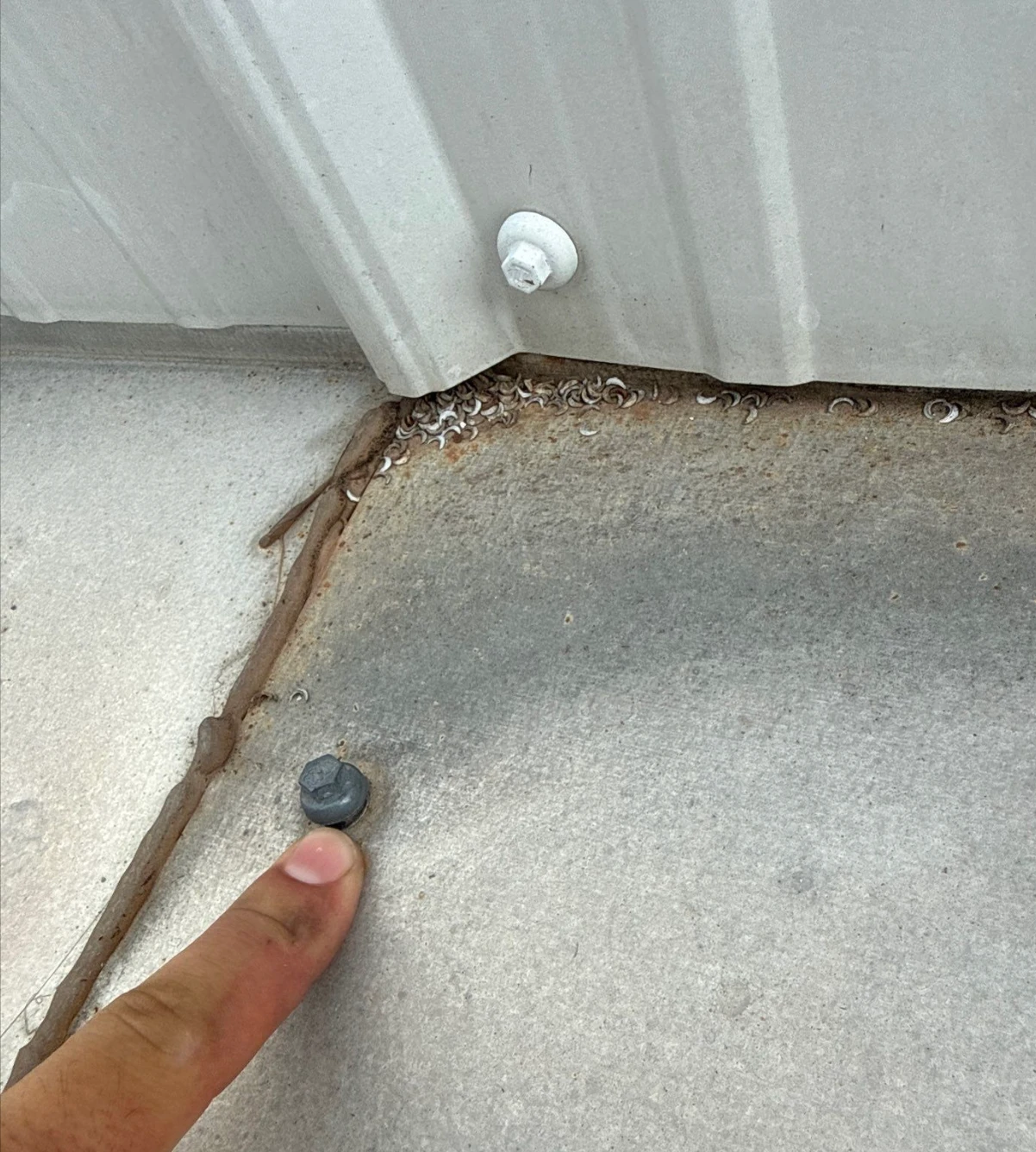
Small tells matter in an assessment: fastener condition, drill shavings left to rust, and how the panel base is holding up.
Frequently Asked Questions
Can you install a metal roof over an existing metal roof?
Yes, when the existing panels are sound and the framing can carry the load. It's typically done with a sub-purlin or hat-channel system so the new panels get a clean fastening plane and you can re-establish slope. Under the building code, a recover metal panel system is allowed even over an existing roof when it transmits its loads directly to the structural system, bypassing the old roof.
How many layers of roofing are allowed by code?
Two, in most jurisdictions — no more than two layers of roof covering are permitted on low-slope roofs before a tear-off is required. A properly engineered metal system that carries its own load to the structure can count as independent, and wet or deteriorated roofs have to be torn off regardless of layer count.
Is a metal roof overlay cheaper than a full replacement?
Usually, yes — you skip tear-off labor, disposal, and deck repair, so total project cost typically favors the retrofit once you account for all cost categories. Those savings disappear if we find wet insulation or bad deck that forces a tear-off anyway, which is why we core-sample before quoting.
Can you put a TPO or single-ply membrane over a metal roof?
Yes — it's one of the most common commercial recovers. A TPO retrofit modernizes an existing metal roof without a complete tear-off: the ribs get filled with insulation, a cover board goes down, and the membrane is heat-welded into a continuous waterproof surface over the existing structure.
Does an overlay trap moisture and cause rust underneath?
It can — if you cap a roof that's already wet. That's exactly why we don't. When moisture in the insulation is confirmed by an infrared survey or core sampling, tear-off is required regardless of the number of layers. A proper assessment verifies the assembly is dry before any recover goes on.
How long does a metal roof overlay last?
A single-ply metal retrofit is commonly warrantied for 20 years, and that's a big part of its appeal over re-covering with exposed-fastener metal. Actual service life depends on membrane thickness, install quality, and maintenance.
Talk to a Practitioner
If you've got a metal roof that's leaking at the fasteners, streaking with rust, or just showing its age, the honest first step is finding out what's actually under it. Brown's Roofing will come out, get on the roof, and — where it's warranted — pull a core sample so you know whether you're looking at a repair, an overlay, or a tear-off before you spend a dollar. With permanent offices and local crews in Monroe, Shreveport, Baton Rouge, and Lafayette, plus Little Rock and Wichita, we serve residential and commercial owners across Louisiana, Arkansas, and Kansas. Call (318) 329-6579 for a free, straight-shooting roof check — no obligation, same-day response.