For years, Louisiana homeowners have heard about FORTIFIED roofing, insurance discounts, grants, and tax credits — but nobody could tell them exactly what the insurance savings would be. That has changed. With the Louisiana Department of Insurance now publishing benchmark FORTIFIED discounts, a stronger roof is no longer just a storm-protection decision. For many homeowners, it's becoming a financial one — and in some cases, the long-term insurance savings can offset much or all of the added cost of upgrading. This guide explains how the program works, what you may qualify for, and how to decide whether a FORTIFIED roof makes sense for your home.
The Big News: Louisiana's FORTIFIED Insurance Discount Benchmarks
Under Regulation 136, the Louisiana Department of Insurance has established benchmark premium discounts that insurers must apply to qualifying FORTIFIED homes, with implementation required no later than January 1, 2027. The benchmark table — developed for Louisiana using hurricane catastrophe models — sets discount ranges by region and by FORTIFIED designation level:
| Louisiana Region | FORTIFIED Roof | FORTIFIED Silver | FORTIFIED Gold |
|---|---|---|---|
| North Louisiana | 16% | 20% | 24% |
| Central Louisiana | 27% | 35% | 42% |
| South Louisiana | 29% | 43% | 49% |
Two important caveats. First, these discounts apply to the hurricane portion of your premium — not your entire policy bill — so the real-dollar effect depends on how much of your premium is hurricane-related. Second, the benchmark applies only to homes with a valid IBHS FORTIFIED designation; a stronger roof on its own isn't the same as a documented, certified one. Actual discounts vary by carrier, policy, and territory. You can review the official figures and methodology on the Louisiana Department of Insurance's benchmark page. For the first time, though, homeowners can evaluate FORTIFIED roofing using published numbers instead of guesses.
What Is a FORTIFIED Roof?
A FORTIFIED Roof is a roofing system engineered to better withstand hurricanes, high winds, wind-driven rain, and severe weather. The standard was developed by the Insurance Institute for Business & Home Safety (IBHS); you can read the program details on the official FORTIFIED program site. Unlike a standard replacement, a FORTIFIED roof requires specific installation methods and independent third-party verification. Key components include enhanced roof-deck attachment, a sealed roof deck, improved roof-edge systems, and final certification documented by an independent evaluator. Louisiana has embraced the standard in a big way — state data puts the number of FORTIFIED roofs across Louisiana at more than 11,000.
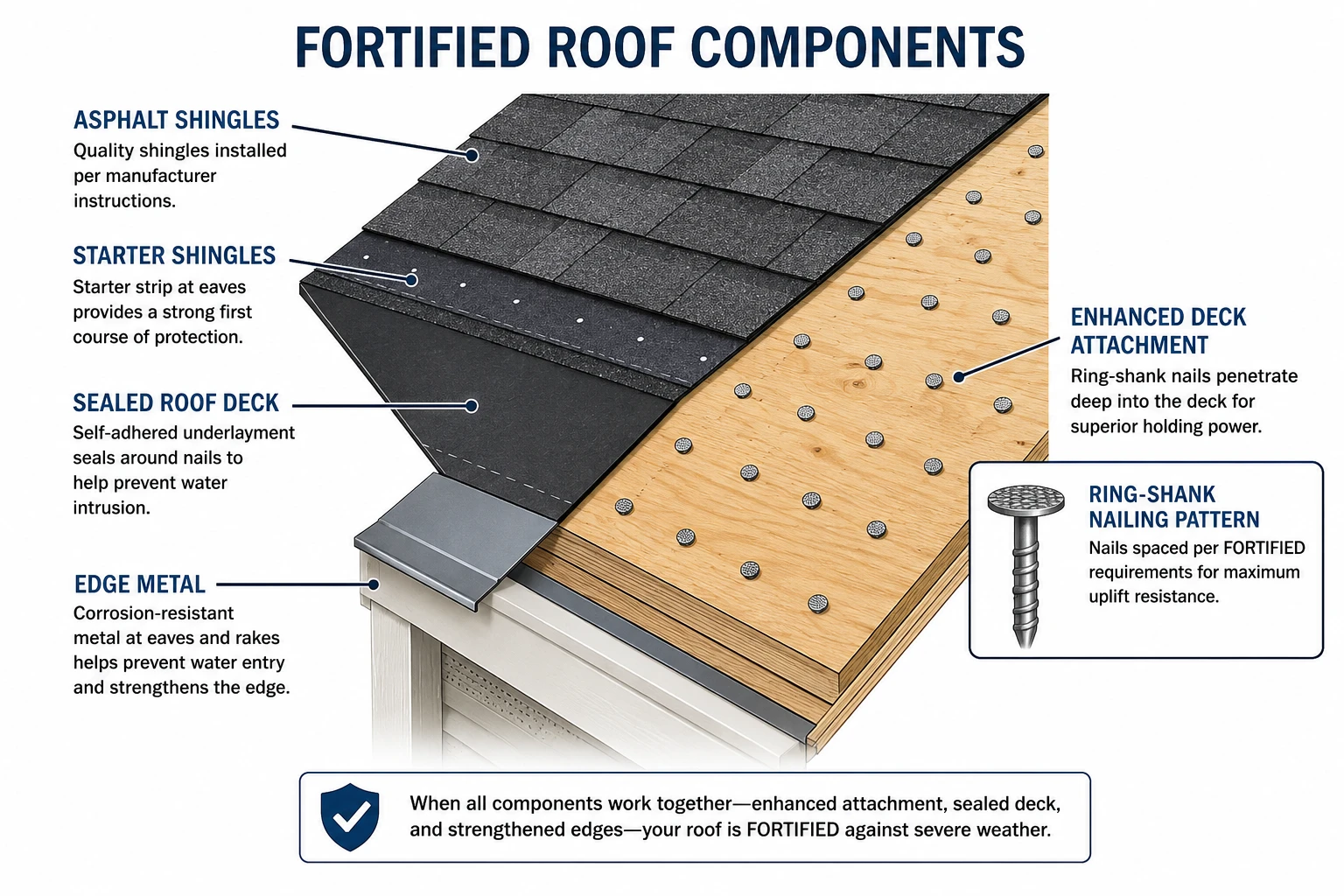 The pieces of a FORTIFIED roof working together: enhanced deck attachment, a sealed roof deck, reinforced edge metal, and a ring-shank nailing pattern.
Why the Sealed Roof Deck Matters
Of all the FORTIFIED requirements, the sealed roof deck is the one homeowners tend to value most. During a hurricane or severe wind event, shingles can be damaged or blown off entirely. Without a sealed deck, water pours straight into the home. A properly sealed roof deck adds a secondary water barrier that keeps the interior protected even if the primary roof covering is lost. FORTIFIED-approved sealing methods include taped roof-deck seams, a double-layer underlayment system, or a full deck ice-and-water shield with a bond break. It's a relatively small part of the overall project that delivers an outsized amount of the protection.
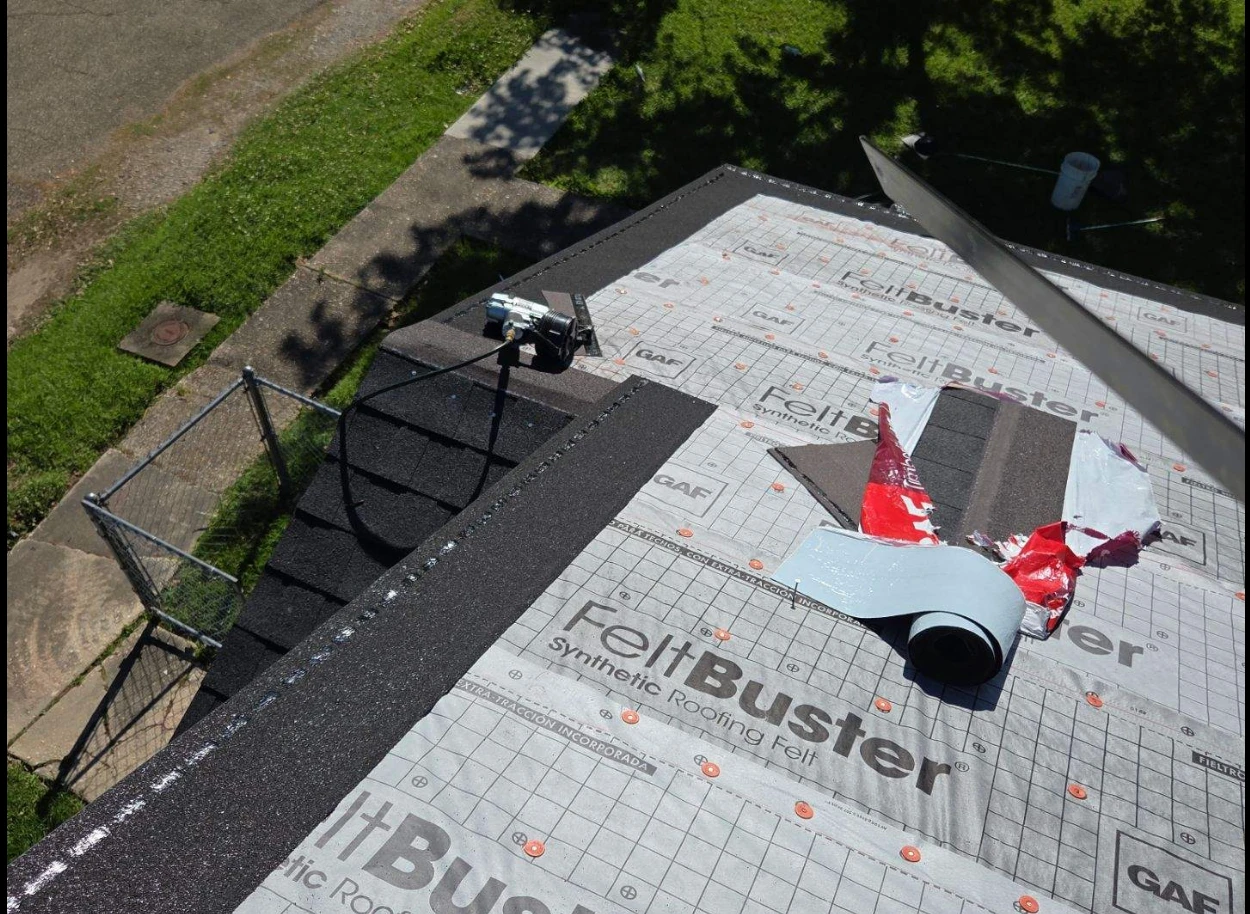 Underlayment going down over the deck during a replacement — the stage where FORTIFIED sealed-deck methods (taped seams, a second layer, or full ice-and-water protection) are built in.
The Louisiana FORTIFIED Roof Tax Credit
Louisiana offers a state income tax credit for qualifying FORTIFIED roof projects, established by Act 404 of the 2025 legislative session. The headline points:
- A credit of up to $10,000 per residence, covering 100% of qualified expenses
- Limited to owner-occupied primary residences with a homestead exemption (no new construction, condos, or mobile homes)
- Subject to a statewide annual cap, awarded first-come, first-served, with unused credit carryforward for up to three years
The credit runs on an annual application cycle: homeowners apply through the Louisiana Taxpayer Access Point (LaTAP) between January 1 and June 30 of the year after their roof is certified by IBHS. So a roof certified in 2026 would have an application window opening January 1, 2027. Note that evaluator, permit, and inspection fees generally don't count as qualified expenses. Because tax rules change and eligibility depends on your situation, confirm the current requirements directly with the Louisiana Department of Revenue or a qualified tax professional — this guide is general information, not tax advice.
The Louisiana Fortify Homes Program Grant
Separate from the tax credit is the Louisiana Fortify Homes Program, administered by the Louisiana Department of Insurance, which offers grants of up to $10,000 to eligible homeowners selected through the state's lottery system. One key rule: a homeowner generally cannot receive both the Fortify Homes grant and the FORTIFIED Roof Tax Credit on the same roofing project, so it's worth understanding which path fits your situation before you start. If you have an active insurance claim, a FORTIFIED roof is a construction-and-certification standard that's generally independent of the claim — but verify your specific circumstances with the relevant program before assuming eligibility.
A Real Example: When FORTIFIED Becomes a Math Problem
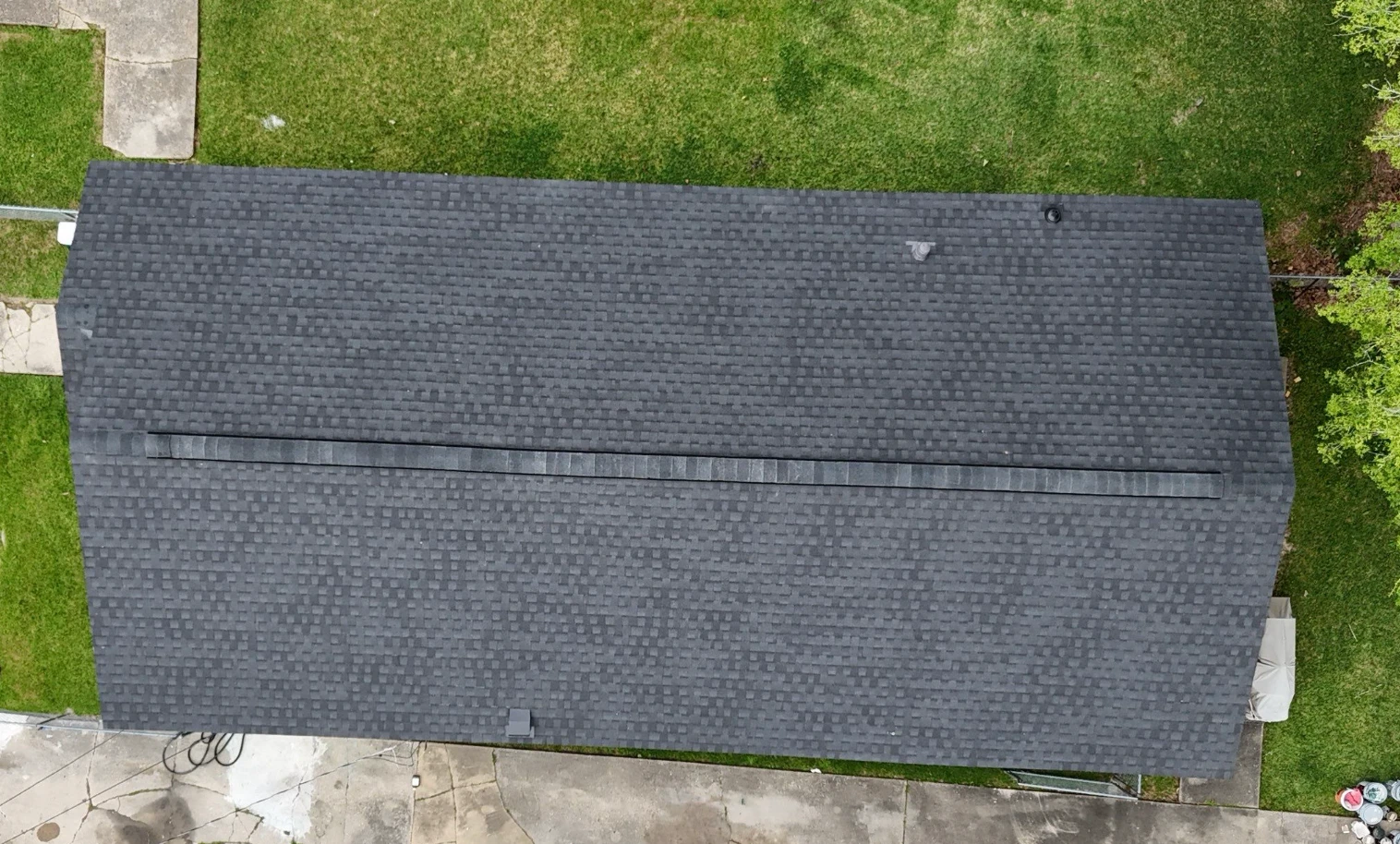
Brown's Roofing recently completed a FORTIFIED project on a home in Gibson, in South Louisiana. This wasn't a basic FORTIFIED roof — it included a double-layer felt sealed deck, an adhered starter system, Malarkey Vista Class 4 impact-resistant shingles, a RidgeFlex ridge-cap system, and full FORTIFIED documentation and evaluation. The result was a significantly stronger system than a standard replacement.
What surprised the homeowner most wasn't the roof — it was the numbers. After weighing the available state tax-credit opportunity, projected insurance savings, and the newly published discount benchmarks, the homeowner realized the additional investment in the upgraded system could potentially be recovered through insurance savings over roughly five years. Savings will vary by homeowner, carrier, premium, and location — but this is exactly why more Louisiana homeowners are treating FORTIFIED roofing as a financial decision rather than just a roofing upgrade. For this homeowner, the choice became less about roofing and more about math.
What Does a FORTIFIED Roof Cost?
This is the most common question we get. A FORTIFIED roof costs more than a standard replacement — generally in the range of roughly 18–25% more for a typical asphalt shingle roof — because of the enhanced deck attachment, sealed deck, edge details, and required documentation and evaluation. Premium systems using Class 4 impact-resistant shingles or upgraded components land at the higher end. Beyond that relative comparison, pricing depends on roof size, slope, complexity, access, the sealed-deck method, and material specification — which is why we provide a written estimate after a free on-site inspection rather than a one-size-fits-all number. The real question isn't just the up-front difference; it's how that difference compares to the insurance discounts, tax credit, or grant you may qualify for over the life of the roof.
What Is a FORTIFIED Evaluation?
A FORTIFIED roof has to be verified by a certified, independent FORTIFIED evaluator before a certificate can be issued — the roofing contractor cannot self-certify the work. That independence is the whole point: it's what makes the designation credible to insurers. Brown's Roofing is an IBHS FORTIFIED Certified Contractor, which means we build to the FORTIFIED standard and handle the documentation, then coordinate the independent third-party evaluation as part of the project so you don't have to source and schedule an evaluator separately. We're the contractor; the evaluator is independent — and keeping those roles clear is part of doing FORTIFIED work correctly.
Frequently Asked Questions
Is a FORTIFIED roof required in Louisiana?
No. FORTIFIED roofing is entirely voluntary — it's an upgrade homeowners choose, often for the combination of storm protection and financial incentives.
How long does a FORTIFIED certification last?
A FORTIFIED designation is typically valid for five years, subject to current IBHS program requirements, after which re-evaluation is needed to maintain it.
Can metal roofs be FORTIFIED?
Yes. Metal roofing systems can meet the FORTIFIED standard, but they often require additional engineering review, wind-uplift documentation, fastening design, and evaluator coordination compared with asphalt shingles.
Does every roofing contractor install FORTIFIED roofs?
No. FORTIFIED work has specific installation, documentation, and evaluator-coordination requirements. Before hiring, confirm that your contractor genuinely understands the standard and the certification process.
Is a FORTIFIED roof worth it?
For many Louisiana homeowners, increasingly yes. Now that the state publishes benchmark insurance discounts, you can finally weigh a FORTIFIED roof using real savings projections alongside the tax credit and grant options — turning what used to be guesswork into a clear-eyed financial comparison.
How Brown's Roofing Can Help
Brown's Roofing works with homeowners across Louisiana — including our office markets in Monroe, Baton Rouge, Lafayette, and Shreveport, and the surrounding communities. As a FORTIFIED Certified Contractor, we can help you evaluate FORTIFIED eligibility, sealed-deck options, evaluator coordination, and how the insurance discounts, tax credit, and grant programs might apply to your project.
If you're considering a roof replacement and want to know whether a FORTIFIED roof is the right investment for your home, call us at (318) 329-6579 to schedule a free inspection.