Roof replacement estimates in Lafayette can land thousands of dollars apart for what looks, on paper, like the same roof. Homeowners reasonably wonder how three contractors can walk the same house and come back with three very different numbers. The short answer is that roof size is only the starting point. After inspecting and replacing hundreds of roofs across Lafayette and the wider Acadiana region, we've found that pitch, existing layers, flashing condition, ventilation, and material specification move the price far more than square footage alone.
What Is a 30-Square Roof?
Roofers measure work in "squares." One square equals 100 square feet of roof surface, so a 30-square roof is roughly 3,000 square feet of roof area before any waste is figured in.
That waste matters. Valleys, hips, ridges, and the cuts needed to fit shingles around penetrations all generate offcuts, so a crew orders extra material to cover it. A 30-square roof commonly calls for around 33 squares of material once waste is added. The square count tells a contractor how much roof there is — it says nothing yet about how complicated that roof is to tear off and rebuild correctly.
So What Does a 30-Square Roof Replacement Cost?
There's no honest flat answer to that without seeing the roof, and any contractor who fires off a firm number sight-unseen is guessing. Pricing depends on roof size, slope, complexity, access, and material specification — we provide a written estimate after a free on-site inspection.
What we can do is show you the tiers a 30-square architectural shingle replacement generally falls into, and what separates them:
| Roof System | What's Typically Included | Relative Cost |
|---|---|---|
| Basic architectural shingle | Standard architectural shingles, basic underlayment, code-minimum accessories | Lower-cost |
| Mid-range upgraded system | Synthetic underlayment, upgraded ventilation, new flashing and drip edge, premium ridge cap | Mid-tier |
| Impact-resistant / premium system | Class 4 impact-resistant shingles, premium accessories, enhanced eave and valley waterproofing | Higher to Premium |
The tier a given roof lands in depends far less on the shingle color on the sample board and far more on the roof's condition and complexity underneath.
Why Do Three Estimates Come Back So Different?
The most common question we hear is some version of: "Why did I get three completely different bids?"
The answer is almost always scope of work. Not every contractor includes the same line items, and the cheapest number on the page often reflects the least amount of work — not a better deal.
A thorough estimate may include synthetic underlayment, ridge ventilation upgrades, new drip edge, complete flashing replacement, and premium ridge cap shingles. A bare-bones estimate may cover only the minimum materials needed to get new shingles on the deck. Both are technically "a new roof." They are not the same roof. When you compare estimates in Lafayette, compare the scope side by side — not just the bottom line.
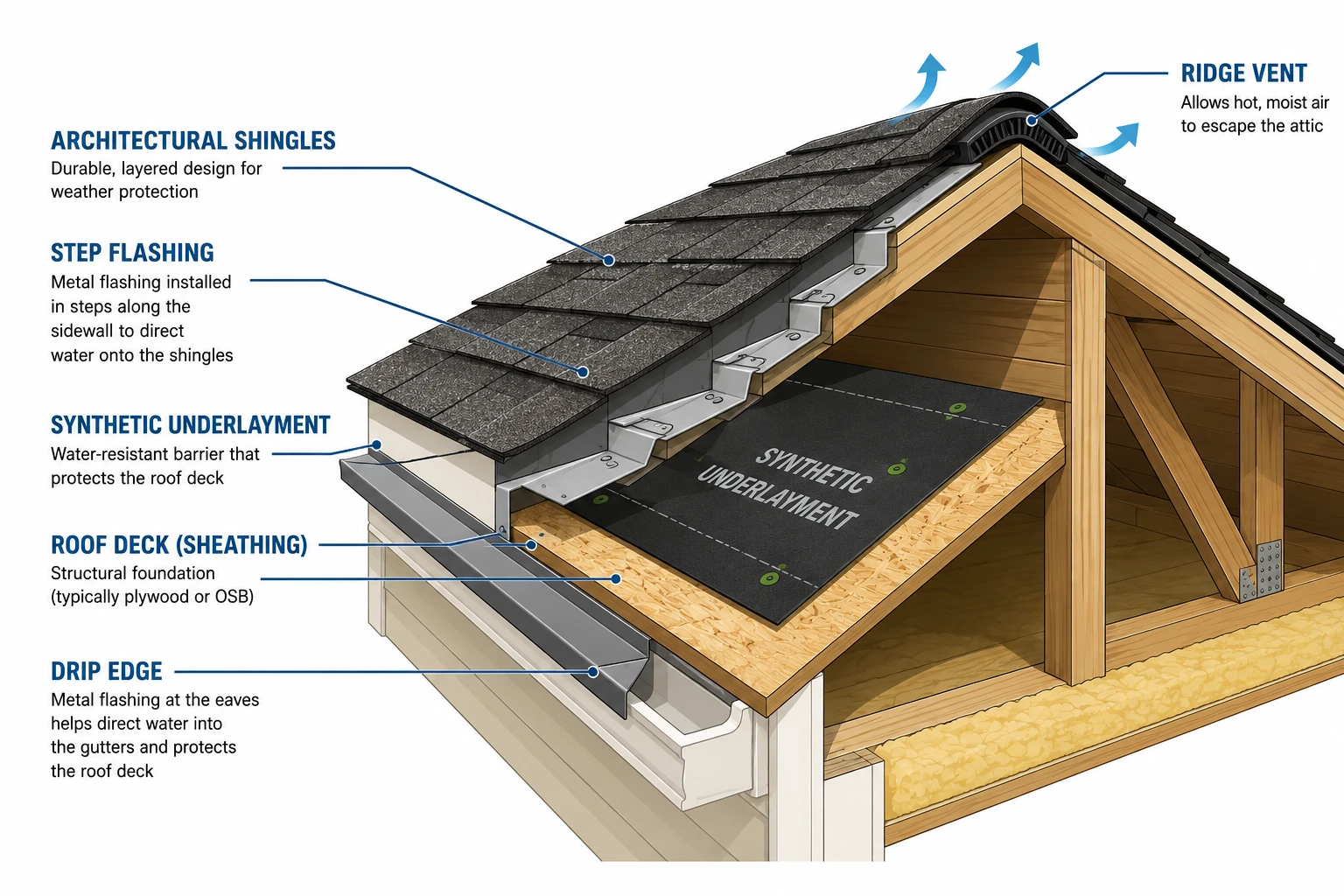
A complete shingle roof system is more than the shingles on top — deck, underlayment, drip edge, flashing, and ridge ventilation all factor into scope and price.
The Factors That Move a Roof Replacement Price the Most
Existing Roofing Layers and Tear-Off
One of the largest hidden variables is how much has to come off before anything goes on. A single layer of shingles over a clean deck is straightforward. A second or third layer — or old felt that has to be stripped back to bare wood — adds labor, dumpster volume, and disposal cost. Two-layer tear-offs in older Acadiana homes are common, and they can shift a project meaningfully, which is one reason a careful inspection beats a phone quote every time.
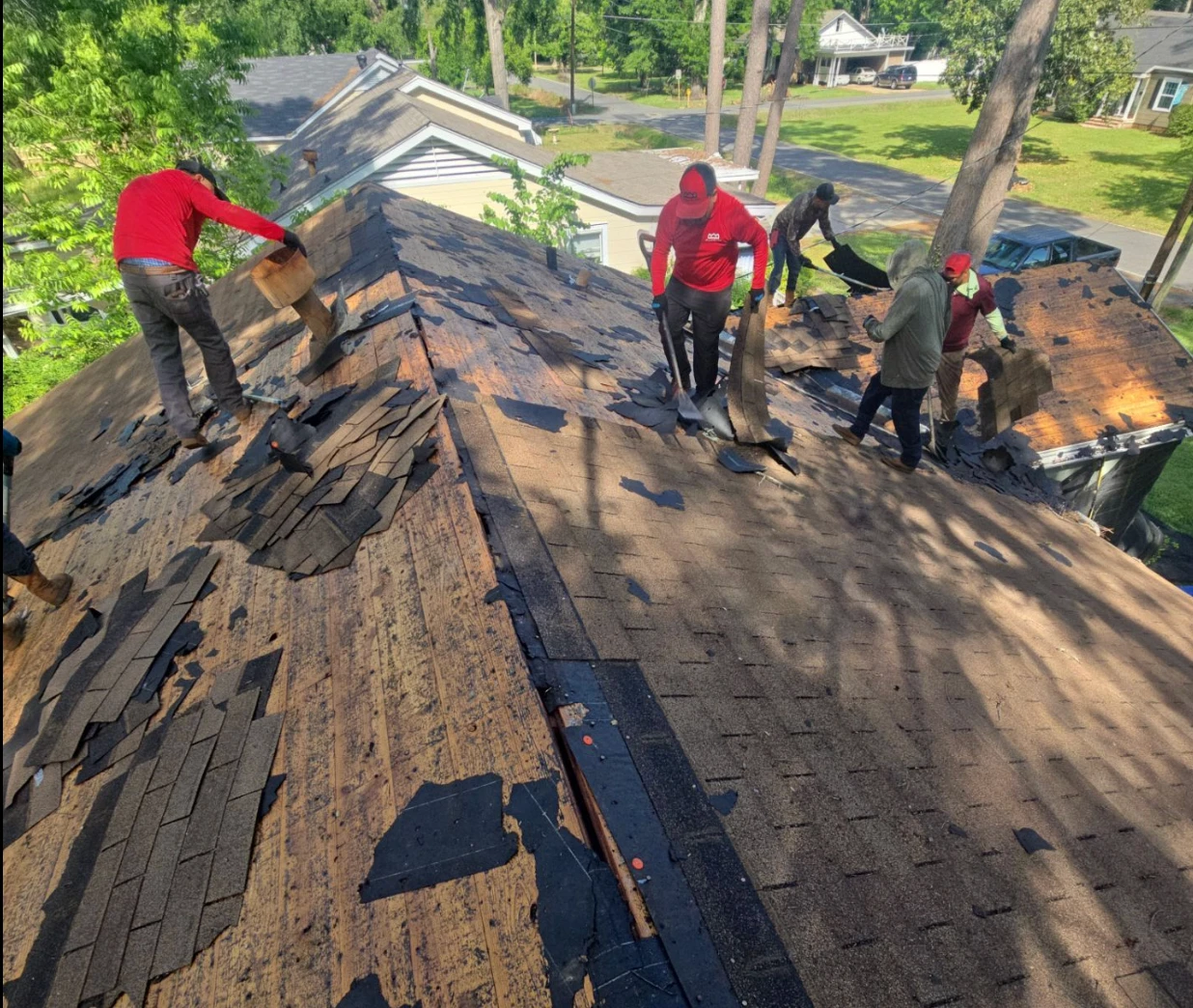
A tear-off stripped down to the wood deck. The number of layers that have to come off is one of the biggest reasons two similar-looking roofs price out differently.
Roof Pitch and Steepness
Steeper roofs are slower and more dangerous to work, which means more labor hours, more safety equipment, and reduced crew productivity.
| Roof Pitch | Labor Impact |
|---|---|
| 0/12 – 6/12 (low to moderate) | Standard — included in base labor |
| 7/12 – 9/12 (steep) | Added labor for fall protection and slower install |
| 10/12 – 12/12 (very steep) | Significantly more labor and specialized equipment |
A genuinely steep roof can move a project up a full tier on labor alone, even when the square count and shingle are identical to a low-slope home.
Flashing Condition
Flashing is the metal that seals the roof where it meets walls, chimneys, and other surfaces — and it's where a large share of leaks originate. Chimney flashing, wall and step flashing, and counter flashing all wear out, and corroded or improperly lapped flashing left in place will leak regardless of how good the new shingles are. Replacing it properly during a re-roof costs more up front and saves far more later.
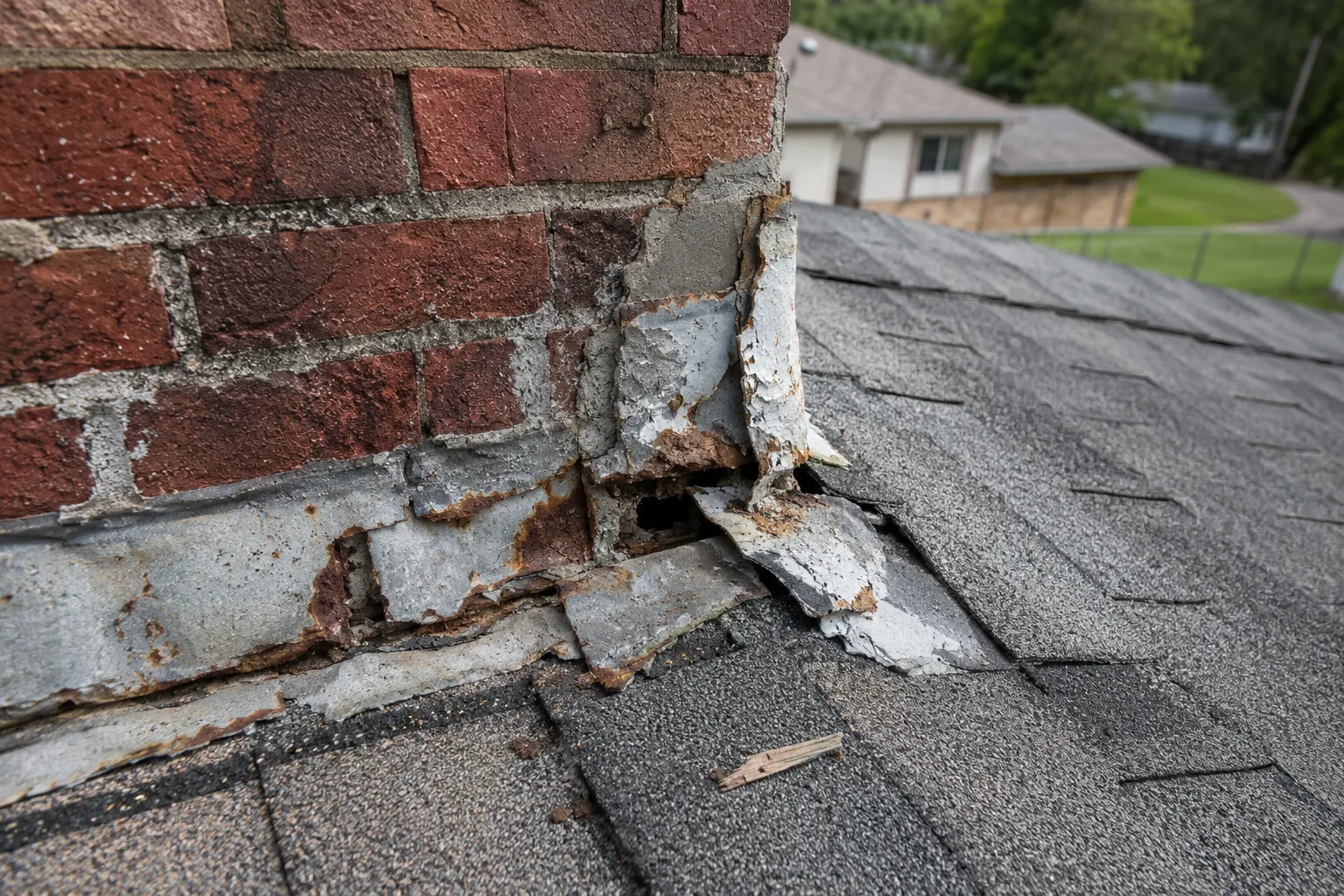
Corroded, lifting chimney flashing found during an inspection. Left in place under new shingles, failed flashing like this keeps leaking.
Attic Ventilation
Proper attic ventilation is not optional in South Louisiana's heat and humidity. Without balanced intake and exhaust, attic temperatures climb, shingles age prematurely from the underside, cooling bills rise, and trapped moisture invites rot and mold. A correct system balances intake at the eaves and soffits with exhaust at the ridge — most major manufacturers, including Owens Corning, even require adequate ventilation to honor their shingle warranties. You can read the manufacturer's breakdown of balanced attic ventilation for the underlying principle. Many replacements add ridge vents and new pipe boots, but the right configuration is specific to each home.
Eave and Valley Waterproofing
Louisiana isn't ice-dam country, but self-adhered waterproofing membrane still earns its place in valleys, along eaves, and around penetrations where wind-driven rain is most likely to push water past the shingles. It's a relatively small material line that buys real protection in our storm climate.
A Real-World Lafayette Example
Picture a homeowner with a 30-square roof who collects three bids: a low number, a middle number, and a high number. At a glance the low bid looks like the obvious winner.
Read the proposals, though, and the picture changes. The low bid excludes flashing replacement entirely. The middle bid includes upgraded underlayment and a corrected ventilation system. The high bid adds impact-resistant shingles, premium accessories, and extra waterproofing in the valleys. Three "new roofs" — three genuinely different products. This is exactly why understanding scope is as important as understanding the number next to it.
How to Compare Roofing Estimates in Lafayette
You don't need to be a roofer to read estimates intelligently. Work through them in this order:
- Get everything in writing. A verbal "ballpark" can't be compared to anything. Insist on an itemized written proposal from each contractor.
- Compare scope line by line, not the total first. Lay the proposals side by side and match line items before you look at the bottom number.
- Check the accessories. Confirm what underlayment, ventilation, flashing, drip edge, and ridge cap are actually included — these are where corners get cut.
- Confirm the tear-off and disposal. Make sure the bid accounts for the layers that are actually on your roof, plus haul-off and cleanup.
- Verify credentials. Confirm the contractor is licensed, insured, and certified by the manufacturers whose products they're installing, with local crews rather than out-of-town storm chasers.
What We're Seeing on Lafayette Roofs Right Now
During inspections across the area, the issues that turn up most often include wind-lifted and creased shingles, aging pipe boots, improper or inadequate attic ventilation, deteriorated chimney flashing, nail pops, and valley failures. We also regularly find storm damage homeowners didn't know was there. What reads as ordinary aging is frequently the result of a wind or hail event — which changes both the repair plan and, often, who pays for it.
Can Insurance Help Pay for a Roof Replacement?
In many cases, yes. South Louisiana sees frequent high wind, severe thunderstorms, hail, and tropical weather, and if a covered storm has damaged your roof, your homeowners policy may pay for part or all of a repair or replacement. A professional inspection is the first step to documenting whether storm-related damage is present and building a claim that holds up.
Material choice ties into insurance, too. Class 4 impact-resistant shingles stand up better to hail, and many carriers offer premium discounts for them — often in the range of 15–30%, depending on the carrier and how the roof is rated. Homeowners pursuing the strongest protection can also build to the FORTIFIED roof standard, a beyond-code re-roofing method developed by the IBHS. As an IBHS FORTIFIED Certified Contractor, we install to that standard; the designation itself is issued after a required independent third-party evaluation, not by the installer.
Frequently Asked Questions
How much does a new roof cost in Lafayette, Louisiana?
There's no single price — a 30-square architectural shingle replacement ranges depending on roof complexity, the number of existing layers to tear off, pitch, flashing condition, and the material you choose. The only accurate figure comes from a written estimate after an on-site inspection.
Does homeowners insurance cover roof replacement?
If covered storm damage is present and your policy applies, insurance may cover part or all of the cost. An inspection determines whether qualifying damage exists and documents it for the claim.
Is a metal roof worth the extra cost?
Metal roofing typically costs more up front than asphalt shingles but offers a longer lifespan and strong wind resistance, which can make it worthwhile over the life of the roof. Whether it pencils out depends on how long you plan to stay and your priorities for durability and appearance.
What if my roof has two layers of shingles?
Extra layers increase tear-off labor and disposal volume, which raises the project cost. It's one of the most common reasons two seemingly similar roofs come in at different prices.
Should I choose impact-resistant shingles?
Many Louisiana homeowners do, because of frequent hail and high winds. Beyond the added durability, Class 4 shingles may qualify for an insurance premium discount with many carriers.
Get a Free Roof Inspection in Lafayette
Every roof is different, and the only way to know your real replacement cost is a professional inspection and a detailed, written estimate. Brown's Roofing gives Lafayette homeowners clear recommendations, transparent scope, and honest assessments based on the actual condition of the roof — not a number pulled over the phone. If you're weighing a roof replacement, call (337) 408-1089 to schedule a free, no-obligation inspection with same-day response.