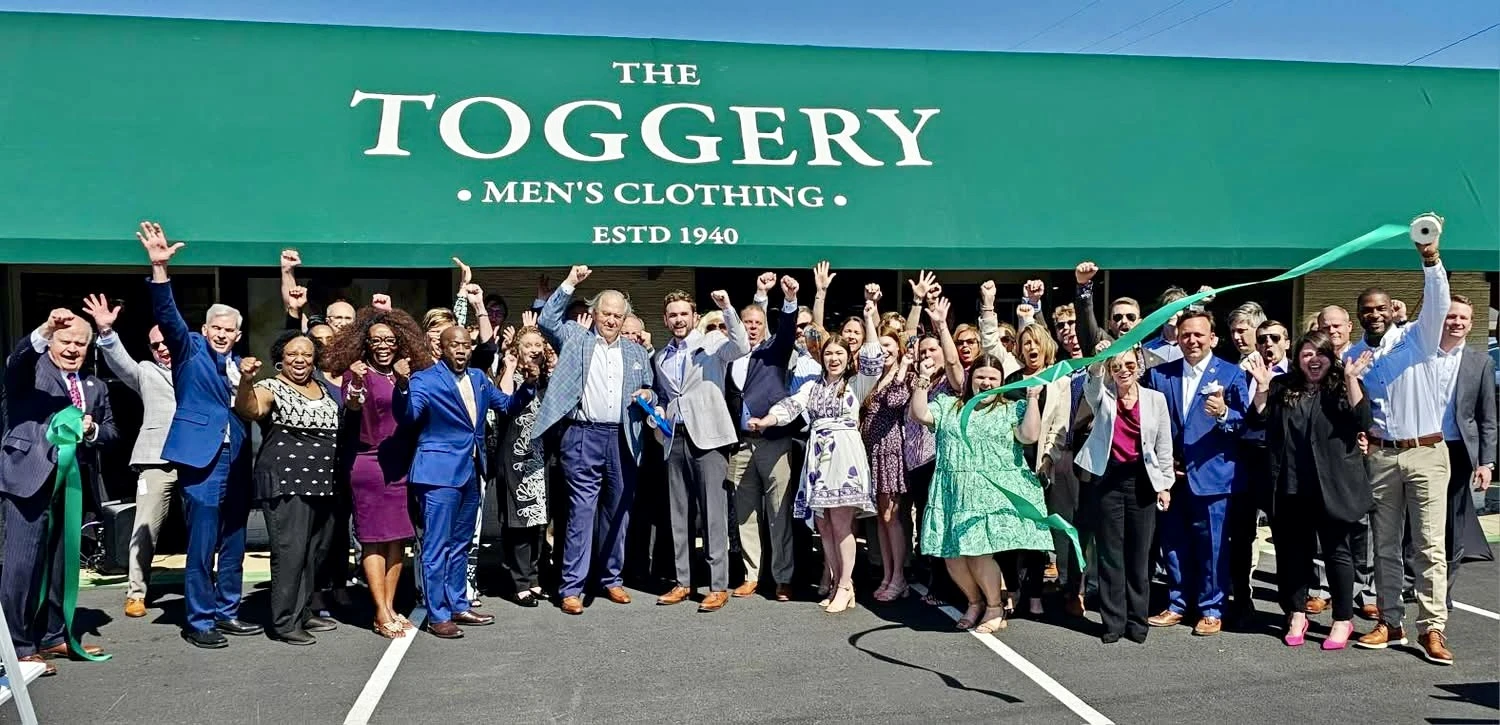
Most people picture commercial roof replacement as a straightforward swap: tear off the old roof, install a new one. Sometimes the reality is far more involved. A recent project at The Toggery — a Monroe men's clothing retailer in business since 1940 — shows why investigation, documentation, and project management can matter as much as the roofing system itself, because what an old roof hides can be more important than what sits on top. What began as a routine insurance replacement turned into a much larger effort to correct problems that had been concealed beneath multiple roof systems for years.
What Caused the Damage
The trigger was the severe winter weather that struck North Louisiana in early 2025. The weight of accumulated ice placed additional stress on the existing roof assembly — a spray polyurethane foam (SPF) system over lightweight insulating concrete and a metal deck — and contributed to cracking within the deck and the concrete layer below.
The storm damage, though, was only part of the story. As our commercial team began investigating the roof, it became clear that previous systems and overlays had concealed a range of underlying issues that a simple insurance scope would never have addressed.
What the Investigation Uncovered
Before any demolition began, we performed extensive due diligence: infrared and capacitance moisture scans, roof core sampling, a full analysis of the existing assembly, a manufacturer warranty-requirement review, and insurance documentation support. That work explained why installing yet another overlay would not solve the building's problems.
Beneath the SPF system, we identified several conditions working against the roof:
- Trapped moisture saturating the assembly
- Buried HVAC and electrical lines
- Corrosion within the metal roof deck
- Drainage and assembly conditions hidden by previous overlays
In some areas, active electrical infrastructure had been completely encapsulated within the roofing itself. These weren't just performance concerns — they were safety concerns.
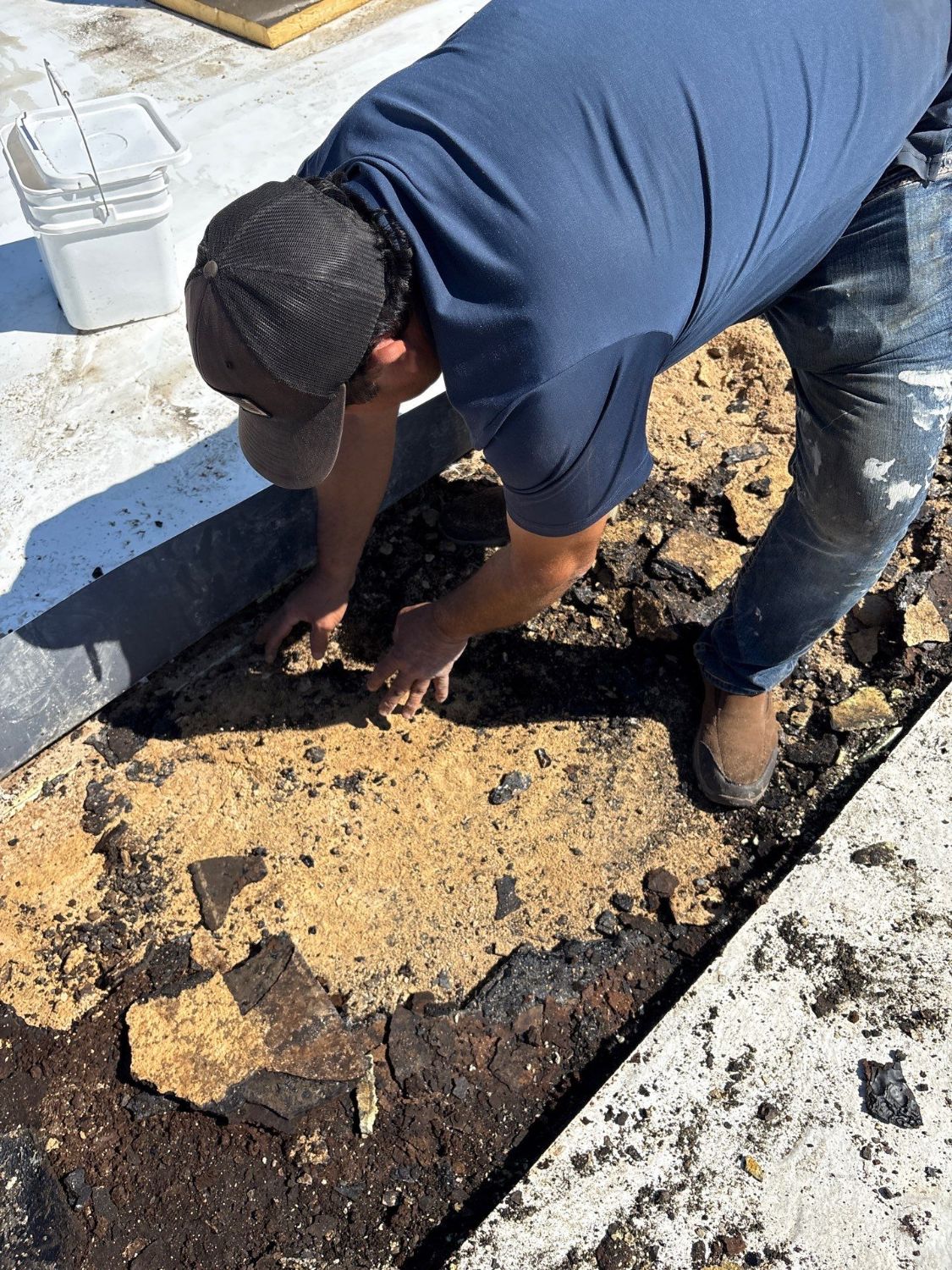 Hands-on investigation: core sampling exposed the saturated material and layered buildup hidden beneath the old roof system.
Why We Expanded the Scope
Many roofing projects stop the moment insurance approves a replacement. This one called for a different approach. Rather than re-covering the roof and burying the same problems again, our commercial team documented exactly what we found and submitted supplemental information to the carrier to support a comprehensive restoration.
That documentation included moisture scan results, core sample findings, manufacturer installation requirements, the requirements for a 20-year No Dollar Limit (NDL) warranty, and proposals from licensed mechanical and electrical contractors. None of it was about padding a scope — it was about putting verifiable evidence in front of the carrier so the approved work matched the actual condition of the building. The objective wasn't simply to replace the roof; it was to correct the conditions that had been causing trouble for years.
The Challenges That Surfaced During Construction
The project was originally forecast at roughly 10 days. Once demolition began, additional hidden conditions changed the picture. When crews uncovered live electrical lines buried beneath the roofing system, work stopped immediately.
From there, the job became a coordination exercise as much as a roofing one. We worked with building ownership, electrical and mechanical contractors, and insurance representatives, and submitted revised documentation and supplemental approvals before work could safely continue. At one point, building power had to be temporarily shut down to address the buried electrical infrastructure safely. Those discoveries added time and complexity — the project ultimately ran about 30 days — but they also eliminated hazards that would otherwise have stayed sealed beneath a brand-new roof.
The Roofing System We Installed
After removing the existing materials, demolition continued through the lightweight insulating concrete so we could eliminate trapped moisture and address the conditions feeding long-term deterioration. The completed assembly included:
- Full removal of the existing SPF roofing and lightweight insulating concrete
- Moisture remediation across the deck
- A new tapered polyisocyanurate insulation system, properly fastened for slope and drainage
- A new 60-mil adhered GAF EverGuard TPO membrane installed from 10-foot by 100-foot rolls
- Manufacturer-approved fastening and adhesion patterns
- New perimeter trim and flashing systems
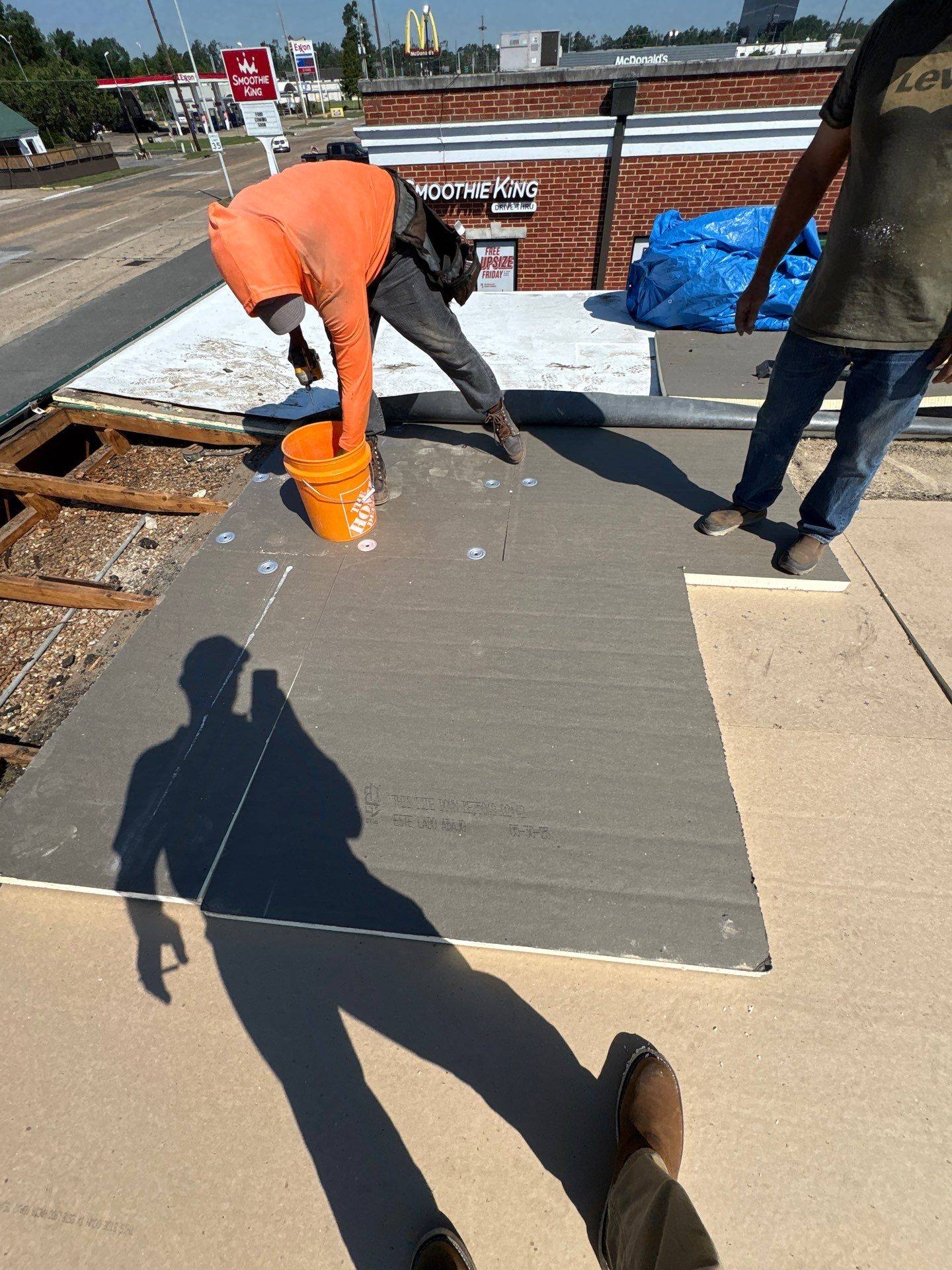 Crews setting the new system over the prepared deck before the adhered TPO membrane goes down.
The reflective white TPO membrane also brings an energy benefit — its high reflectivity helps reduce cooling load on a low-slope commercial building through North Louisiana summers. The finished roof was installed in full accordance with GAF's adhered-system requirements, which is what made the warranty goal achievable.
Why a 20-Year NDL Warranty Mattered
One of the project's central goals was a manufacturer-backed 20-year No Dollar Limit warranty. Commercial property owners often seek NDL coverage because it provides enhanced protection and demands strict compliance with the manufacturer's installation standards. Earning it required proper assembly design, approved materials, manufacturer-specified installation, and documented quality-control procedures throughout.
As a GAF Gold Elite commercial contractor, Brown's Roofing is qualified to install and register these enhanced systems. The result for the owner is a roof engineered for decades of service, not a short-term patch that hides the next problem.
Commercial Roofing Is More Than Membrane and Flashing
Projects like this one show why commercial roofing usually involves far more than rolling out membrane. The work here also included site supervision, temporary fencing, safety management, dumpster rotations, mechanical and electrical coordination, insurance documentation, and perimeter trim fabrication and installation. Every one of those pieces contributed to a clean, code-compliant result.
What Building Owners Can Learn
The biggest lesson is simple: a roof overlay does not always solve underlying roofing problems. Over time, layered roof systems can conceal moisture intrusion, corrosion, electrical and mechanical conflicts, and drainage issues — none of which disappear when you add another layer on top. A thorough investigation before construction routinely pays for itself by surfacing conditions that would otherwise stay hidden until they cause a failure. Industry guidance from the National Roofing Contractors Association on low-slope membrane systems reinforces the same point: assembly design and condition matter as much as the membrane on top.
Frequently Asked Questions
What is a 20-year No Dollar Limit (NDL) warranty?
An NDL warranty is a manufacturer-backed guarantee with no cap on the dollar amount the manufacturer will pay for covered repairs over the warranty term. To qualify, the roof has to be installed exactly to the manufacturer's standards using approved materials, with documented quality control — which is why NDL systems are typically reserved for qualified commercial contractors.
Can a roof overlay hide damage?
Yes. Installing a new roof over an existing one can trap moisture and conceal corrosion, drainage problems, and even buried mechanical or electrical lines. That's why a moisture survey and core sampling before construction are often worth the up-front effort on a commercial building.
Do you help with commercial insurance documentation?
We do. Our commercial team supports the claim with moisture scans, core sample findings, and manufacturer requirements so the approved scope reflects the building's actual condition — documented and evidence-based, never inflated.
Commercial Roofing in Monroe, Louisiana
Brown's Roofing provides commercial roofing services throughout Monroe, West Monroe, and North Louisiana, including commercial roof replacement, TPO installation, roof moisture investigations, insurance claim support, core sampling, roof condition assessments, system design assistance, and long-term warranty systems. For building owners weighing a commercial roof replacement, understanding the existing roof is almost always the first step toward a solution that lasts.
If you manage a commercial building in the Monroe area and want to know what's really happening beneath your roof, call us at (318) 329-6579 for a free, no-obligation roof assessment.