Softwash & Shingle Rejuvenation in
Shreveport, LA
Low-pressure softwash cleaning and shingle rejuvenation treatments that remove algae, restore shingle oils, and extend roof life without full replacement.
(318) 666-9960Softwash & Shingle Rejuvenation — Shreveport Area
Roof softwash and shingle rejuvenation in the Shreveport-Bossier metro is most valuable on shaded slopes around Highland's tree canopy, the older South Highlands homes under mature oak coverage, and the Cane River-influenced humidity belts to the south. Brown's Roofing's softwash scope removes algae, moss, and biological buildup at the root using low-pressure biodegradable solutions — and shingle rejuvenation treatments restore granule adhesion and flexibility on aging-but-structurally-sound asphalt roofs across Caddo and Bossier parishes. The Northwest Louisiana picture is unusual because two aging mechanisms work against each other. The Caddo-Bossier hail belt physically scours granules off exposed slopes every storm season — that's the loud failure, the one that goes to claims. The quiet failure is what's happening to the petroleum oils inside the shingle mat under sustained sub-tropical summer heat: every year, the mat dries a little more, becomes a little more brittle, and is a little less able to withstand the next hail impact without cracking. Brown's WeatherPro rejuvenation program puts those oils back using a USDA BioPreferred bio soy-ester spray — a plant-derived oil that soaks into the mat and restores flexibility verified under ASTM D3462 protocols. On a 10–15 year-old roof that's been through 2–3 hail cycles without claim-level damage, a rejuvenation pass is often the difference between making it to the next hail season versus needing a full tear-off after it.
Common Softwash Scenarios in Shreveport
Highland and South Highlands canopy roofs — cleaning interval calibrated to canopy
The Highland and South Highlands corridor sits under one of the densest mature oak canopies in Northwest Louisiana. North-facing slopes in this corridor stay damp longer than anywhere else in the metro, and we see Gloeocapsa magma growth on roofs less than 6 years old in some of these blocks. Cleaning intervals here run 18–24 months instead of the 2–4 year metro norm. Rejuvenation candidacy is more complicated under heavy canopy because the soy-ester treatment carries its own algaecide layer — meaning a combined visit suppresses regrowth measurably longer than cleaning alone does on these properties.
Pierremont and University Park — the rejuvenation sweet spot
Homes through Pierremont and University Park are typically where rejuvenation does the most work in the metro. These roofs have lived through both canopy organic-load pressure and multiple Caddo-Bossier hail cycles. If granules are still mostly bonded and the underlayment is sound — which we confirm with a written inspection — rejuvenation pushes the next replacement decision out roughly 5 years.
Cross Lake and Southern Hills — exposed-slope hail veterans
Cross Lake and Southern Hills sit with less canopy than the Highland corridor — meaning less algae, but more direct UV and more direct hail. Roofs in this part of the metro often skip the cleaning conversation entirely and go straight to rejuvenation candidacy: the question is whether the shingle has lost enough oil that the next hail event will crack rather than bounce. We inspect for granule release patterns and edge flexibility before recommending — and decline rejuvenation on roofs already past the candidacy window.
What to Expect From Brown's Roofing
- Pre-treatment inspection to confirm the roof is structurally sound enough for softwash and rejuvenation
- Low-pressure biodegradable application — no granule loss, no shingle lifting, no warranty voiding
- Algae, moss, and lichen killed at the root rather than just rinsed off the surface
- Canopy-vs-exposed-slope strategy split — algae-heavy slopes get cleaning + algaecide-carrying rejuvenation; hail-scoured slopes get rejuvenation candidacy review first
- USDA BioPreferred bio soy-ester rejuvenation spray applied through Brown's WeatherPro partnership when the roof is in the 7–18 year sweet spot
- Written ASTM D3462-protocol flexibility assessment for hail-cycled roofs before any rejuvenation pass
- Post-treatment photo documentation, condition report, and recommended interval to next visit
- Cleaning typically holds 2–4 years (18–24 months under Highland / South Highlands canopy); rejuvenation pass holds roughly 5 years on the program
When to Call
- When dark streaks, green buildup, or visible algae are showing on north-facing or shaded slopes
- When your roof is 10–18 years old, structurally sound, but starting to show brittleness from UV and hail cycling
- Before listing in Highland, South Highlands, Pierremont, or University Park — a clean, restored roof drives both curb appeal and inspection outcomes
- As an alternative to full replacement when the structural condition doesn't justify a re-roof yet
- After a non-claim hail event where the roof passed inspection but lost flexibility under repeated impact
- As part of an ongoing maintenance plan to extend service life before replacement becomes necessary
LA Office
Brown's Roofing
Shreveport
2285 Benton Rd, Ste A-201, Bossier City, LA 71111
(318) 666-9960Monday–Friday: 8:00 AM – 5:00 PM
Saturday: By appointment
Sunday: Closed
Related Services in Shreveport
More in Shreveport
Real Results
Before & After: Residential Soft-Wash
Same roof, same visit. ARMA-spec chemistry kills algae, moss, and Gloeocapsa magma streaking at the root — shingles return to near-original color without high-pressure damage to the granules or the manufacturer warranty.
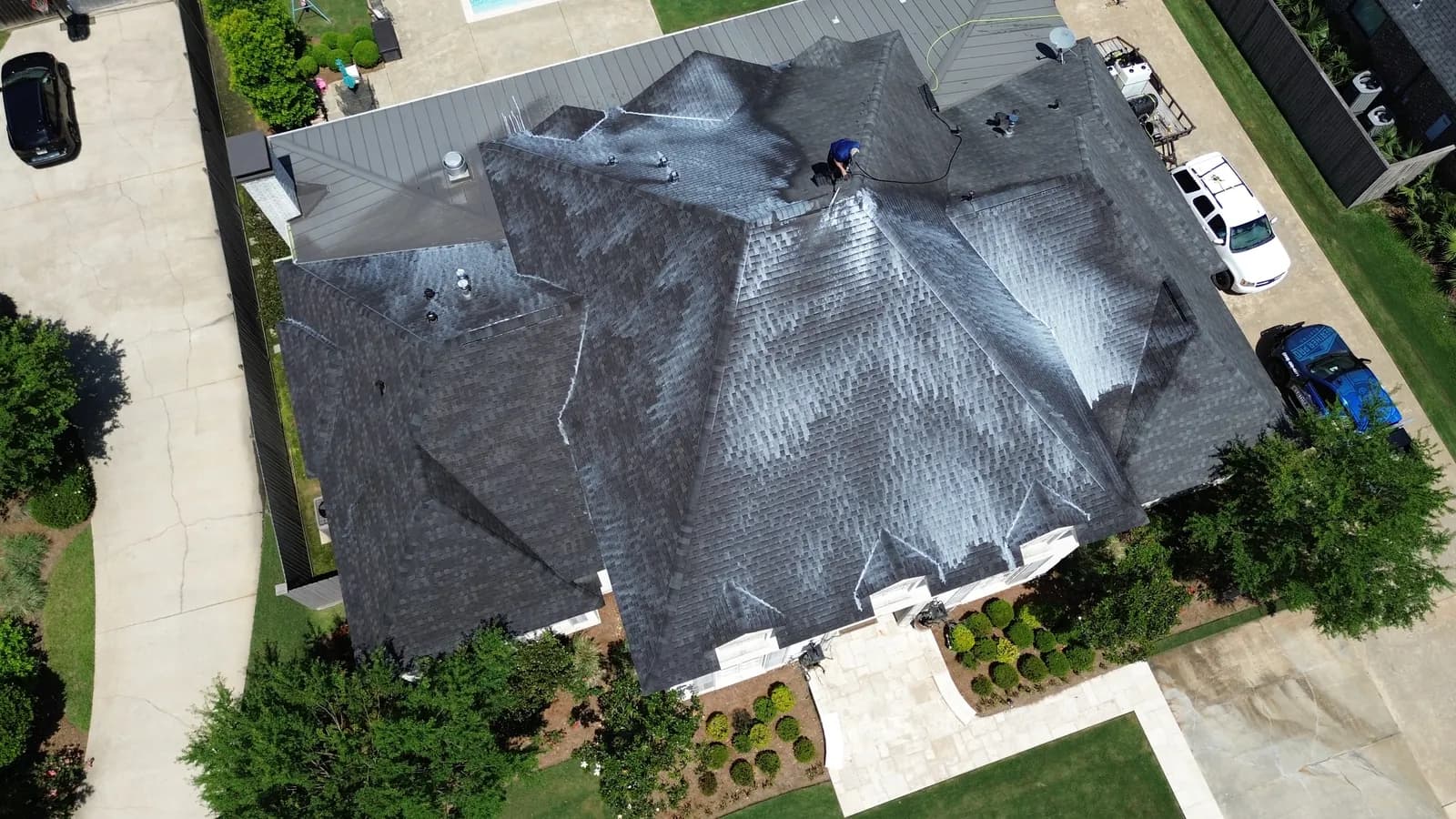
Chemistry application underway — low-pressure ARMA-spec solution penetrating algae and biological staining at the root.
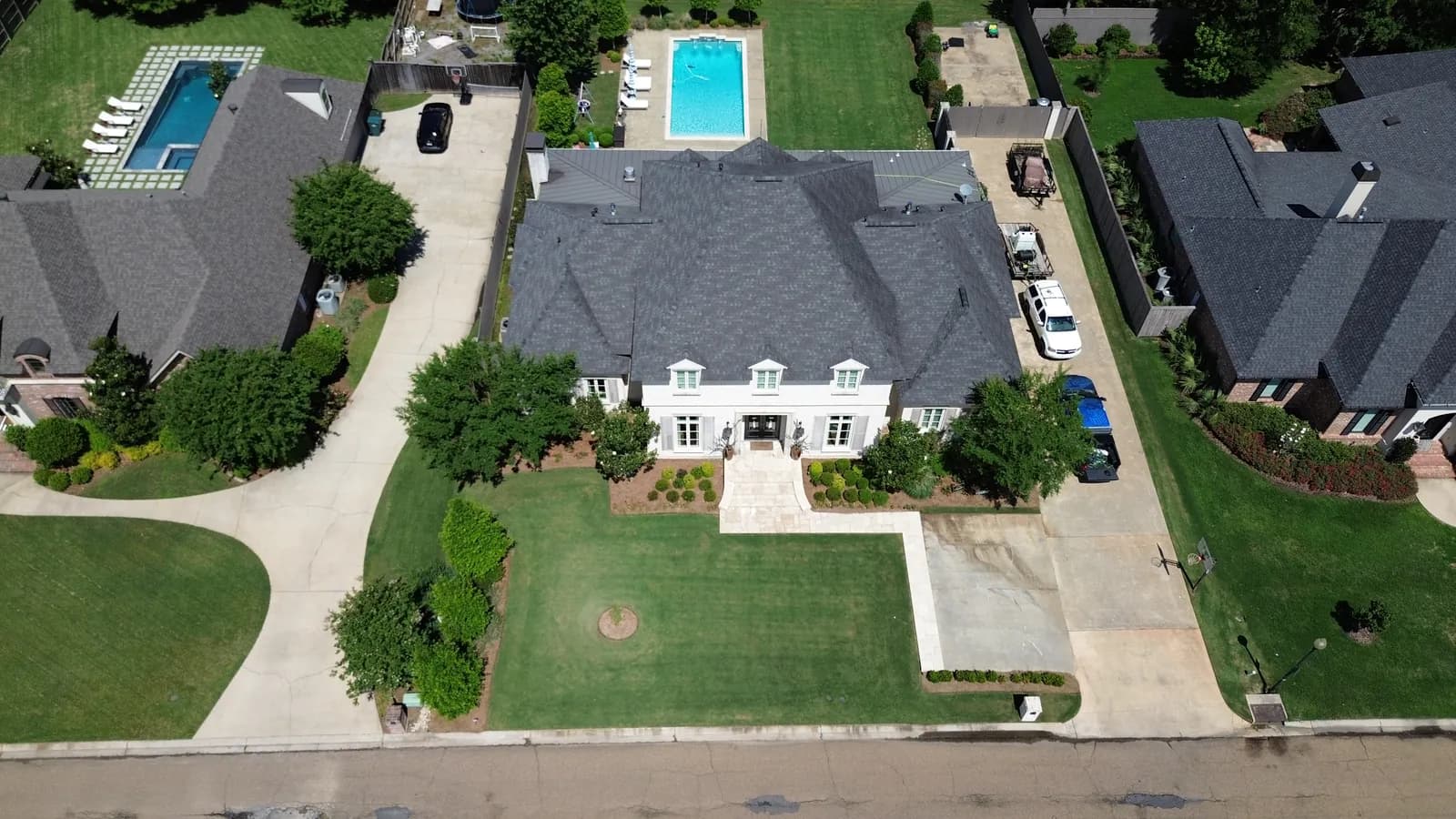
Algae and surface staining gone, granules intact, manufacturer warranty preserved. Curb appeal restored without replacement.
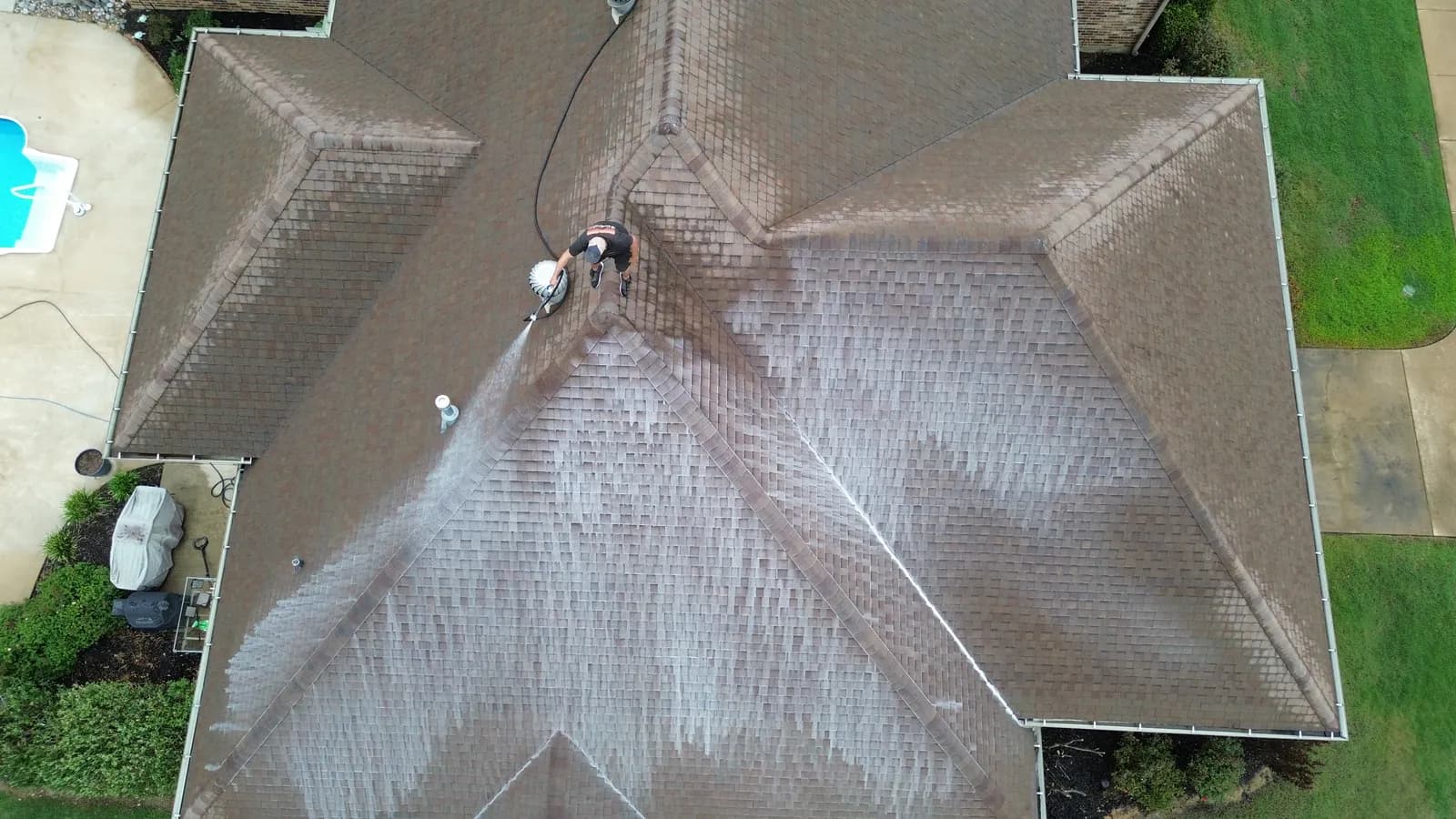
Low-pressure wand application — under 100 PSI, the ARMA-specified method approved by every major shingle manufacturer.
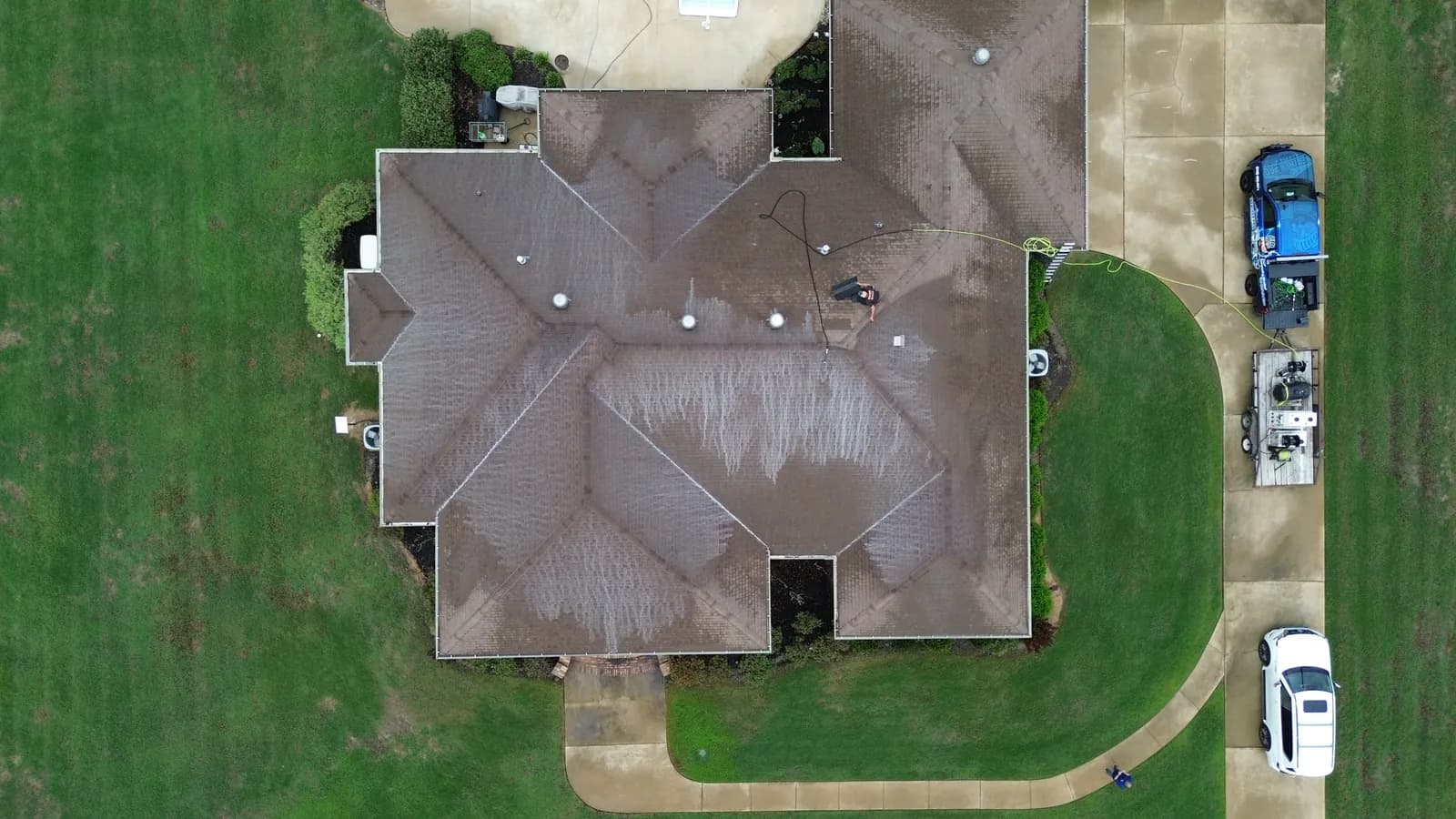
Aerial drone documentation — every slope, valley, and dormer reached for full coverage, not just the visible street-facing sides.
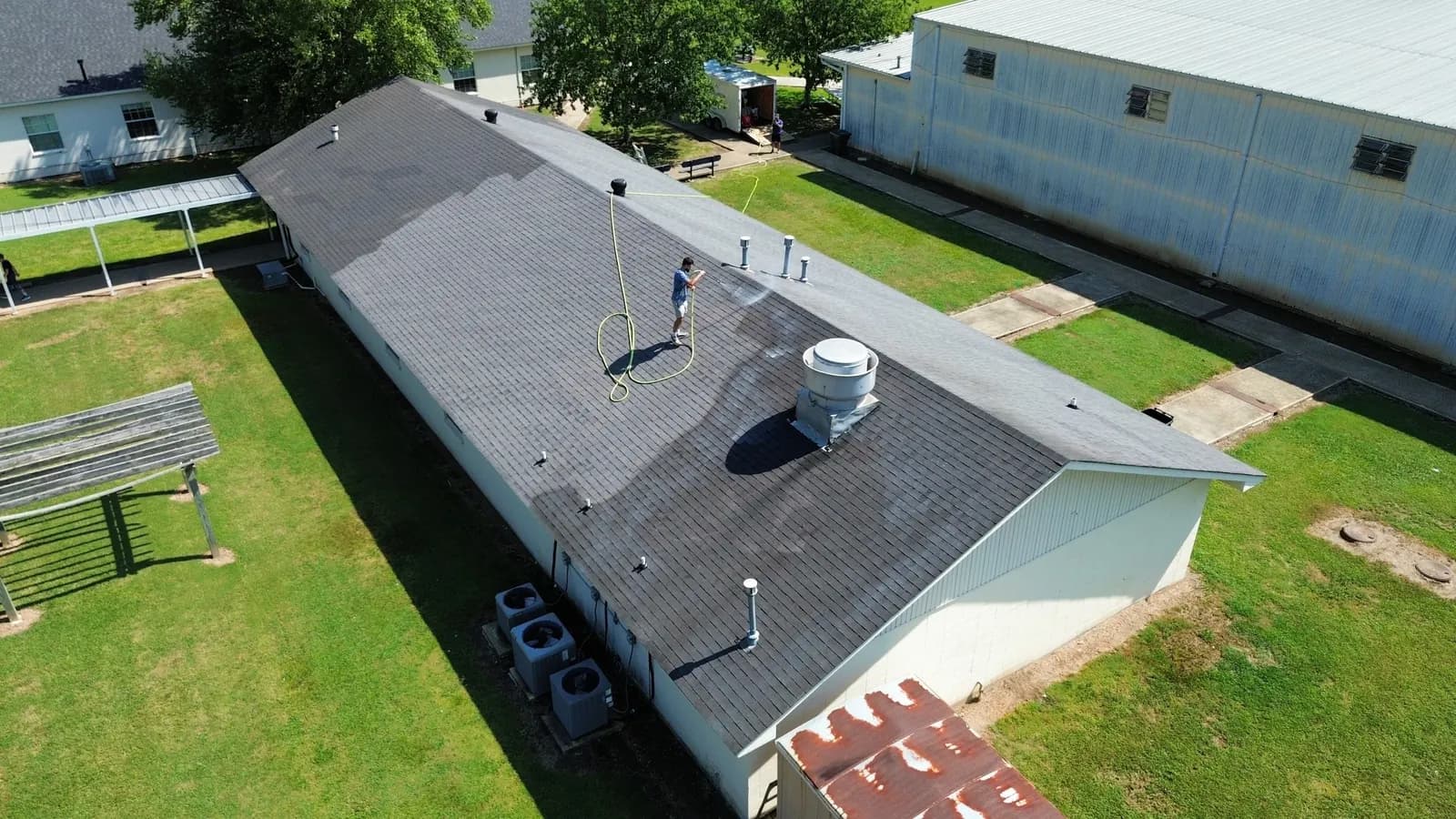
Treated vs. untreated sections visible in a single frame — the chemistry kills the algae, and the staining lifts as the dead organism weathers away.
Our Process
Simple. Transparent. Professional.
Contact Us
Call your local office or submit a free inspection request online. We respond same-day.
Free Inspection
A trained specialist inspects your roof — documenting condition, damage, and problem areas with photos.
Honest Estimate
Clear, itemized written estimate. Storm damage? We document everything in detail, slope by slope.
Professional Install
Our crews complete the work with quality materials, permit coordination, and minimal disruption.
Site Cleanup
All debris hauled, magnets run for nails, yard restored. You won't find a scrap when we leave.
Warranty & Follow-Up
Manufacturer and workmanship warranties documented. We follow up to ensure you're completely satisfied.
FAQ
Softwash & Shingle Rejuvenation FAQ — Shreveport
- Dense oak canopy, prolonged shade, and Northwest Louisiana humidity. Highland and South Highlands sit under one of the metro's most mature tree canopies — north-facing slopes under those trees stay damp longer and feed Gloeocapsa magma algae aggressively. Roofs in the same metro under direct sun rarely show the same growth pattern. Softwash kills the algae at the root rather than just rinsing it off.
- Yes — meaningfully. High-pressure washing strips granules, lifts shingle tabs, separates seams, and frequently voids manufacturer warranties. We use low-pressure softwash with biodegradable solutions specifically because that's what manufacturers approve for asphalt roofs. If a contractor proposes pressure washing your roof, get a second opinion.
- It's real, but it's not a substitute for replacement on a roof that's actually failed. Rejuvenation works on 7–18 year-old asphalt roofs that are structurally sound but showing brittleness from UV and hail cycling — it restores natural oils that have evaporated and re-bonds granules to the mat. It buys time on a roof that has time left to buy. It doesn't fix a roof that's reached end of life.
- Most properties benefit from softwash every 2–4 years, though high-canopy properties around Highland, South Highlands, and South Shreveport sometimes need it more often. The Caddo-Bossier hail-belt context is also relevant: storm cycles that physically scour the surface can extend the time between needed treatments on exposed slopes. We'll inspect first and tell you honestly when the next treatment will pay for itself.
- Often, yes — and the timing here is the whole game. A shingle that bounces a 1-inch impact at year 8 may crack at the same impact at year 14, because the petroleum oil content inside the mat has dropped by half over those six years. Restoring flexibility before the next hail event meaningfully changes how the next storm scores on your roof. We assess oil content indirectly through edge-flex testing and granule-release patterns during inspection, then recommend rejuvenation only on roofs that still have enough mat life to make the chemistry worth applying.
- Independent program data on bio-rejuvenation chemistry shows asphalt shingles regain roughly 5 years of service life per treatment, with up to 3 applications cumulatively before replacement is the right call — so up to 15 years of additional life on the high end. In practice on Northwest Louisiana ranches, we see realistic 4–6 year gains per treatment depending on starting condition. A 14-year-old roof that would have aged out at year 22 can realistically reach year 27–30 with one or two rejuvenation passes. The cost on each treatment runs roughly 15–30% of full replacement — meaningful but a fraction of tear-off, and timed before the next major hail cycle that would have ended the roof.
Free Assessment
Get Softwash & Shingle Rejuvenation in Shreveport
Call the Shreveport Brown's Roofing team or request a free assessment online.