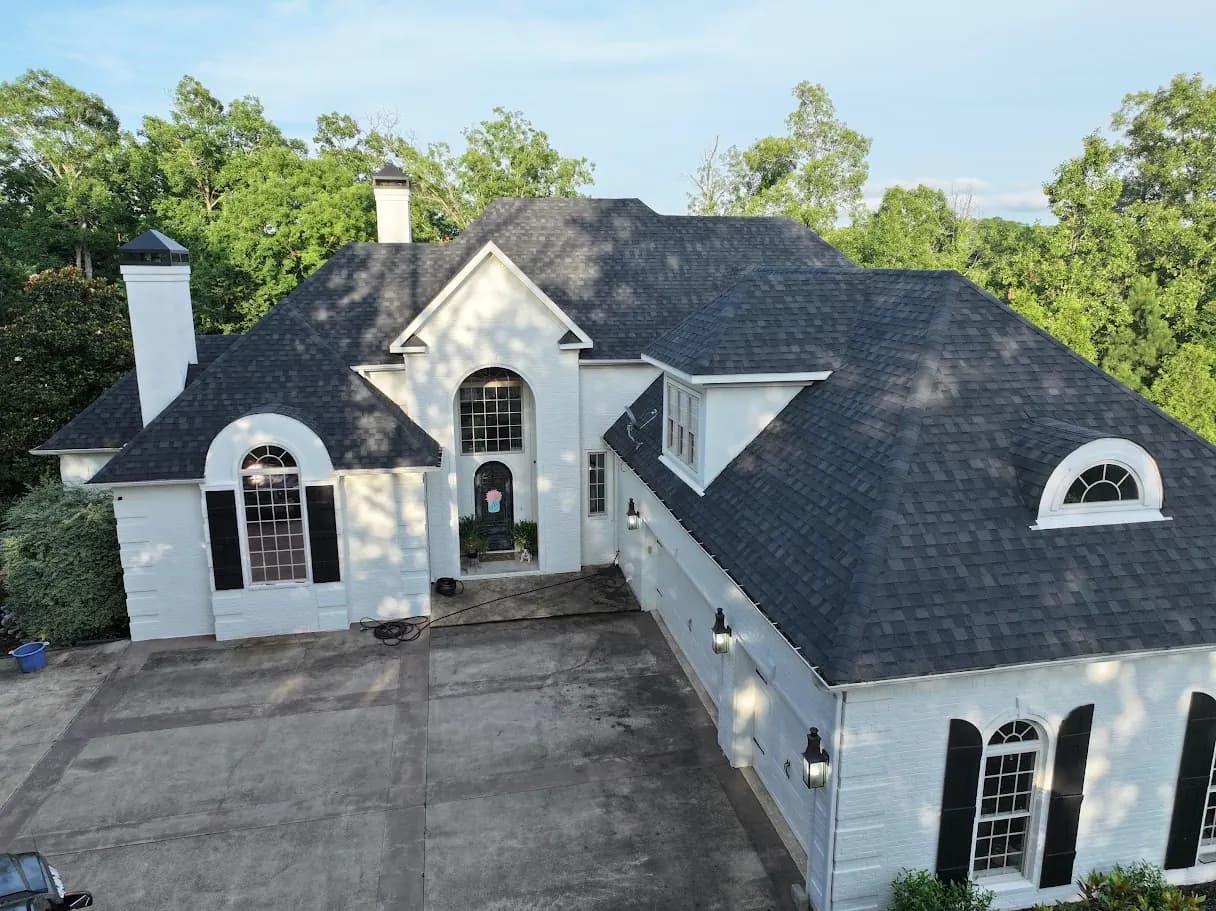
Residential Roof Repair
Diagnosed Right. Repaired Right.
Most residential roof leaks come from one of six predictable failure points. We trace the real source — not just patch where the stain shows up — fix it with manufacturer-spec materials, and document the work so the repair holds and the paperwork outlasts the project.
Why Our Repairs Are Different
Diagnose First, Repair Second, Document Always
Most residential roof leaks aren't mysterious. Across LA, AR, KS, AL, MS, TX, and FL, the failure points are predictable — pipe boots crack at year 10, valleys fail at 15, ridge caps lift in 80 mph wind events, and chimney flashings are the leading source of "my roof leaks above the fireplace" calls. Identifying the right one and fixing it correctly is most of the job. The trick is tracing the actual source: water rarely enters directly above where it shows up inside, especially on plank-deck and older substrates where it tracks along framing before staining drywall.
We use manufacturer-approved materials and methods. The other contractor who smeared silicone caulk on your shingles or sprayed black goop into your valley voided your roof warranty. We don't do that. Color-matched shingles, manufacturer-spec flashing, roofing-grade sealants, and the proper repair details — so the warranty stays intact and the repair lasts as long as the rest of the roof. The detail work is what determines whether a repair holds for years or fails the next season.
Documentation comes with every repair. Small project, but the paperwork can matter years later — for a buyer's inspection question, a manufacturer warranty interaction, or future claim history. Every repair we perform comes with photos, written scope, materials specification, and a warranty document filed in our system. That paperwork has saved more than one homeowner a contested claim on resale.
When storm damage is the driver — wind, hail, falling debris, hurricane — we shift into claims-aware mode. Document the damage before any temporary repair, attend your insurance adjuster's inspection at no charge, and complete the repair to manufacturer specification once the claim scope is approved. Standard, ethical practice — no AOB, no inflated scope, no claim-chasing.
Our Repair Process
Same-Day Triage Call
When you call with an active leak, we triage on the phone — is water actively entering, are interior contents at risk, what tarp coverage do you have. We dispatch faster on active leaks; non-emergency repairs schedule in 1–3 days.
On-Site Inspection
We walk the roof (where safely accessible), inspect from inside the attic where applicable, photograph the failure mode, and identify whether the leak source is what it looks like — or whether the water is traveling along framing from a different entry point. Most residential leaks don't leak directly above where they show up inside.
Written Scope & Estimate
Every repair gets a written scope with photographs, materials specification, cost estimate, and warranty terms before any work begins. If we suspect insurance-claim-worthy damage, the documentation supports your claim filing.
Manufacturer-Spec Repair
We use manufacturer-approved materials and installation methods to keep your roof warranty intact. Matching shingles where available, compatible flashing materials, and warrantied sealants. No silicone caulk on shingle work, no mismatched mineral granule patches, no shortcuts that fail in two years.
Documented Completion
After the repair, you receive a written completion report with before-and-after photos, materials used, and warranty terms. Useful for resale records, insurance-claim closeout, and future maintenance reference. We file a copy in our system too.
Common Failure Modes
How Residential Roofs Actually Fail
Roof leaks follow predictable patterns. Knowing what to look for is the difference between catching a small problem today and dealing with a much larger repair after six months of attic moisture.
Failed Pipe Boots
The #1 source of "my roof started leaking and the rest looks fine" calls. Pipe boots crack at the rubber seal between year 8 and 12 in our climate, well before the surrounding shingles need attention. Cheap fix, ignored too long.
Wind-Lifted Shingles
After 60–80 mph wind events, shingles that pulled up but didn't blow off lose their seal-down strip and become tomorrow's leaks. Visual inspection from the ground misses most of this — we walk the roof and document.
Hail Bruising
Hail strikes from 1"+ stones leave circular bruises in shingles that compromise the asphalt mat. Not always immediately leaking — but shortens roof life and is a documented claim-eligible damage type with most carriers.
Failed Valley & Step Flashing
Valleys (where two roof slopes meet) and step flashing (where a slope meets a wall) carry concentrated water flow and fail first. Caulk-only repairs by previous contractors typically fail within 2–4 years.
Clogged or Damaged Gutters
Gutters that overflow back-feed water under the lowest course of shingles, rotting fascia and the roof edge from below. Leak presents as "the eaves are leaking" but the actual fix is gutter and drip-edge work — not roofing.
Aged Sealants & Caulk
Builder-grade caulk at chimneys, skylights, and pipe penetrations dries out and shrinks within 7–10 years. Re-caulking with proper roofing-grade sealants (not silicone, not painter's caulk) is a common preventive repair that gets ignored until it leaks.
What We Repair
Residential Roof Repair Services
Across every residential roofing system. Most repairs complete in 1–3 working days after diagnosis; storm-damage and decking work runs longer.
Active Leak Response
Same-day dispatch when water is actively coming through the ceiling. We deploy emergency tarping, isolate the leak source, and contain the damage before the permanent repair starts. Stops the bleeding while diagnosis happens — and gives you the documentation you need if it turns into an insurance claim.
Same-day response goal
Wind-Lifted & Missing Shingles
After a wind event, missing or lifted shingles are the most common roof damage we repair. We replace missing shingles with manufacturer-matched product (where available), re-seal lifted shingles to the underlying course, and document the storm damage for any insurance claim. Often the first warning sign of broader wind damage that warrants a full claim inspection.
Typically 1–2 days
Hail Damage Repair
Hail strikes leave round impact marks on shingle surfaces — not always immediately leaking, but compromising granule coverage and shortening roof life. We document hail damage thoroughly with photos, can attend your insurance adjuster's inspection, and complete repair or replacement to manufacturer spec once the claim scope is approved.
Tied to claim approval timeline
Pipe Boot & Penetration Repair
Pipe boots crack and lose their seal long before the field shingles fail — typically year 8–12 in our climate. Cracked boots are the leading cause of "sudden" leaks on otherwise sound roofs. We replace with high-temp EPDM or premium silicone boots, re-flash the penetration, and warranty the repair.
Typically half-day to 1 day
Valley & Flashing Repair
Valley flashing, step flashing at walls, chimney crickets, and skylight flashings are the highest-failure points on any pitched roof. Aging caulk, separated metal seams, and UV-degraded sealants all eventually fail. We re-flash to manufacturer spec using compatible materials — copper on slate, color-matched aluminum or steel on shingle.
Typically 1–3 days
Ridge Cap & Hip Repair
Ridge caps take more wind exposure than any other part of the roof and fail first. Lifted, cracked, or missing ridge caps are an early sign of wind damage and a critical fix to prevent water entry at the highest point of the roof. Hip ridges fail similarly. Both are common claim-eligible repairs after storm events.
Typically 1–2 days
Decking & Substrate Repair
When repeated leaks have damaged the decking beneath the roof material, the deck itself needs replacement before the new roofing goes back on. We open the affected area, replace rotted sheathing with code-compliant OSB or plywood, and reinstall underlayment and roofing to manufacturer spec. Common during storm-damage and chronic-leak repairs.
Typically 2–5 days
Tile, Slate & Metal Repair
Specialty repairs on tile, slate, and metal roofs — individual tile replacement, slate re-securing with copper hooks, panel re-fastening, and seam re-sealing. Specialty trades require specialty experience; we maintain crews qualified on each system. Often paired with insurance-claim documentation when storm damage is the cause.
Varies by system and scope
Decision Framework
Repair, File a Claim, or Replace?
Three common paths for a residential roof problem. The right one depends on roof age, damage scope, and whether storm damage is involved.
Repair (Pay Out-of-Pocket)
Localized failure, structurally sound roof, 5+ years of remaining life, repair cost below your deductible. Fastest, cheapest path.
File a Storm Damage Claim
Storm caused the damage (wind, hail, falling debris), repair cost exceeds deductible, damage is documentable. We help with documentation and adjuster meetings.
Full Replacement
Roof at end of life, multiple active leaks, widespread damage, soft decking. Full tear-off and new roof — cash or insurance-funded depending on cause.
What We Bring to a Repair
Manufacturer Certifications
GAF Certified, Owens Corning Platinum Preferred, CertainTeed SELECT ShingleMaster, and IKO ROOFPRO Select — repairs that maintain manufacturer warranty coverage.
Photo Documentation
Every repair photographed before, during, and after. Useful for resale records and any future insurance interaction.
Insurance-Claim Experience
We document storm damage, attend adjuster inspections, and complete repair to claim scope. We don't inflate; we don't leave damage off the scope either.
Workmanship Warranty
Standard 2-year workmanship warranty on every repair, extended terms on larger scopes. Filed in our system; available at any time.
FAQ
Residential Roof Repair FAQ
- For active leaks during business hours, our goal is same-day response — we dispatch a crew to deploy temporary tarp protection, contain interior damage, and identify the leak source. After-hours emergencies are typically next-morning unless interior conditions are escalating. Non-emergency repairs (lifted shingles after a storm, slow leaks, missing pipe boots) typically schedule in 1–3 business days.
- Repair makes sense when the failure is localized (one or two pipe boots, a valley, a section of wind-lifted shingles), the rest of the roof is structurally sound, and there are 5+ years of remaining service life. Replacement makes sense when there's widespread shingle damage, multiple active leaks, soft spots in the decking, or the roof is at end of expected life (typically 18–25 years for asphalt). We give you both options with honest pricing — and tell you which we'd do on our own home.
- Repair pricing varies widely by scope. Small repairs (single pipe boot replacement, ridge cap fix, isolated shingle replacement) are the lowest tier; mid-scale repairs (multiple penetrations, sections of flashing, valley re-flashing) sit higher; larger repairs approaching partial re-roof are the most involved. We provide a written estimate before any work begins — pricing depends on roof size, slope, complexity, and access.
- Yes. The majority of residential roof repairs we perform are on roofs installed by other contractors — including builder-grade installs on newer homes that have started leaking inside the first decade. We work with all common residential systems (asphalt shingle, metal, tile, slate, low-slope membrane) and all major manufacturers. We can also help establish maintenance documentation on roofs where the original contractor is no longer available.
- Almost always because the original source wasn't identified. Water travels along framing and decking before showing up inside, so the leak rarely originates directly above the visible stain. Patches placed at the symptom location don't stop the actual entry point. We trace the source — walking the roof, checking the attic when accessible, and reading the water-tracking pattern — before scoping the fix. That's why our repairs hold.
- Brown's Roofing repairs carry a 2-year workmanship warranty by default, with extended terms available on larger-scope repairs. Manufacturer material warranties (typically 20–50 years on shingles, 30–50 years on metal panels) continue to apply on the products themselves. We document the repair in our system so warranty claims are straightforward — no looking up old paperwork at the time of a problem.
- If the damage was caused by a covered peril (wind, hail, falling debris, hurricane) and exceeds your deductible, in most cases yes. We document storm damage with photos and written report, attend your adjuster's inspection at no charge to ensure the full scope is captured, and complete repairs to manufacturer specification once the claim is approved. We do not chase claims that aren't there — but when damage is present, we make sure the carrier sees it. Note: most residential repairs we do are not insurance-driven; most leaks aren't storm-caused.
- Yes — when your repair is part of a storm-damage claim. Adjuster inspections are typically 30–45 minutes; having a roofing contractor on-site to walk the damage with the adjuster ensures the full scope is captured and reduces the back-and-forth that often happens when the adjuster scopes the work alone. No charge — it's part of how we handle insurance-claim repairs.
Residential Roof Repair in Your Market
Local crews with same-day response for active leaks across all six office locations.
Free Assessment
Roof Leak? We Respond Fast.
Call us or submit a request. Same-day response on active leaks. Written scope before any work begins. Photos and documentation on every repair.