
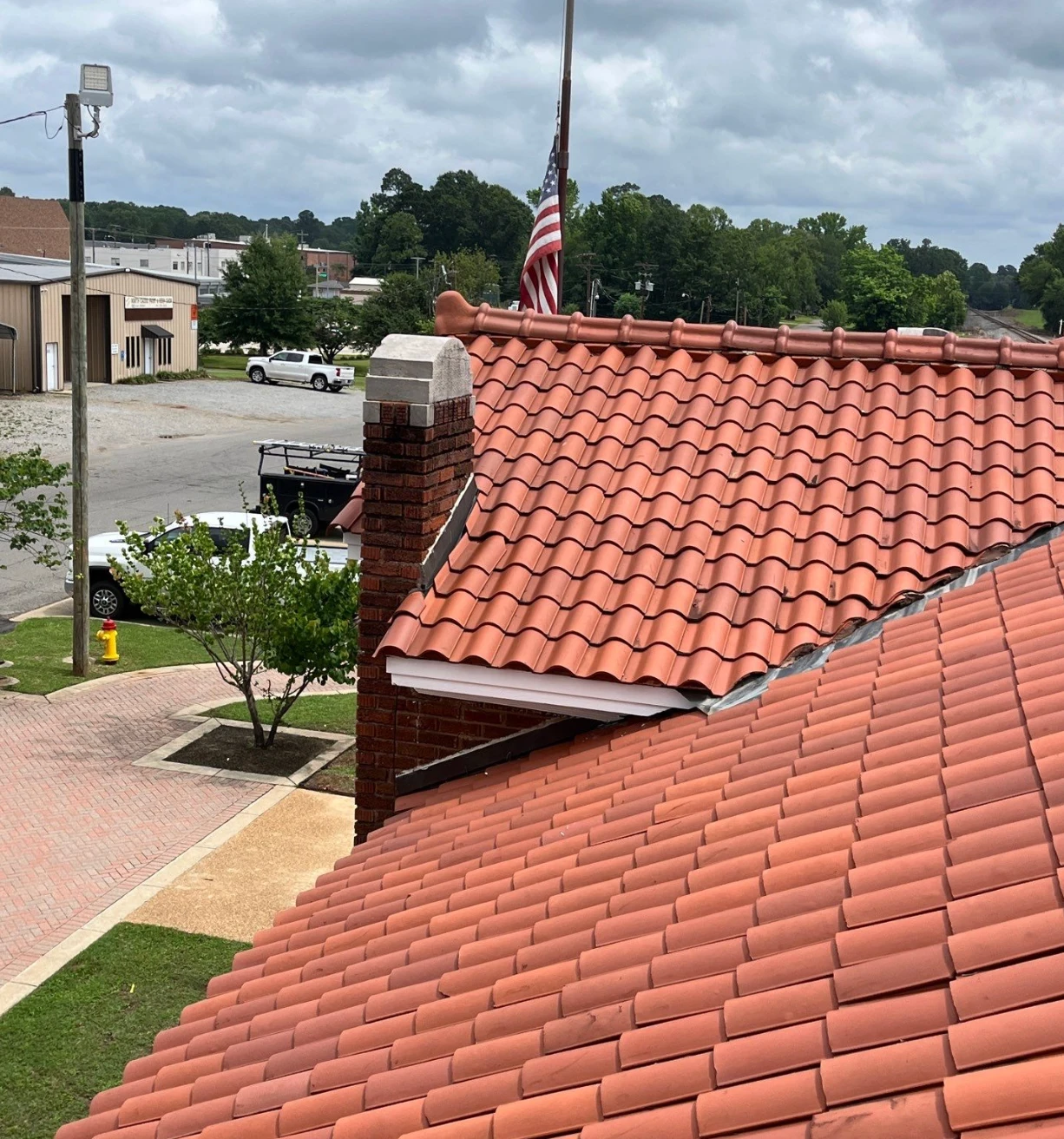
When most people think about roofing projects, they picture a full tear-off and replacement. Replacements are sometimes necessary — but many commercial buildings, museums, and public facilities can extend the life of a roof significantly through strategic repair work instead. That was the case at the Vivian Railroad Station Museum, a historic railroad depot now operated as a local museum in Vivian, Louisiana, where our team recently completed a specialized repair focused on preserving a piece of North Caddo Parish history while working within a tight budget.
Preserving a Historic Landmark in Vivian
Housed in the town's original railroad depot and listed on the National Register of Historic Places, the museum stands as a repository of the area's railroad heritage, with exhibits and artifacts that keep the region's cultural history alive. For a building like this, roofing decisions are about far more than stopping leaks. Every repair has to balance performance, appearance, historical preservation, and budget — and the wrong approach can erase the very character that makes the building worth saving.
The Challenge: A Historic Tile Roof with Copper Details
The roughly 4,100-square-foot roof featured several components you rarely see on modern projects: Ludowici clay roof tile, decorative ridge, hip, and starter tile, six custom copper chimney penetrations, and original architectural detailing throughout. A full replacement of a roof like this would have cost many times more than a targeted repair — and well beyond the budget available for the work.
So the challenge was straightforward: stop the active leaks, preserve the historic appearance, and maximize the life of the existing roof without a complete replacement. As it happens, that approach aligns with how preservation professionals think about these roofs. The National Park Service's guidance on historic clay tile roofs recommends repairing and selectively replacing individual tiles rather than wholesale replacement — both to protect the building's character and because clay tile is among the longest-lived roofing materials, often lasting a century or more.
Why Tile Roof Repairs Are a Specialty
Plenty of contractors specialize in shingles, metal, or commercial membrane systems. Historic tile repair is its own discipline. Ludowici tile roofs are prized for their durability and long service life, but repairing individual tiles takes experience and patience: unlike asphalt shingles, damaged tile has to be carefully removed and replaced without disturbing the surrounding materials. Our service division approached the project with preservation first — making repairs that would extend the life of the existing roof while keeping its original appearance intact.
Scope of the Repairs
Working across the most vulnerable areas of the roof, the team:
- Replaced roughly 50 Ludowici roof tiles
- Repaired ridge, hip, and starter tile
- Restored the six copper chimney penetrations
- Cleaned and restored the existing tile surface
- Addressed leak points throughout the system
Each of these targeted the spots where water intrusion had developed over the years, rather than disturbing sound areas of a roof that still had decades of service left in it.
Copper Repairs Take Specialized Craftsmanship
The six copper chimney penetrations were among the most demanding parts of the job. Copper shows up on historic structures because of its longevity and architectural appeal — a properly built copper detail can last well over a century — but working with it calls for knowledge that's distinct from ordinary roofing repair. Rather than ripping out and replacing these assemblies, our technicians carefully repaired and restored the existing copper, preserving the building's historic character while improving its weather resistance. For anyone who wants to understand how exacting that work is, the Copper Development Association publishes the detailing standards architects and sheet-metal craftsmen follow. On a historic structure, keeping the original materials whenever possible is almost always the preferred outcome.
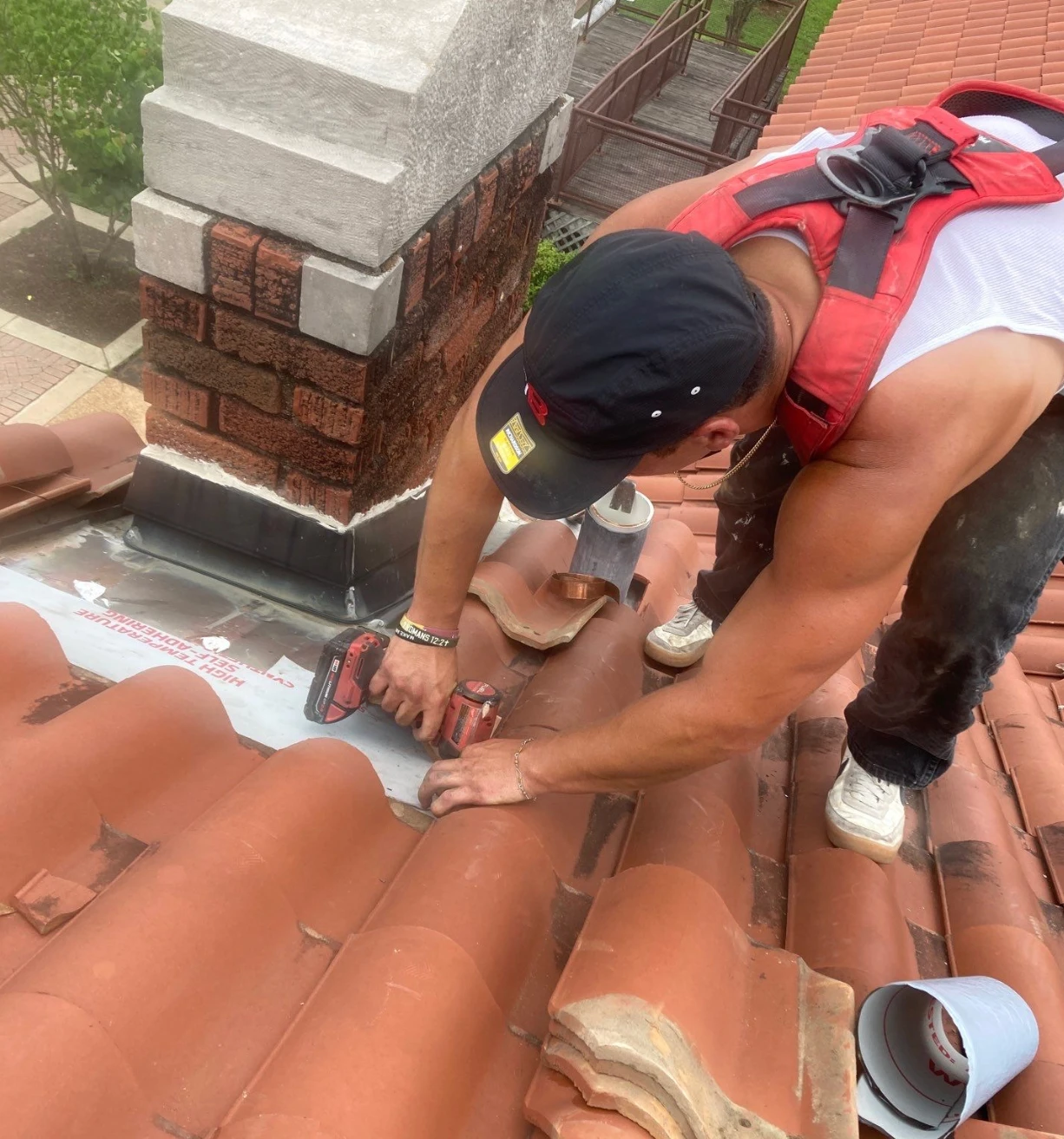 Hands-on at the chimney: resetting clay tile and restoring the copper flashing rather than tearing out original material.
Repairs Can Save Owners From a Full Replacement
One of the biggest misconceptions in roofing is that every leak demands a full replacement. In reality, a strategic repair plan can extend roof life, reduce maintenance costs, protect a building's interior, preserve historic architecture, and delay major capital expenditures — often for a small fraction of the cost of replacing the roof. For municipalities, museums, churches, schools, and other public facilities working with limited budgets, that difference can be substantial. In this case, targeted repairs let the building address its active roofing issues without taking on a full replacement it didn't need.
Restoring Appearance with a Gentle Roof Wash
After the repairs were complete, our service team finished with a gentle, low-pressure soft wash to improve the appearance of the historic tile. Over time, dirt, biological growth, and environmental staining dull the look of a tile roof. Because clay tile is fragile and abrasive cleaning can damage it, the right method is a soft, low-pressure wash — never high-pressure blasting. The result was a cleaner, more uniform surface that matched the restored condition of the repaired roof.
Frequently Asked Questions
Is it better to repair or replace a historic tile roof?
For a sound historic tile roof, repair and selective tile replacement are usually preferred over a full tear-off. Clay tile is extremely long-lived, and preserving the original material protects both the building's character and the owner's budget. A full replacement is reserved for roofs that are genuinely failing.
Can damaged clay tiles be replaced individually?
Yes. Individual cracked or slipped tiles can be carefully removed and replaced without disturbing the surrounding roof — but it takes experience to do it without breaking adjacent tiles. Matching the profile and color of historic tile is part of the craft.
How do you clean a historic tile roof without damaging it?
With a gentle, low-pressure soft wash. High-pressure washing and abrasive methods can chip or erode fragile clay tile, so a controlled soft-wash approach is the safe way to remove staining and biological growth while protecting the roof.
Historic and Tile Roof Repair Across Louisiana
Brown's Roofing completes large commercial roof replacements across Louisiana and Arkansas, but projects like this one show why specialized repair expertise matters just as much. From our Shreveport office, our service division regularly handles commercial roof repairs, historic roof restoration, tile and copper repairs, and emergency leak work throughout North Louisiana and beyond.
Not every roof needs to be replaced. Sometimes the best solution is a strategic repair that protects the building and stretches the owner's investment. If you manage a historic building, commercial property, or public facility and want to understand your options, call us at (318) 329-6579 to schedule an inspection.