
Snow and ice accumulation can pose serious risks to flat commercial roofing systems—even in regions where winter weather is infrequent. Beyond the added weight, snow and ice can lead to membrane damage, drainage failures, leaks, and structural concerns if not handled correctly.
For commercial properties in South Louisiana, North Louisiana, and Central Arkansas, occasional winter storms can catch building owners off guard. Knowing how snow and ice should be safely managed—and when to call a professional—can prevent costly damage.
Why Snow and Ice Removal Matters
Flat roofs are designed to manage water, but snow and ice introduce unique challenges, including:
- Excessive structural load from heavy snow accumulation
- Blocked drains and scuppers leading to ponding water
- Ice dams that force water beneath the roofing membrane
- Cracks, punctures, or seam separation caused by improper removal
Even a short-duration winter event can create problems if snow and ice are allowed to refreeze or block drainage systems.
Safety Must Always Come First
Snow and ice removal is dangerous work and should never be treated as routine maintenance:
- Only trained personnel should access the roof
- Proper fall protection and non-slip footwear must be used
- Work should never be performed during active storms or high winds
- Areas below roof edges should be secured
For most commercial buildings, especially those with flat or low-slope roofs, snow and ice removal is best handled by professional roofing contractors.
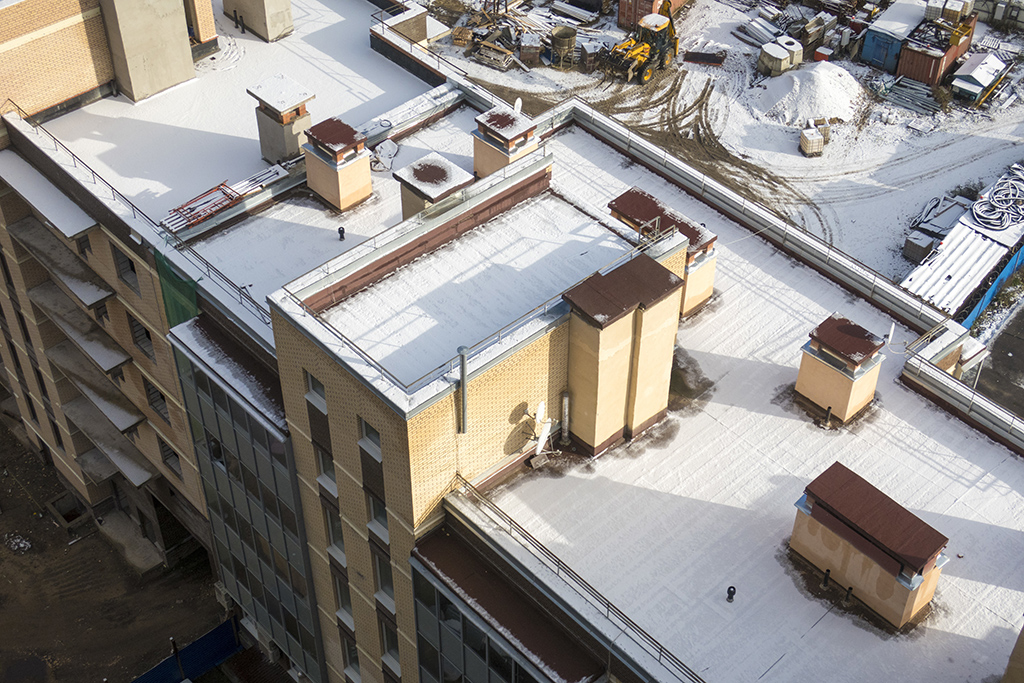
Use the Correct Tools—and Avoid the Wrong Ones
Improper tools are one of the leading causes of winter roof damage.
Recommended tools include:
- Plastic snow shovels or roof rakes
- Soft-bristle push brooms
- Roofing-system-approved ice melt products
Tools that should never be used:
- Metal shovels or ice picks
- Axes, chisels, or power tools
- Standard salt or calcium chloride not approved for roofing systems
These tools can puncture membranes, damage coatings, and crush insulation beneath the surface.
Proper Snow Removal Techniques
To protect the roof system:
- Clear paths to drains, scuppers, and gutters first
- Remove snow in thin layers rather than all at once
- Leave approximately 1–2 inches of snow to protect the membrane
- Avoid piling snow in one area or pushing it over roof edges
Uneven loading or aggressive removal can lead to membrane failure or structural stress.
Ice Requires Extra Caution
Ice should never be chipped or pried from a flat commercial roof.
Safer methods include:
- Applying roof-safe ice melt products
- Relieving pressure around drains and penetrations
- Allowing stubborn ice to melt naturally when possible
Recurring ice buildup often points to drainage, insulation, or slope issues that should be evaluated by a roofing professional.
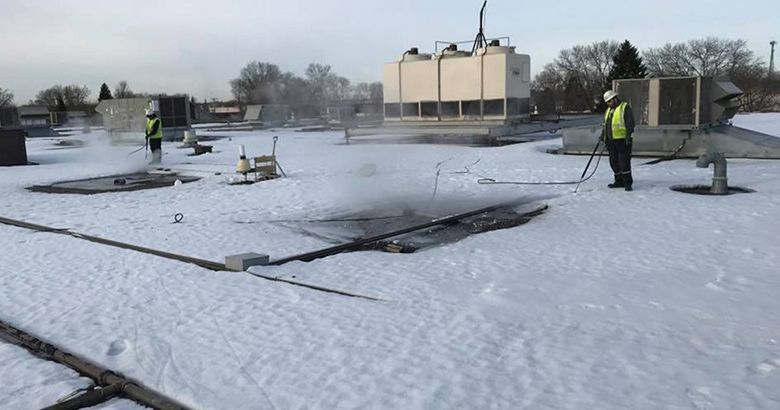
Roof Inspections After Winter Events
After snow or ice conditions subside, the roof should be inspected for:
- Membrane tears or punctures
- Loose flashing or seams
- Crushed or saturated insulation
- Standing water or blocked drains
Early detection can prevent small issues from turning into major repairs.
When to Call a Professional Roofer
Professional assistance is recommended when:
- Snow depth approaches safe load limits
- Ice buildup is widespread or recurring
- The roof is older, complex, or under warranty
- Leaks or visible stress appear
Professional crews have the training, equipment, and insurance to safely remove snow and ice without compromising the roof system.
How Commercial Snow and Ice Removal Is Priced
Commercial snow and ice removal is not typically priced by square footage. Instead, it is usually priced based on hourly time commitment.
This is because not all snow and ice removals are the same. Each project must account for the intricacies of the specific roof system, including:
- Roofing membrane type (TPO, PVC, modified bitumen, metal, etc.)
- Insulation thickness and roof condition
- Drain locations and internal drainage systems
- Parapet walls, skylights, curbs, and rooftop equipment
- Ice thickness and how firmly it is bonded
- Roof access and safety requirements
A smaller roof with heavy ice and complex penetrations may take significantly longer than a larger roof with light snow accumulation.
Why Hourly Pricing Protects the Roof
Hourly pricing allows roofing professionals to:
- Work carefully without rushing
- Adapt to changing conditions
- Use proper fall protection and safety setups
- Minimize the risk of membrane damage or warranty issues
Square-foot pricing often encourages aggressive removal, which can lead to punctures and long-term roof damage.
What a Typical Removal Bid Accounts For
A professional bid may include:
- Crew size and labor hours
- Roof-safe tools and equipment
- Approved ice melt products
- Safety equipment and insurance exposure
- Travel time and emergency response readiness
Many commercial property owners choose time-and-material agreements or pre-approved hourly rates for winter services.
Serving Commercial Properties Across Louisiana and Arkansas
While snow and ice are less common in the South, commercial roofs in Baton Rouge, Lafayette, Monroe, Shreveport, and Little Rock are still vulnerable during winter weather events.
Buildings in these regions are often not designed for prolonged freezing conditions, which makes proper snow and ice removal even more critical when winter storms occur. Experience with flat roofing systems, drainage design, and regional construction practices is essential to preventing damage.
At Browns Roofing, we provide commercial roofing services throughout:
- South Louisiana — Baton Rouge and Lafayette
- North Louisiana — Monroe and Shreveport
- Central Arkansas — Little Rock and surrounding areas
Our team understands the unique challenges that winter weather presents for commercial roofs in the Gulf South and Mid-South regions.
Protecting Your Roof All Winter Long
Proactive snow and ice management helps extend the life of a flat commercial roof, protect warranties, and prevent interior damage. When winter weather hits—even unexpectedly—having an experienced commercial roofing contractor makes all the difference.