
Understanding roofing terminology is essential for homeowners, whether you’re planning a roof replacement, scheduling repairs, or simply trying to maintain your roof. At Browns Roofing, we believe in empowering our clients with knowledge to make informed decisions. Below, we break down some common roofing terms, providing both formal definitions and simplified explanations. To keep things light, we’ve added a funny analogy to each term to help you remember them!
Chimney Cricket
Formal Definition: A chimney cricket is a small, peaked structure installed on the high side of a chimney to divert water and debris away from the chimney base. According to IRC R903.2.2, crickets are required for chimneys wider than 30 inches to prevent water pooling.
Basic Language: Think of a chimney cricket as a mini roof behind your chimney. It helps water flow around the chimney instead of collecting at its base.
Funny Analogy: A chimney cricket is like a tiny umbrella for your chimney—it keeps the rain from ruining its day.
Slope
Formal Definition: Roof slope refers to the angle or steepness of a roof, expressed as a ratio of vertical rise to horizontal run (e.g., 4:12). IRC R905.2.2 specifies minimum slope requirements for different roofing materials.
Basic Language: Slope is how steep your roof is. A 4:12 slope means the roof rises 4 inches for every 12 inches it runs horizontally.
Funny Analogy: Roof slope is like the incline on a treadmill—too steep, and it’s a workout for anyone trying to walk on it!
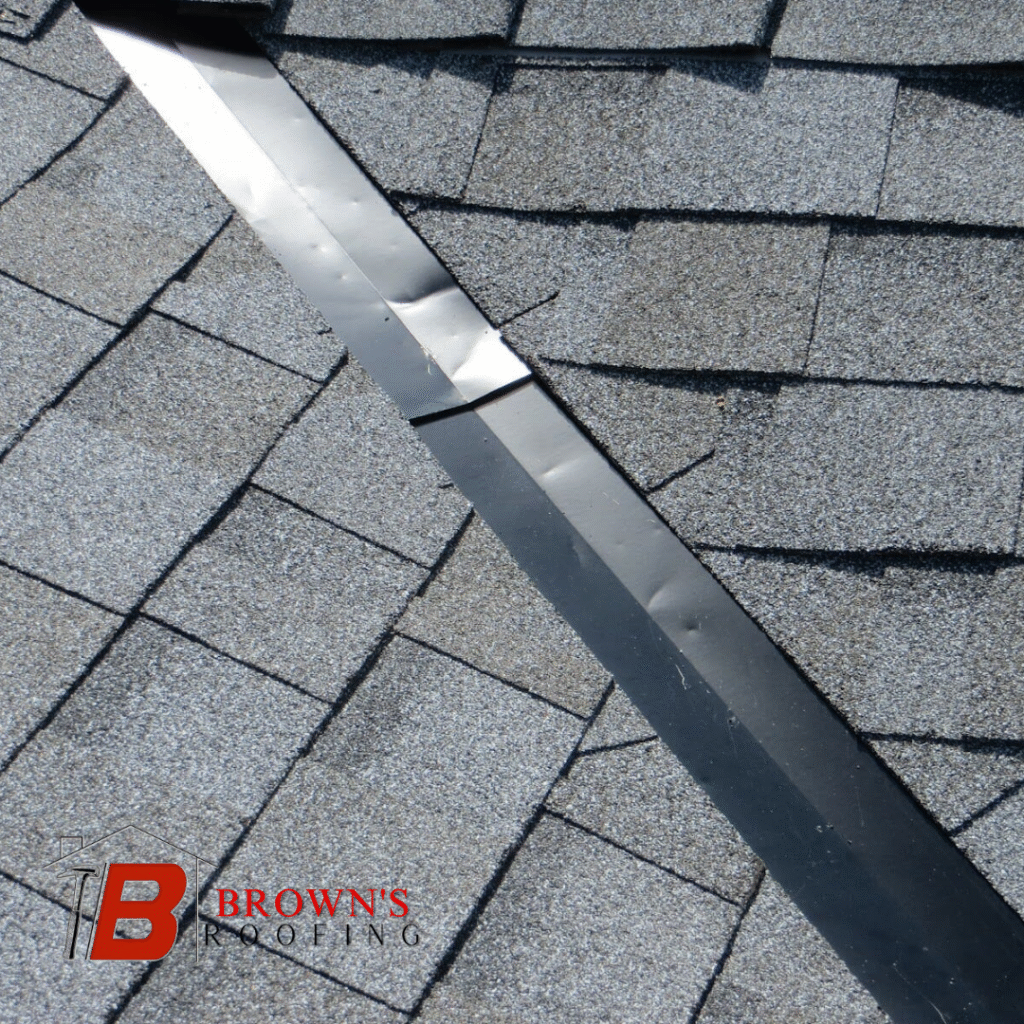
Flashing
Formal Definition: Flashing is a thin material, typically metal, installed to direct water away from critical areas of the roof, such as valleys, chimneys, and vents. IRC R903.2.1 requires flashing to be installed at roof intersections and penetrations.
Basic Language: Flashing is like a waterproof seal that protects the spots where your roof meets walls, chimneys, or vents.
Funny Analogy: Flashing is the duct tape of your roof—it keeps everything watertight and in place.
Shingle Exposure
Formal Definition: Shingle exposure refers to the portion of a shingle that remains visible and exposed to the elements after installation. The IRC does not specifically regulate exposure but defers to manufacturer guidelines.
Basic Language: This is the part of the shingle you can see on your roof. The rest is overlapped by the shingle above it.
Funny Analogy: Shingle exposure is like the hem of your pants—just enough is visible to look good, but too much, and it’s a problem.
Granule Loss
Formal Definition: Granule loss occurs when the protective mineral coating on asphalt shingles wears away, often due to weathering, aging, or mechanical damage.
Basic Language: Granules are the tiny, sand-like particles on your shingles. If they start coming off, it’s a sign your roof might need attention.
Funny Analogy: Granule loss is like losing sprinkles off your ice cream cone—it’s a sign things are melting down.
Blistering
Formal Definition: Blistering refers to the formation of raised bubbles on shingles caused by trapped moisture or excessive heat.
Basic Language: Blistering looks like little bubbles on your shingles. It’s often caused by heat or moisture and can weaken your roof over time.
Funny Analogy: Blistering is like popcorn popping on your roof—except it’s not nearly as fun or tasty.
Decking Rot
Formal Definition: Decking rot is the decay of the wooden sheathing beneath your roof covering, typically caused by prolonged exposure to moisture.
Basic Language: Decking rot happens when the wood under your roof gets wet and starts to break down. It’s a serious issue that can compromise your roof’s structure.
Funny Analogy: Decking rot is like leaving a loaf of bread out in the rain—it gets soggy, gross, and completely useless.
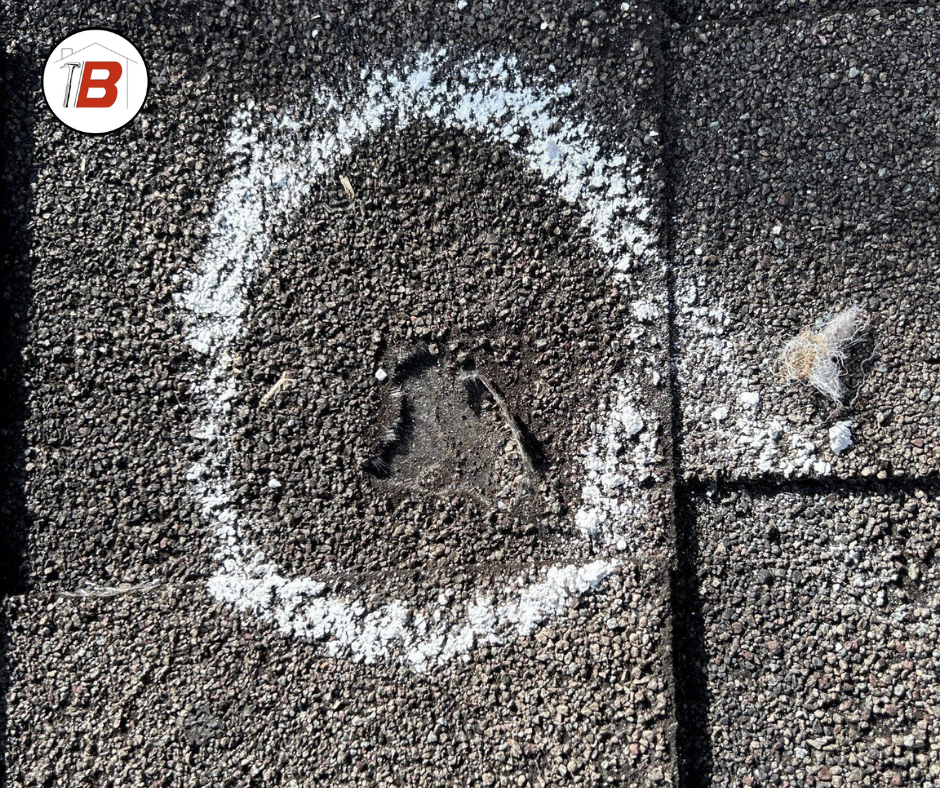
Hail Damage
Formal Definition: Hail damage refers to the impact marks or dents caused by hailstones striking the roof, which can lead to granule loss, cracks, or punctures.
Basic Language: Hail damage looks like dents or cracks on your roof from hailstones. It can shorten your roof’s lifespan and lead to leaks.
Funny Analogy: Hail damage is like your roof getting pelted in a dodgeball game—it’s going to leave some bruises.
Manufacturer’s Warranty
Formal Definition: A manufacturer’s warranty is a guarantee provided by the roofing material manufacturer, covering defects in materials for a specified period.
Basic Language: This is the promise from the company that made your shingles. It says they’ll replace or fix them if there’s a problem with the materials.
Funny Analogy: A manufacturer’s warranty is like a pinky promise from the shingle company—they’re saying, “We’ve got you covered.”
Building Code
Formal Definition: Building codes are regulations that set minimum standards for construction practices to ensure safety and performance. The IRC is the primary code for residential roofing.
Basic Language: Building codes are the rules that make sure your roof is built safely and correctly.
Funny Analogy: Building codes are like the recipe for baking a cake—follow them, and you’ll get a solid result. Skip them, and you might end up with a disaster.
Building Permit
Formal Definition: A building permit is an official approval issued by a local government agency, allowing construction or renovation to proceed in compliance with building codes.
Basic Language: A building permit is permission from your city or town to start work on your roof.
Funny Analogy: A building permit is like getting a hall pass in school—it’s your official “okay” to get moving.
Drip Edge
Formal Definition: A drip edge is a metal flashing installed along the edges of a roof to direct water away from the fascia and into the gutters. IRC R905.2.8.5 requires drip edges for asphalt shingles.
Basic Language: A drip edge is a metal strip that keeps water from running down the edges of your roof and causing damage.
Funny Analogy: A drip edge is like the brim of a hat—it keeps the rain from running down your face (or your roof).
Mechanical Damage
Formal Definition: Mechanical damage refers to physical harm to roofing materials caused by non-weather-related events, such as foot traffic, tools, or falling objects.
Basic Language: This is damage to your roof that isn’t caused by weather, like someone walking on it or dropping something heavy.
Funny Analogy: Mechanical damage is like stepping on a Lego—it’s not the weather’s fault, but it still hurts.
Algae Growth
Formal Definition: Algae growth on roofs is the development of dark streaks or patches caused by airborne algae spores, particularly in humid climates.
Basic Language: Algae growth looks like black or green streaks on your roof. It’s common in humid areas and doesn’t usually harm your roof, but it can make it look dirty.
Funny Analogy: Algae growth is like a bad haircut—it doesn’t hurt anything, but it’s not a great look.
Call Browns Roofing for Expert Roofing Services
Whether you need a roof inspection, repair, or replacement, Browns Roofing is here to help. With locations in Baton Rouge, Shreveport, Monroe, and Little Rock, we’re committed to providing top-notch service to homeowners and businesses. Contact us today to schedule a consultation and experience the Browns Roofing difference!